admin
admin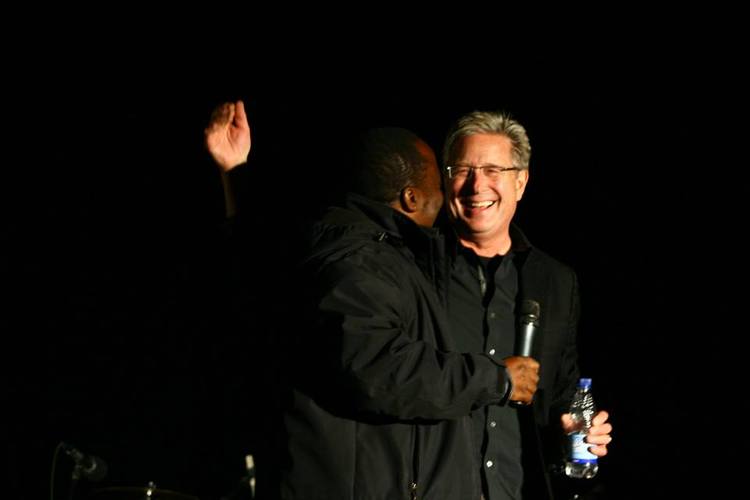
Tendai Manzvanzvike Divine Appointments
IN this final instalment, Apostle Ephiel Mukamuri (AEM) of Logos Rhema Ministries International/Word of Faith Churches talks to Tendai Manzvanzvike (TM) about the grace connection that has seen his church host different men and women of God. These include Dr Andre and Jenny Roebert of Faith Broadcasting Network; award-winning American gospel artistes, Don Moen and Ron Kenoly; Dr Fred Price of Ever Increasing Faith Ministries, among others. He also speaks about his passion for compassion ministry or alms giving, as he prefers to call it.
TM: A number of well-known men and women of God have come to Zimbabwe through your church. We hear that some of them want five- or six-figure appearance fees. How does your church do it?
AEM: We have never paid humongous figures to have a pastor come preach in our church. Some of them could just say get me a place to stay, like when we had Dr Fred Price. He passed through here twice. He just wanted us to take care of his accommodation, and said if there is an offering, that would be fine, if not, that would still be fine with him.
But with gospel artistes, it’s a bit different. We have had two well known musicians — Ron Kenoly and Don Moen. The latter was here in May 2013.
TM: Why the difference between pastors and musicians?
AEM: I don’t know how they do it, but our policy as a ministry now is that we will only have musicians who come as missionaries. When they come as missionaries, what happens is if they tell their friends and churches and they are actually supported.
TM: How many visitors do you have in a year?
AEM: A minimum of three to four visits, but sometimes it’s more. In the past, we used to put them in hotels, but our policy now is that if they want to stay in a hotel, they pay for themselves. Otherwise, all our guests come to our house, and stay with us. And, this has meant that we improve the state of our home as well.
TM: What other core programmes does the church work on?
AEM: In 2004, we informally started a charity organisation, not because we were rich, but it was something we were doing from the heart as Christians.
We called it the Joseph Project. The way it came about is that one Sunday evening in 1988, we were driving from Resthaven, and we stopped by Helensvale Service Station looking for refreshments.
The place was closed, and then, a car full of young people, pulled up. They were white kids from South Africa. They wanted directions to where we were coming from. We gave them the directions, but also realised that they had Christian materials, and I asked them whether they were Christians.
The following day, they visited our offices at 17 Wetherby House — a tall young man, and another short guy. It was the latter who introduced us to Andre and Jenny Roebert. He now runs Overland Missions in Livingstone, Zambia.
In 2004, Stefan Radelich (the tall guy) also started working for Dr Lester Sumrall of Feed the Hungary, and he heard that we needed food – because I was touched to tears, when I heard that we had kids in our church, who walked from Mbare to the Showgrounds or George Hotel in Avondale, and these kids, a number of them orphans being looked after by grandmothers, would only have one meal – in the evening.
Radelich who was my friend already — I didn’t even ask him — initially sent some little cash, and asked me to buy food for the children. The next thing, he sent me an email saying Dr Sumrall had approved that they sent us a food container.
We didn’t even have a plan for that food container, and Radelich told me that a container was coming, and it came. We were not registered yet, so what happened was that they were already sending food containers to Pastor Tom Deuschle’s church. Pastor Tom knew me and he approved that their compassion ministry receives the container on our behalf. From that time on, Feed the Hungry would add a container for us. That’s how we got into feeding the needy. I prayed, and God gave me an idea to take food to orphanages, and also told pastors that if they needed people to bless with food, they could come. One of the orphanages we supported was Harare Children’s Home, until 2008. But by then, we were not only receiving food, but clothing and different items, and we took them to other children’s homes and other pastors.
In 2008 again, the general committee, which is like the executive board of Harare Children’s Home invited us for a discussion on fundraising because there was real need for money, for the home. They shared with us a very touching issue: children in orphanages don’t just need material things; they need emotional support, and if they don’t get it, they grow up lost. They also said one of the things that messes up these children was that these are children that are picked up, taken to the police or social welfare and then to the orphanage. Those children know no relative, except the other kids in the orphanage; know no other home, except the orphanage; and, know no other mother except the foster mother.
Due to economic challenges, the foster mothers resigned. So, a child who for two years had a mother became motherless. The mothers moved on because it is a job, and the money is inadequate.
And what also happens is that these kids are going to school. You then have a scenario where they are badmouthed at school, because there are other kids who know that they come from the home — that kind of upbringing!
When we heard all that, it touched us and we said we trust God to help us do something to generate extra income. It was then that we asked the general committee who owned the piece of land adjacent to the home, and they said it belonged to the Home.
We realised that the whole land where the Home is, was donated to them by the City of Salisbury (now Harare) in 1956, but only one side of it was developed, and the other was not. It was a forest. The kids would play there, but it was very dangerous.
So, we suggested that this piece of land be turned into an events park, and then they asked me to come in as a trustee.
TM: Have you succeeded?
AEM: We proposed to put up a youth activity and development centre for teenagers from the home, but we also want to cater for other homes, and orphans.
But here is our challenge! We initially thought that God would send us a multimillionaire, but to date we have built the place on our knees (prayer), and most of the money came from the church. The Rotary Club of Msasa has assisted us with roofing materials for the toilets and showers.
TM: So, the alms giving is part of ministry of the church?
AEM: Yes, giving to the poor is part of the church’s activities.
TM: Your final remarks!
AEM: I have been a preacher for many years, and I didn’t know the value of giving to the less privileged. I used to think that all I had to do was teach them the Bible, and trust God for their well-being through their faith. But God opened my eyes to some scriptures in the Bible. (Proverbs 19:17, Psalms 41:1, 2 Corinthians 8)
When my eyes were opened to the power of alms giving, I realised that it’s a privilege. Why do we call it a privilege? Because, God will give you kickbacks for that.



 Online Reporter