Online Reporter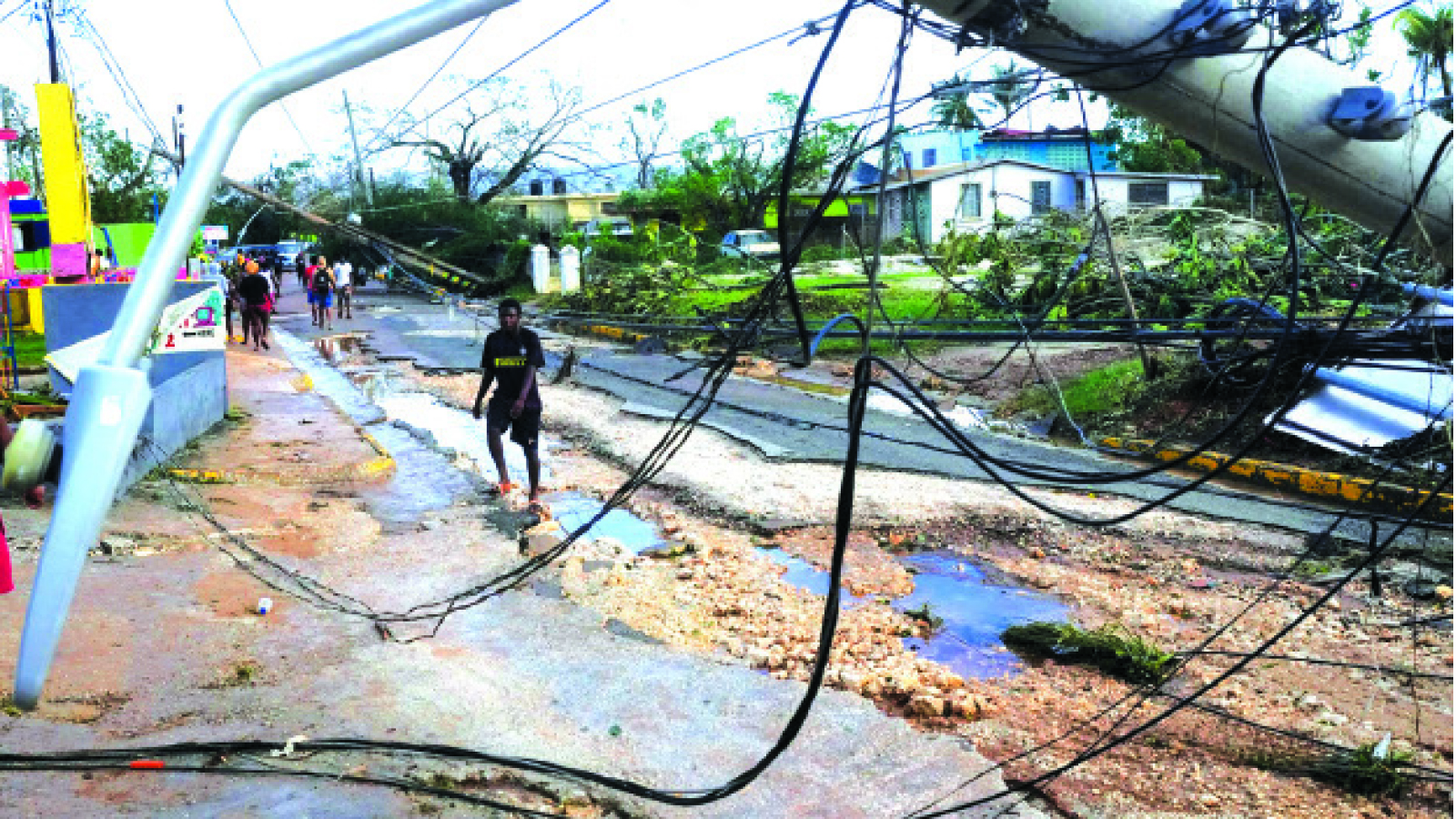
Cliff Chiduku
In a little less than a month, activists and policymakers will converge in Belém, Brazil, for the COP30 climate summit.
This gathering, like the many that have come before it, is billed as a turning point.
Organisers insist it will be different, a moment for translating lofty declarations into transformative actions.
The focus, we are told, will be on ambitious implementation, with nationally determined contributions (NDCs) aligned to the Paris Agreement’s 1.5°C pathway at the heart of discussions.
Yet, beneath the speeches and choreographed photographs, one troubling irony persists: Those who pontificate loudest about the need to phase out fossil fuels are, in fact, the very nations guiltiest of polluting the planet.
This hypocrisy has become the hallmark of global climate negotiations.
Wealthy industrialised nations dominate the discourse with polished rhetoric about decarbonisation, green transitions and climate justice.
They admonish developing nations for failing to accelerate their transitions while quietly expanding oil fields, subsidising coal and building liquefied natural gas terminals at home.
The contradiction is not simply frustrating — it undermines the credibility of the entire global climate governance framework.
To understand this contradiction, one must revisit the architecture of climate change negotiations.
The United Nations Framework Convention on Climate Change (UNFCCC) was built on the principle of “common but differentiated responsibilities”.
This acknowledges that while all countries have a duty to tackle climate change, those that historically polluted the most must bear a greater share of the burden.
This principle is not charity; it is fairness.
After all, industrialisation in the West was powered by coal, oil and gas, whose emissions accumulated over centuries to create the climate crisis the world now faces.
Yet, at successive COPs, this principle is increasingly ignored or diluted.
Instead, developed countries project themselves as climate champions, using moral high ground to pressure their developing counterparts to shoulder disproportionate sacrifices.
Europe and North America speak of net zero targets and clean energy revolutions, but their per capita emissions remain among the highest globally.
Meanwhile, the poorest nations, whose contributions to global emissions are negligible, are told to abandon coal, oil and even wood fuel without the financial or technological support required to do so.
Zimbabwe’s paradox
For countries like Zimbabwe, this hypocrisy is not abstract — it has real consequences. Zimbabwe contributes less than 0,1 percent to global greenhouse gas emissions, yet it is among the countries most vulnerable to climate change.
Droughts have become more frequent, cyclones more destructive and rainfall patterns more erratic.
Cyclone Idai in 2019 remains a chilling reminder of the devastation wrought by a warming planet. It washed away homes, infrastructure and livelihoods in Manicaland province.
Despite this, Zimbabwe is constantly urged to hasten its energy transition, often by the very countries whose emissions triggered the climate crisis in the first place.
We are told to abandon coal and thermal energy even though the former remains a cornerstone of our energy mix.
The Kariba Hydroelectric Plant — once a symbol of reliable, clean energy — is crippled by recurrent droughts linked to climate change. At the same time, our attempts to industrialise and power economic growth are constrained by lack of finance, inadequate infrastructure and barriers to accessing clean technologies.
Meanwhile, the industrialised nations that lecture us continue to expand fossil fuel projects. The United States is increasing oil and gas drilling, Germany reopened coal plants when its energy supplies were threatened and the United Kingdom has granted new licences for North Sea oil.
Yet Zimbabwe, which has barely industrialised and whose energy demand pales in comparison, is painted as lagging in “transitioning”.
The hypocrisy is staggering.
Take the United States.
No other country has contributed more to historical emissions, yet the US often positions itself as a global climate leader.
Similarly, the European Union touts its green credentials, but imports liquefied natural gas, invests in oil projects in Africa and reverts to coal in times of crises.
For Zimbabwe, this duplicity matters because it shapes access to finance.
Developed nations pledged US$100 billion annually to support climate action in the Global South.
To date, that pledge remains unmet. When funds do come, they are usually in the form of loans rather than grants, deepening debt burdens for countries already struggling with limited fiscal space. Zimbabwe, further constrained by illegal sanctions and international isolation, finds it even harder to access the resources needed to build resilience or invest in renewable energy.
The cost of hypocrisy
The hypocrisy of developed nations has three major consequences.
First, it erodes trust. Countries like Zimbabwe are left wondering why they should sacrifice scarce resources to meet climate targets when the biggest polluters refuse to honour their own commitments.
Second, it delays progress. Without adequate finance and technology transfer, developing countries cannot scale up renewable energy or climate-smart agriculture at the speed required.
Third, it perpetuates vulnerability.
Each missed opportunity leaves our communities more exposed to floods, heatwaves and droughts, whose costs far exceed our ability to adapt. If COP30 is to mean anything for Zimbabwe and other vulnerable nations, honesty must replace hypocrisy.
Developed nations must acknowledge the contradiction between their lofty rhetoric and their fossil-fuelled realities.
They must stop treating Africa as a moral stage for grand speeches while continuing business as usual at home.
For Zimbabwe, equity must be non-negotiable.We cannot be asked to leapfrog into a green economy without the financial and technological support that makes such a transition feasible.
Our NDCs must be grounded in our national context — balancing the need to reduce emissions with the equally urgent imperative of industrialisation, poverty alleviation and energy access. After all, climate justice is meaningless if it ignores development justice.
Developing nations should approach COP30 with both realism and assertiveness.
They must demand that climate finance pledges be honoured in full and in grants, not loans. They should advocate for fairer mechanisms that consider their low emissions profile and high vulnerability.
At the same time, developing countries should strengthen South-South cooperation, working with their peers to negotiate as a bloc.
Regional projects in renewable energy, climate-smart agriculture and technology sharing can reduce dependence on the Global North.
For Zimbabwe, the country must continue to diversify its energy mix, investing in solar and small hydro projects while ensuring that coal remains a transitional resource rather than a permanent crutch.
Its policies should balance ambition with pragmatism, making clear that without external support, drastic emission cuts are neither fair nor feasible.
In conclusion, the climate crisis demands urgency, ambition and solidarity.
Yet, year after year, the loudest voices at climate summits are those most responsible for the mess.They pontificate about 1.5°C, net zero and just transitions, even as their oil rigs pump, their coal plants burn and their gas terminals expand.
For the Global South, which has contributed almost nothing to the problem yet bears its brunt, this hypocrisy is intolerable.
If COP30 is to live up to its promise, it must move beyond empty speeches to genuine accountability.
Those polluting the most must do the most, not just talk the most.
Until then, the loud declarations of climate leadership will remain little more than hot air — and countries like Zimbabwe will continue to pay the heaviest price for a crisis they did not create.
Cliff Chiduku is a communications, public policy and governance expert with interests in climate and environmental issues. He writes in his personal capacity. Feedback: [email protected] or Call/App +263775716517.