

 admin
admin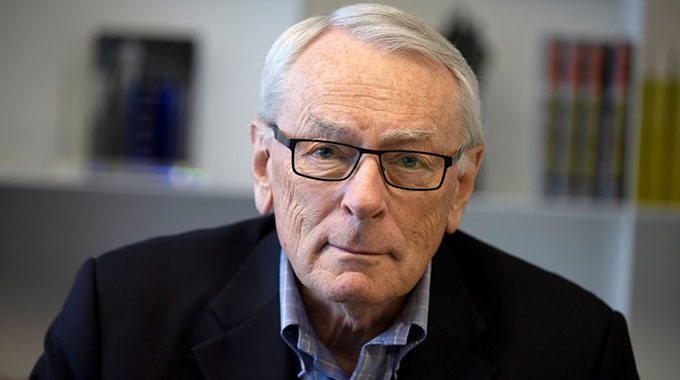
DICK Pound, the longest-serving member of the IOC, estimates there’s a three-month window to decide the fate of the Tokyo Olympics, which are being threatened by the fast-spreading COVID-19.
Pound, in an exclusive interview with The Associated Press, did not sound alarmist. But he did speak frankly about the risks facing the Olympics, which open July 24.
Pound has been an International Olympic Committee member since 1978, 13 years longer than current president Thomas Bach.
“You could certainly go to two months out if you had to,” Pound said, which would mean putting off a decision until late May and hoping the virus is under control.
“A lot of things have to start happening. You’ve got to start ramping up your security, your food, the Olympic Village, the hotels. The media folks will be in there building their studios.”
And if it got to the point of not going ahead, Pound speculated “you’re probably looking at a cancellation.”
“This is the new war and you have to face it. In and around that time, I’d say folks are going to have to ask: ‘Is this under sufficient control that we can be confident about going to Tokyo, or not?”’
China on Tuesday reported 508 new cases of infection and another 71 deaths — 68 of them in the central city of Wuhan, where the new coronavirus was first detected in December. The updates bring mainland China’s totals to 77 658 cases of infection and 2 663 deaths. South Korea now has the second-most cases in the world with 977, including 10 deaths.
Clusters of the illness are now appearing in the Middle East and Europe. This could signal a new stage in the spread of the virus, with four deaths reported in Japan as of Tuesday.
Pound encouraged athletes to keep training. About 11 000 are expected for the Olympics, and another 4 400 for the Paralympics, which open on Aug. 25.
“As far as we all know, you’re going to be in Tokyo,” Pound said.
“All indications are at this stage that it will be business as usual. So keep focused on your sport and be sure that the IOC is not going to send you into a pandemic situation.”
Canada women’s soccer coach Kenneth Heiner-Moller says he will leave the question of the coronavirus and Olympics to “whoever is the expert on this.”
“I sincerely hope that they’ll make sure that everyone around the world stays healthy and that something around that coronavirus can be done. I think that’s the most important part,” the Dane told a media conference call Tuesday.
“And obviously we want to participate in the Olympics and hopefully [the Games are] going to continue. But my concerns are not on that. I hope they know their way around it, the way of making sure all people stay healthy, as healthy as they can be. And then hopefully we’ll continue with the Olympics. But right now it’s not in the forefront of my mind. We’re just continuing as if the Olympics are going to happen anyway.”
The modern Olympics dating from 1896 have only been cancelled during wartime, and faced boycotts in 1976 in Montreal, in 1980 in Moscow and 1984 in Los Angeles, all in Pound’s memory.
The Olympics in 1940 were to be in Tokyo, but were called off because of Japan’s war with China and World War II.
Pound called uncertainty a major problem and repeated the IOC’s stance — that it’s depending on consultations with the World Health Organisation, a United Nations body, to make any move. So far, the games are on.
“It’s a big, big, big decision, and you just can’t take it until you have reliable facts on which to base it,” Pound said.
He said whatever advice the IOC is now getting, “it doesn’t call for cancellation or postponement of the Olympics. You just don’t postpone something on the size and scale of the Olympics. There’s so many moving parts, so many countries and different seasons, and competitive seasons, and television seasons. You can’t just say we’ll do it in October.”
If changes have to be made, Pound said every option faced obstacles. – AP.


 Online Reporter