Online Reporter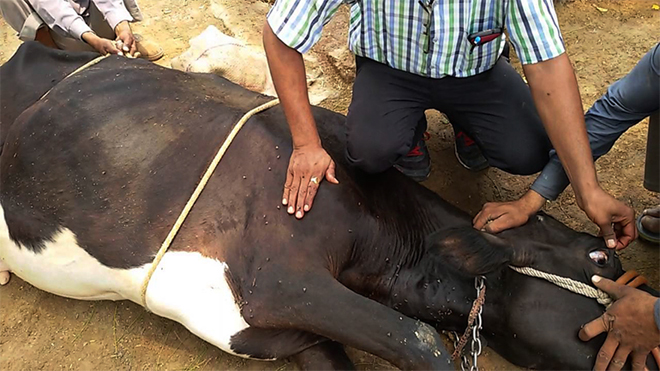
Samuel Kadungure
News Editor
IN the heart of rural Manicaland, where cattle are more than livestock, but a lifeline, legacy, and source of survival, a silent threat is eroding the very fabric of community life.
A tick-borne disease — theileriosis, commonly known as January Disease — is devastating herds, crippling productivity, and leaving communal farmers struggling to make ends meet.
The crisis has been worsened by a crippling shortage of dip chemicals, which has brought the communal dipping programme to its knees.
Without regular dipping, the disease has spread like wildfire, claiming cattle at alarming rates and threatening the survival of families who depend on them.
Since its outbreak in January 2026, theileriosis has already killed numerous cattle, with cases continuing to surge.
Investigations reveal that some communities last dipped their cattle as far back as November 2025, leaving them dangerously exposed.
The Department of Veterinary Services has struggled to sustain the dipping programme, citing severe shortages of chemicals.
As a result, at least 100 cases are being reported weekly in the province, with cattle in some areas going for over a month without dipping before succumbing to disease.
Although four tick-borne diseases have increased in recent years, theileriosis remains the most destructive, striking even outside its usual rainy-season window.
Manicaland Provincial Veterinary Officer, Dr Takunda Chikaka, admitted on Wednesday that incessant rains have worsened the situation, creating ideal conditions for tick proliferation and making disease control even more difficult.
“All the seven districts have reported cases of January Disease since the beginning of the year, and our field staff has been carrying out awareness campaigns in terms of prevention, treatment and control. The message has largely centred on control of the tick vector through dipping and tick grease application. Farmers are being taught the drugs of choice for management of clinical cases. The Department of Veterinary Field Services is also in the process of carrying out January Disease vaccination, and this week hotspots in Makoni are being targeted. The province is anticipating delivery of dipping chemical within two weeks to augment ongoing disease control efforts,” said Dr Chikaka.
Cattle deaths in the province have prompted the DVS to impose a quarantine order in Chimanimani District in an effort to combat the spread of the disease, while in Makoni, cattle deaths are being reported in Chinyika West, where vaccinations are currently being carried out.
In Chimanimani, five dip tanks – Mutambara, Svinurai, Zandonyi, Nyambeya 1 and 2 – with a cattle population of 3 400 have been exposed to the suspected outbreak and placed under quarantine.
Farmers are advised to dip their cattle weekly, and where January Disease has occurred, a 5-5-4 dipping regime is recommended, where farmers dip cattle after five days, then after another five days, and then after four days, that is, three times in two weeks, in order to break the life cycles of infected ticks.
This is a moment of introspection for communal farmers who anticipate Government to do everything for them. The cattle that are dying are theirs, and cannot, therefore, fold their hands while doing nothing to avert the situation at hand.
They should take action, and whatever comes from Government should come after they have taken the lead. Prevention is better than cure, and necessity is the mother of invention.
Government has other national responsibilities to take, and there are certain responsibilities farmers, as patriots, should shoulder, and this is one of them, and has been proven to work with success.
Government, in partnership with Coopers Shumba Group, piloted the Sustainable Community Dipping Model (SCDM) in the Midlands Province in January 2025, which should be replicated in Manicaland to save the provincial herd from imminent extinction.
Contribution was US$2 per cattle.
The model decentralises dipping services, empowers communities through Livestock Development Committees (LDCs) and the traditional leadership, and establishes revolving funds for sustainable acaricide procurement. The impact evaluation report for the model’s performance between January and June 2025 presents key findings as follows.
“The model directly addressed the high burden of TBDs in Midlands, home to Zimbabwe’s second largest cattle population (783 871). Levy collection rose from eight percent in 2020 to 40 percent in 2025, enabling over 27 dipping sessions per year — well above the strategic minimum of 18. TBD deaths fell dramatically, from 1 312 in 2021 to 175 in 2025 (an 83 percent reduction).
“Decentralised procurement and community led management reduced operational delays and costs, with 75 percent of dip tanks maintaining at least three months’ acaricide cover. Strong involvement of traditional leaders and local authorities fostered compliance, accountability, and ownership. Communities reinvested levy surpluses into new dip tanks, boreholes, and animal health facilities. Spin offs: Construction of 13 new dip tanks, establishment of solar powered boreholes, and creation of Village Business Units (VBUs) for horticulture demonstrate wider rural development benefits,” reads part of the report.
Challenges faced during the pilot phase included water shortages at 60 percent of dip tanks due to seasonal drying, training gaps among dip attendants, and limited resources for veterinary extension staff.
However, the SCDM proved effective and sustainable for livestock health management, aligning with Zimbabwe’s Livestock Growth Plan and Vision 2030. Launched in 2019, the model decentralises dipping services, empowering communities to manage their own animal health systems.
The model can reduce tick populations and tick-borne diseases, improve cattle health, strengthen community capacity, and align with national development agendas if implemented religious in Manicaland.
Initiated with support from the Zimbabwe Resilience Building Fund and Livelihoods and Food Security Programme, the model trains Livestock Development Committees to run dip tanks and procure acaricides, ensuring sustainability.
“This was done through establishment of Community Dip Tank Revolving funds at dip tank level, in which the DVS was leading the process in collaboration with the acaricide suppliers, traditional leadership and the local authorities. The national DVS staff trained all the district DVS staff (district level and field level staff). After the district trainings, sensitisations were done to the respective communities for them to select the ideal dip tank committees to handle the new way of doing business at dip tanks. The training focused on community-based management which involved the establishment of a community-based dipping revolving fund for the independent procurement of the needed acaricides, safe, effective and efficient use of dipping chemicals.
“Towards the end of 2023, Coopers and DVS engaged in a discussion pertaining to the model. The model had been implemented for four years in the southern provinces of Zimbabwe. A decision had to be made whether it had been a success, and if so, if it could be replicated in other parts of the country. A national discussion forum was held in Gweru in February 2024 to assess the efficacy of the model. During the meeting, the following was clear – the model indicated prospects for success and could be a pivotal component of sustainable dipping and livestock health systems in Zimbabwe,” reads the report.
The model is a layered, community-driven system designed to ensure effective and sustainable livestock dipping through coordinated roles and financial accountability.
It is anchored on farmers, who contribute levies that form the financial backbone of the system.
The contributions flow into the LDCs, which are community-led structures responsible for managing dip tanks and coordinating dipping operations.
From the LDCs, the process escalates to the DVS district office, where dipping levy funds are submitted for banking and procurement of acaricides. In addition, the DVS provides oversight and technical support. The funds are then directed to the acaricide supplier, who delivers the chemicals to the LDCs for use in dipping sessions.
The intervention is meant to prevent cattle mortalities, which have the potential to severely undermine the developmental gains registered by farmers.
Willingness by farmers to contribute to the full cost of dipping their cattle is the major goal of this model, and needs to be shared by all stakeholders involved.
The approach rests on the basic principle that communities, through their dip tank committees, will sustainably and independently mobilise resources for the procurement of acaricide and maintain their own dip tanks, as well as an adequate dipping programme as per DVS recommendations.
Considering the number of cattle lost, and the existing threats of tick-borne disease outbreaks, serious farmers should have an interest in the resuscitation of their dip tanks and have a strong buy-in to making cattle-based contributions to procure acaricides. It is now or never.
It is either farmers act or let their cattle perish by not acting where they should have.
Communal farmers will only have themselves to blame because US$2 per cattle or household does not compare to the commercial value of their cattle under threat.