Online Reporter
Freeman Razemba
Senior Reporter
MORE than two million road traffic violations have been recorded in Harare by newly-installed traffic cameras, with offenders likely to start receiving their tickets from next week as the Government moves to bring sanity to the country’s roads, Home Affairs and Cultural Heritage Minister Kazembe Kazembe has said.
The cameras, a key component of the Electronic Traffic Management System, have been installed at 20 strategic intersections along major roads in the capital.
They detect speeding, failure to obey road signs, use of mobile phones while driving, and travelling without fastened seatbelts, among other breaches of traffic regulations.
The Government intends to install over 300 high-tech cameras in Harare before expanding the programme to other cities across the country.
The cameras are part of Phase One of the national Smart Traffic Management and Surveillance Programme being implemented by the Ministry of Home Affairs and Cultural Heritage, with TelOne serving as the technical partner.
Minister Kazembe and Police Deputy Commissioner General Lorain Chipato yesterday led a delegation of senior police officers and Government officials on a tour of all 20 traffic surveillance sites and the Command and Control Centre at CID Headquarters.
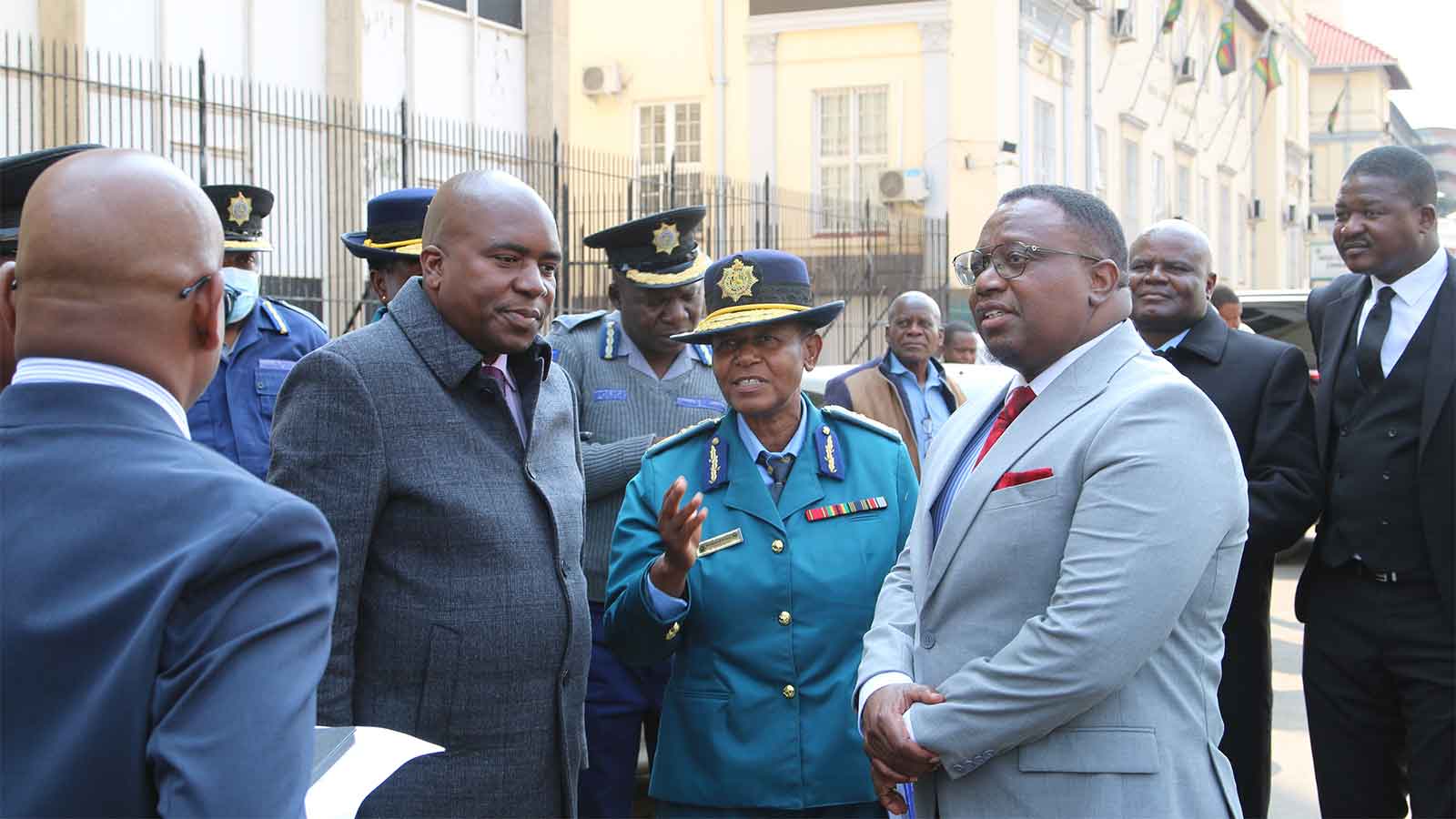
In an interview after the tour, Minister Kazembe expressed satisfaction with the infrastructure, declaring Phase One now 99 percent complete.
“We have toured all the sites that are supposed to be done in Phase One, and Phase One consists of 20 sites. I am happy that all the 20 sites are now ready,” said Minister Kazembe. “I am happy with the infrastructure, and indeed, they have done a splendid job.”
The Minister said the Command Centre was fully operational, with all screens up and violations being detected in real time.
“Earlier on, we were talking of only 1 million incidents. And now they have recorded about 2.3 million violations already in the past month or so. Whilst those people have not been notified as yet, as you know, a crime is a crime, an offence is an offence, so the law will catch up with them. They will still have to pay those fines,” he said.
Minister Kazembe said the system was comprehensive, allowing for filtering and generation of various reports by site, by violation and by vehicles.
The Minister said that not all detections automatically translate into offences, as a validation process is conducted at the Command Centre before tickets are issued.
“In the control room, there are officers who validate the detections. They go to the videos and see what you have done. They validate to say, is this a crime? Is this an offence? Was there a police officer? Was the traffic light working? So there is that validation. Once it’s validated, then it becomes an offence. Before validation, it’s just a detection,” he said.
Minister Kazembe added that the system maintains an unalterable audit trail, recording the identity of every officer who logs in and validates violations, ensuring accountability and transparency.
“All the violations are in the database and are recorded, and now they are busy validating them. So any time from now, maybe starting from next week or the week after, notifications will be coming to those offenders to say, go and pay,” he said.
He noted that offenders who wish to contest the charges could opt to go to court, with video evidence available to support prosecution.
Minister Kazembe praised the quality of the footage, noting that the cameras capture images with remarkable clarity.
“The quality of the picture is amazing. You can actually read somebody’s newspaper that is in his car from those cameras. You can even read the message on the phone when someone is driving. So that is the picture quality,” he said.
The system detects a wide range of violations, including driving while using a mobile phone, crossing intersection lines, running red robots, and parking in restricted areas.
Beyond traffic enforcement, the cameras will also play a crucial role in combating crime, particularly against motorists targeted by criminals at traffic-controlled intersections.
Minister Kazembe said officers at the Command Centre would be able to detect criminal activity and dispatch reaction teams to intercept offenders in real time.
Minister Kazembe confirmed that Phase Two would follow soon, with additional features being considered to further enhance the system’s capabilities.
“We should be able to see sanity on our roads,” he said. “We will soon move to other towns and cities with this traffic management system.”