malvernmugadzikwa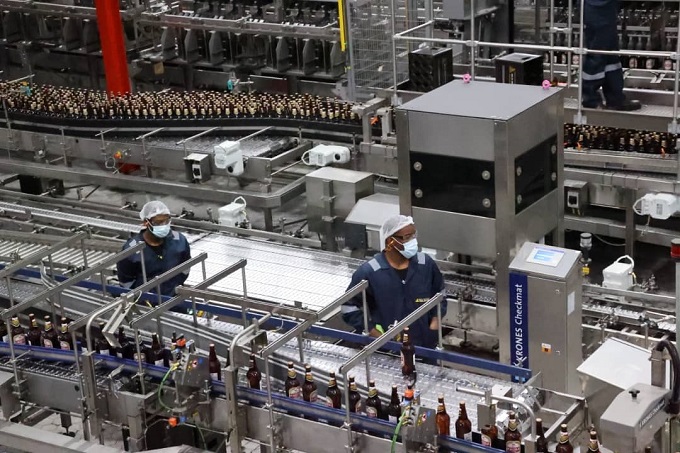
Clemence Machadu
THE part I find interesting about the Southern African Development Community (SADC) anthem is where it says: “SADC, dawn of a better future and hope for regional and universal integration. Let us praise with joy the realisation of our hopes.”
It is a powerful anthem, which emphasises self-determination and the desire for a prosperous future.
This serves as a rallying cry to inspire the entire region’s citizenry to work together towards the continued growth and development of each and every member state.
Echoes of the SADC anthem will yet again reverberate in the whole region as its 16-member states gather for the SADC Industrialisation Week in Zimbabwe from July 28 to August 2.
The week provides a platform to discuss and advance regional industrialisation efforts, collaboration and integration among member states.
It brings together key stakeholders, including industrialists, policymakers and the academia, to foster dialogue in industrialisation issues within the region.
This presents a timely and unique opportunity that Zimbabwe should optimally use to take its economy to the next level, especially considering the current state of the manufacturing sector.
Last year, Zimbabwe’s industrial capacity utilisation declined to 53,2 percent from a 10-year high of 56,3 percent in 2021.
It is likely to be lower again this year, given the El Niño-induced drought that affected agricultural production, as the manufacturing sector relies on agriculture for 60 percent of its raw materials.
The overall contribution of the manufacturing sector to the gross domestic product (GDP) has also been declining, ending at 9 percent last year, compared to 14,8 percent in 2018.
In terms of merchandise exports, manufactured products also still make a small contribution.
If you put gold, nickel ores and concentrates, flue-cured tobacco and nickel mattes together — just four products alone — they constituted 64 percent of last year’s total merchandise export receipts of US$7,2 billion.
There is, therefore, need to accelerate Zimbabwe’s industrialisation and also align it with the SADC Industrialisation Strategy and Roadmap targets.
The roadmap seeks to increase the share of manufacturing value added (MVA) to GDP to 30 percent by 2030 and increase the share of medium- and high-technology production in total MVA to 30 percent by 2030, as well as increasing manufactured exports to at least 50 percent of total exports by 2030.
The roadmap also seeks to raise the share of industrial employment to 40 percent of total employment by 2030.
Zimbabwe cannot target anything less than these figures to become a dynamic regional powerhouse and also cover up the current transitional dynamics in the industrial base.
This is why the current industrial policy being crafted by the Ministry of Industry and Commerce should seek to surpass such targets.
Wide consultations have already been made, with drafts also being crafted.
Zimbabwe, therefore, has a timely opportunity to launch its new industrialisation policy in the lead-up to or during the SADC Industrialisation Week.
Hosting the new policy launch alongside the SADC Industrialisation Week would be highly advantageous, as it would enable Zimbabwe to showcase its revitalised industrialisation agenda to a wider audience of fellow member states, industry leaders, as well as other stakeholders from the region.
It would also provide a unique opportunity to get real-time feedback and buy-in from regional counterparts, which could also help refine and strengthen the policy.
Considering that an investment forum will be held on July 29, 2024, launching the new industrialisation framework during the SADC Industrialisation Week could also help Zimbabwe attract the much-needed investment, partnerships, as well as technical support from key stakeholders who will be present.
In my view, the authorities should seize this strategic window to unveil its new industrialisation policy, as opposed to launching it afterwards.
It is also imperative for the new policy to spell out concrete measures to deal with the perennial challenges facing the industry, which include erratic electricity supply, obsolete machinery and equipment, lack of access to finance and low productivity.
Zimbabwe is blessed in that it is strategically located in the Southern African region, making it integral to any regional value chain development efforts.
The SADC Industrialisation Week should be an opportunity for Zimbabwe to leverage on this strategic geographic position and cement its role as a vital hub for regional industrial integration and value chain linkages.
Local companies should, therefore, actively participate in the industrialisation week to showcase their capabilities and forge cross-border partnerships, while also positioning themselves as suitable players in the regional value networks that the SADC industrialisation strategy aims to cultivate.
The African Continental Free Trade Area (AfCFTA) is already upon us and Zimbabwe should readily position itself to seize opportunities and deal with threats that also come with it.
The SADC Industrialisation Week presents an opportunity for Zimbabwe to gauge the readiness of its industries to compete and collaborate within this expanded continental market.
Local companies can evaluate their readiness for a bigger market such as the AfCFTA.
The platform can also help address any potential challenges that its industries may face in the context of the AfCFTA, while also taking appropriate interventions to enhance competitiveness.
Industrialisation is not solely about manufacturing, as the latter per se refers more narrowly to the process of converting raw materials into finished goods.
Industrialisation is, however, a much broader economic and social transformation process that goes beyond just manufacturing.
It looks at the broad process of transitioning from an agrarian-based economy into one dominated by large-scale industry and the development of technological innovation and infrastructure.
We should, therefore, look at the SADC Industrialisation Week and the crafting of the new industrialisation policy from that perspective.
Zimbabwe was ranked 32 out of 52 countries in the 2022 African Industrialisation Index conducted by the African Development Bank.
This represented a drop from its ranking of 26 in 2010.
It is time to take Zimbabwe’s industry to its rightful place.
Industrialisation will be central to Zimbabwe’s long-term development prospects, as the country seeks to transition into a more diversified and value-added manufacturing base.
With its young and growing labour force, and abundant natural resources, including minerals, agriculture, as well as energy potential, Zimbabwe has significant untapped capacity to drive industrial growth.
The time for Zimbabwe to start reclaiming its position as an industrial hub within the SADC region is now.
Seizing the momentum of the SADC Industrialisation Week represents a golden opportunity for Zimbabwe to set its industrial agenda. Doing so will help in fostering SADC’s dawn of a better future and hope for regional and universal integration, as espoused in the SADC anthem.
Clemence Machadu writes about socio-economic development issues. Feedback: [email protected]


 Online Reporter