malvernmugadzikwa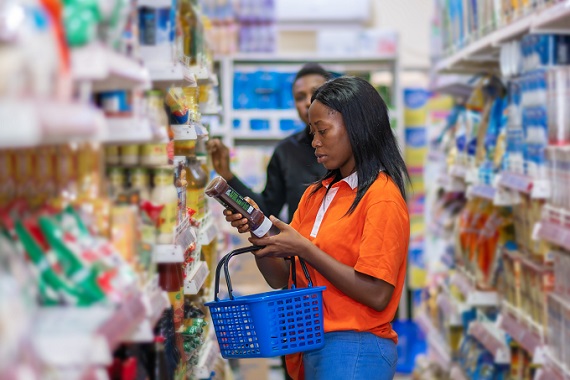
Panganayi Hare
Last week, Health and Child Care Minister Dr Douglas Mombeshora inaugurated a 16-member Food Standards Advisory Board (FSAB) to advise the Government on food and food standards. FSAB board chairperson Mr Panganayi Hare shared his vision and plans with The Sunday Mail’s Emmanuel Kafe.
*******************
In accordance with Section 18(5) of the Food and Food Standards Act, the broad function of the Food Standards Advisory Board is to advise the Minister of Health and Child Care on all matters relating to food and food standards.
Specifically:
In accordance with Statutory Instrument 5 of 2015, to certify on behalf of the Minister of Health food products for purposes of local sale, export and import;
To consider applications for the use or introduction of new food products, ingredients or food articles on the market and advise the minister accordingly;
To formulate food safety and quality policy and advise the minister accordingly;
To amend and revise food laws and regulations, then advise the minister;
To facilitate or carry out risk analysis for food contaminants and advise the minister accordingly
The FSAB does not oversee food production and distribution in Zimbabwe.
Rather, its mandate is advisory. It is made up of experts from the food supply chain.
There are experts in primary production, manufacturing, distribution, storage and preparation.
These experts discuss and agree on food safety policies, food laws and regulations that need to be followed to try and ensure good quality and safe food for local consumption and export.
The board will come up with a work plan and then commence work.
To ensure continuity, the seventh FSAB will resume from where the sixth FSAB left.
Thus, it will consider applications that were made and are yet to be processed.
Some draft regulations were started and are yet to be completed, for example, the soft drinks regulations.
Major food safety concerns
The biggest concern is consumers’ lack of food safety awareness. The most effective way to ensure the safety of food is to have consumers who are able to demand good-quality and safe food. Hence, there is need to focus on consumer education so that our consumers, just as an example, know that they need to check expiry dates before buying food in shops, among other things.
Resources for the enforcement of food regulations are not adequate.
The FSAB will advocate provision of resources to enable regulatory authorities to enforce food control regulations, including orderly management of food vendors and control of food at ports of entry.
The country has food safety and quality regulations, but they are not fully enforced.
There is also inadequate implementation of the farm-to-fork approach as an international best practice.
There is need to implement the farm-to-fork approach to ensure food safety and quality, including good agricultural practices, good manufacturing practices, good storage, good transportation, as well as proper preparation at consumption level.
Some of our food safety and quality statutory instruments are not up to date and they need to be revised to keep abreast with internationally set food standards.
We have to make sure the food we export to other countries meets international safety standards to avoid rejection and loss, as well as secure market access.
Zimbabwe is a signatory to various trade agreements. They include the SADC free trade, COMESA (Common Market for Eastern and Southern Africa) free trade and the African Continental Free Trade Area (AfCFTA) agreements.
In terms of the World Trade Organisation Sanitary and Phytosanitary (WTO SPS) agreement, none of these agreements can override our trading partners’ right to impose SPS measures to protect their human, animal and plant life, and environment.
Therefore, our farmers and food manufacturers must be assisted to produce food that meets acceptable international standards.
The FSAB will work closely with them and assist them through their representatives.
There is also need to participate more in international food standards-setting processes.
The FSAB needs to actively and effectively participate in international food standards-setting work of CODEX, the WTO SPS Committee, the African Regional Standards Organisation (ARSO) and the International Standards Organisation (ISO) to keep up with international food safety standards requirements.
Compliance
As the Minister of Health and Child Care (Dr Mombeshora) mentioned during the inauguration of our board, the FSAB does not have the mandate to enforce compliance with food safety and quality standards.
Enforcement is the responsibility of other Government departments, like the police, municipal health authorities, the port health authority, the environmental health authority, the National Biotechnology Authority and the Department of Veterinary Services.
This is provided for in the Food and Food Standards Act and the Public Health Act.
These Government departments have the mandate to arrest and take offenders to court.
The FSAB is not a food control authority like the Environmental Management Agency, the Medicines Control Authority of Zimbabwe or the Zimbabwe National Water Authority.
We would, however, want to work towards having such an authority.
The food manufacturing industry, retailers and the hospitality sector are represented in the FSAB membership.
The obligations of the FSAB members include consultations with their constituencies to update them on the outcome of food safety and quality discussions in the FSAB meetings, as well as to hear out and carry their concerns that need to be taken into consideration during FSAB discussions on food regulations and other matters.
Supply chain monitoring
In terms of supply chain monitoring, so to speak, the FSAB will look at domesticating some CODEX Recommended Codes of Practice (RCP) to make them mandatory national regulations for certain foods that we consider to be at high risk of contamination along the supply chain.
We will also consider CODEX RCP for some food additives.
On traceability, we note that the Food and Agriculture Organisation has worked with the Environmental Health Department and came up with a food recall procedure.
This is good complementary work, and the procedure will have a strategy for traceability to enable the recall of food whenever a food safety incident is detected in the market or detected by the laboratory.
Collaborations
One of the most effective strategies to ensure compliance with food safety and quality regulations is to create an alert consumer base that can demand safe and quality food.
The FSAB will work closely with the Consumer Council of Zimbabwe (CCZ) and the Consumer Protection Commission (CPC) in their consumer education programmes such as television and radio programmes, consumer clubs and other events.
We will provide technical information to them and are ready to participate in their programmes when invited.
The chief executive officer of the CCZ is a member of the FSAB.
Challenges
During the current El Niño-induced drought, consumers will focus on food availability, rather than safety and quality. Those selling food will take advantage of this and they will pay little or no attention to the safety and quality of the products they sell.
Smuggling of food will be rampant, hence the possibility of substandard food products on the market. There will be too many players in food importation, hence the proliferation of vendors and informal sector players who are difficult to deal with.
Inadequate resources may derail our programmes to actively and effectively participate in international food standards-setting activities of CODEX and other international standards bodies.
Our sister Government departments may have inadequate resources to enforce food safety and quality regulations.



 Online Reporter