Online Reporter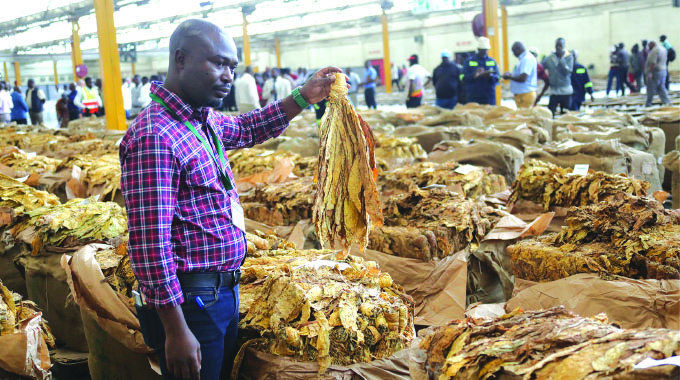
Obert Chifamba
Agri-Insight
IN a landscape where trust and fair dealings should prevail, unscrupulous buyers are running a successful sideshow every marketing season — thronging communal areas armed with a litany of tactics to fleece farmers of their produce and leaving them with little or even no compensation at times.
Today I will delve into the dynamics behind this exploitation, exploring the motivations of these buyers, the impact on farmers and the potential solutions to safeguard the agricultural backbone of the rural communities. These deceptive buyers always wait to pounce on the vulnerabilities of farmers resulting from the illiquid situation that usually characterises the run-up to the marketing season.
In recent times, these unscrupulous buyers have taken advantage of the difficult economic patch the country has been going through to entice farmers with instant cash. And given that the majority of farmers usually struggle to access cash for miscellaneous expenses, they end up giving in to the temptation and sell produce at unviable prices. The sad reality is that they usually incur losses in the process, as the money may not be enough to take care of their socio-economic concerns and fund a novel season later.
It is disappointing to note that the farmer is always the loser in the process, as they do not have the bargaining power with the buyer fixing the prices yet the logical thing would be for the seller who knows the costs incurred during the production process to name a price that allows him to break even. At times the buyers even bring commodities for barter trading, which will not directly leave the farmer with hard cash, but with a commodity to later sell or use.
One painful observation is that this marketing system distorts the true value of the farmer’s produce considering that the bulk of quick sales always leave the seller short-changed somehow. Of course the farmer’s situation in most cases leaves him without much choice but to sell produce to these buyers and attend to pressing issues rather than wait for selling to the traditional markets where payments may not be instant.
This sad scenario brings to the fore the need for farmers to diversify crop options so that they always have something coming from the field to generate a little bit of an income.
Most farmers have to contend with the fact that they only get an income once a year, which is something they need to change if the current winds to run all farming enterprises as businesses is anything to go by.
They need to appreciate that all businesses do not have room for a period during which they will not be generating some income even if it may be tiny. Farmers, especially in rural settings, have no excuse for not keeping small livestock units such as road runners, rabbits and goats whose maintenance does not require a lot of capital investments. These usually come in handy during times of distress and carry the day for the farmers.
The other disturbing thing is that these marauding buyers are difficult to trace in the event that the farmers have complaints over anything emanating from the deal. It is fast becoming necessary for Government or other stakeholders in the agriculture industry to come up with ways of protecting farmers from these opportunists whose activities always have a negative impact on the communal food systems. The ultimate thing is that food security and the socio-economic stability in the concerned communities will also be compromised in the process.
There is also the issue of standards in terms of such things as quantity and quality, which are in most cases not diligently maintained with farmers in most cases using common measures such as the bucket or sack to ascertain quantity. It is the absence of proper price-setting mechanisms that leave the farmers vulnerable to prejudice. In most cases, some of the buyers deliberately go to the farmers with scales to ensure real quantities and weights are observed. The buyer is also the one who determines the quality of the product and sets a price even when the product would have fetched a better price and quality.
One interesting observation is that each time there is a good season and the subsequent bumper harvests, there is also a glut of these unscrupulous buyers making forays into farming communities. Their activities have in many cases seen farmers breaching contractual obligations and side-marketing produce and ending up going through abrasive legal disputes with contractors. Some farmers have had property attached because of that.
The tobacco marketing season got underway early this month and all farmers are upbeat prices will firm as the season progresses. And like always, prices that buyers will offer will determine the mood that will prevail throughout the season. In most cases, side-marketing for tobacco happens when farmers feel hard-done by the prices buyers will be offering them. It is important for buyers to try and be more civilised and fix prices commensurate with the quality of the leaf. I am not condoning side-marketing but trying to expose some of the issues that push farmers from the formal marketing channels and straight into the waiting arms of the unscrupulous buyers.
If the problem of these unscrupulous buyers is to be effectively dealt with, all stakeholders must try and put their hands on the deck and take matters head on and be honest with each other so that they all address their shortcomings. This will leave farmers with no excuse for dealing with the unscrupulous buyers who are coming in because they see a void. Most farmers do not want to sell produce to these buyers as they know perfectly well the risks they will be taking but simply find themselves in difficult situations to wait for the formal processes to pan out.
On the one hand, stakeholders in the tobacco industry, including Government, would help the situation a lot if they can come up with a complaints handling mechanism to assist farmers in distress.
Sometimes farmers have genuine problems, which they fail to solve because there is no one to turn to for a quick redress of the issues.
Unscrupulous buyers are in most cases very wily and strike each time there is a crisis looming or something already affecting farmers.
If buyers do not offer viable prices or fail to make farmers understand how their finances will be flowing in the loan repayment process, we have observed that they seek solace from unlicensed buyers and breach contractual obligations in the process.
Some unscrupulous buyers even go to the extent of buying the crop at the farms and do not wait for the farmers to ferry it to the market. In such situations, the farmers get quick money but lose out in the sense that measurement gadgets the buyers bring with them have no one to authenticate their calibrations.