Online Reporter
Prosper Tsvanhu
THE recent debate surrounding the legacy of Zimbabwe’s greatest cricketers, sparked by the conversation concerning Sean Williams, highlights a fundamental tension.
Must a player achieve world-class statistics to be deemed ‘great,’ or is cultural significance and inspirational value equally important, particularly in a developing cricket nation?
The answer, for Zimbabwe, lies in recognising that the nation’s cricketing heritage is built on both pillars.
In seeking to weigh the elite of this land, we must, with sober conscience, abandon the sterile dichotomy between ‘excellence’ and ‘significance,’ and the divisive binary of black versus white, for the true titans embodied both, the precise craftsman and the cultural standard-bearer.
Their shared legacy is found in the uniform they wore and the singular struggle they represented.
I. The Fastidious Artistry of one Andrew Flower
The very conversation concerning Zimbabwean genius must, by its own fastidious calculus, begin with the solitary, magnificent figure of Andy Flower. For a lengthy, demanding span, he was the finest batsman under the sun on the Test arena.
To average over 51.54 in the five-day game and 35.34 in the high-stakes, breathless theatre of the one-day format, all while shouldering the draining task of wicket-keeping, is not merely a feat of athleticism; it is a monument to an almost monastic concentration and technical rigour.
His batting was an intellectual counter-offensive; a masterclass conducted against the finest spinners the world could offer. He was not a bludgeoner; he was an executor. His employment of the sweep and the reverse-sweep was never desperation, but a quiet, calculated flourish, a geometric, elegant dismantling of the field’s design.
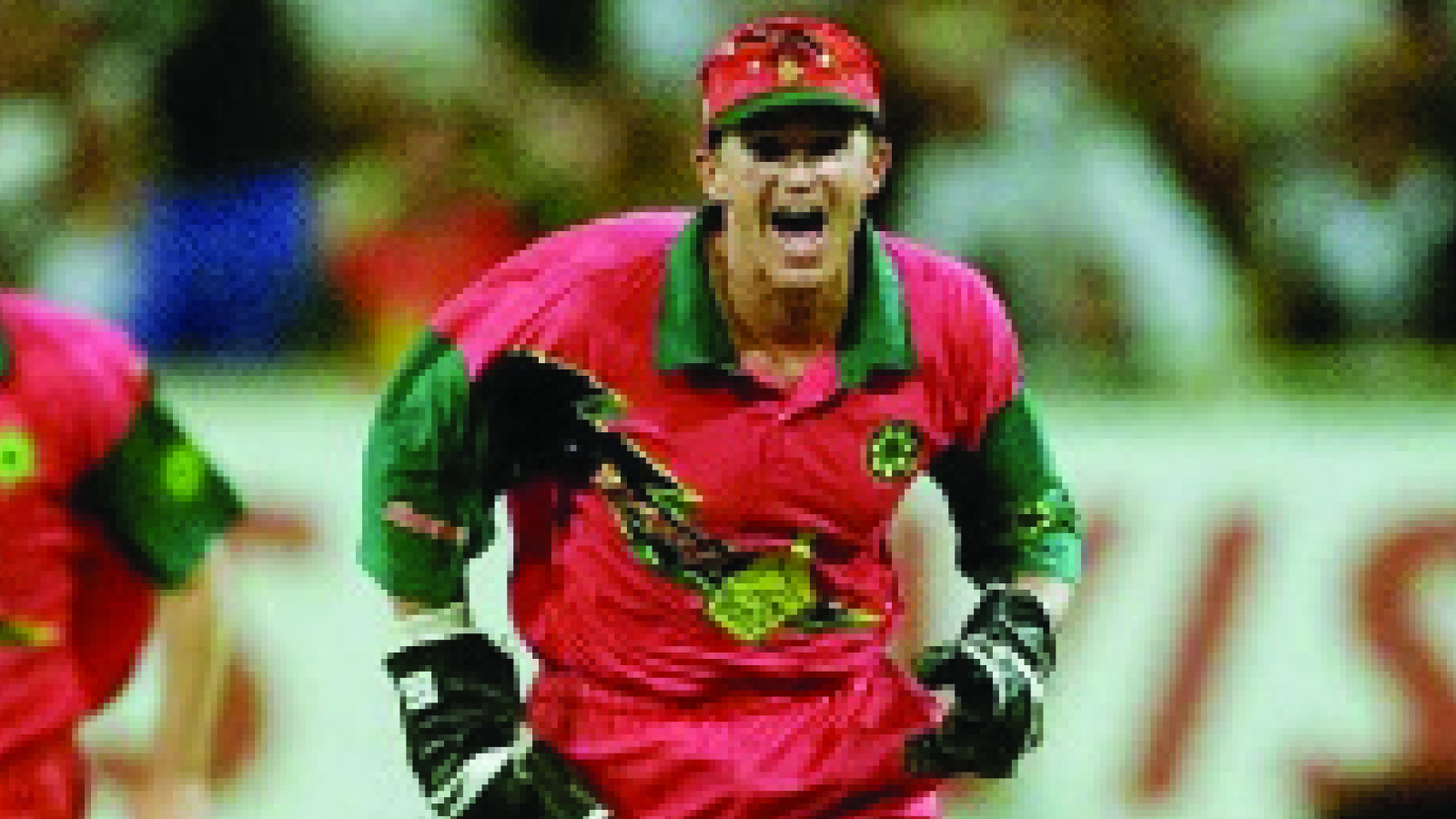
His unbeaten 232 against India in Nagpur in 2000 remains the perfect, indelible testament to his mental architecture, a singular, lonely standard of excellence achieved entirely through self-willed perfection. Flower stands as the unimpeachable craftsman.
Yet, his arena was laid upon the foundation of pioneers. It was Dave Houghton, the original, tirelessly persuasive captain, whose sheer will and performance in the World Cup cornered the world powers, compelling them to finally grant Zimbabwe the hard-won dignity of Test status. Flower’s genius, in this telling, was the glorious, self-actualised fulfilment of Houghton’s historical, foundational struggle.
II. Heath Streak, The Hardened Workhorse
The necessary, essential counterpoint to Flower’s lonely, brilliant genius was the steadfast ballast provided by Heath Streak, may his soul rest in peace. He was the unflagging workhorse, the true artisan who returned to the grim coalface, pitch after pitch, series after series, without complaint or fanfare.
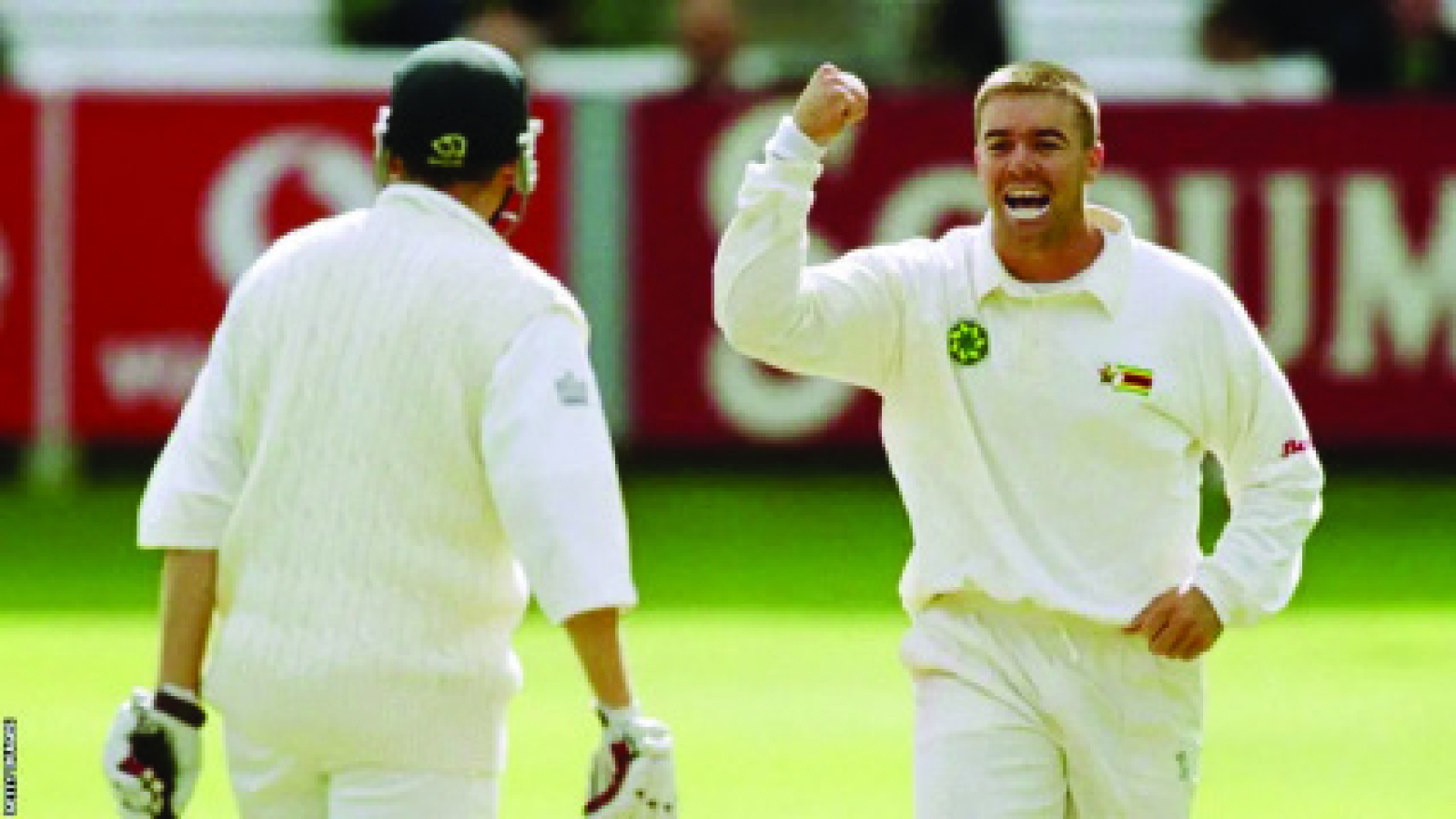
Streak’s record, which marks him as the nation’s unparalleled leader in wickets across both Test (216) and ODI (239) formats, is not simply a statistic; it is a confession of the sheer, unrelenting workload he consented to carry. He was genuinely quick, swung the ball late, and, critically, provided the bowling attack with relentless accuracy and palpable authority.
He was the stabiliser, the figure who ensured the team remained, at all times, credible. His captaincy, too, demonstrated a fierce, proprietary pride in the shirt, even as the walls around the programme began their inevitable, tragic tremor.
While his later career was sadly clouded by personal failures of judgment, his on-field legacy is one of indispensable utility and an unflagging sincerity to his craft.
III. The Crucible of Meaning: A History Forged in Fire
The true, unique weight of a Zimbabwean career, however, can also be measured through the lens of its cultural ripple effect. For cricket is not merely a ledger of runs and wickets. It is, especially in nations grappling with the burdens of history and the search for identity, an expression of hope, and sometimes a silent protest.
The foundation of the modern Black cricketer’s ambition was established in the townships. This trajectory runs directly through Takashinga Cricket Club, an incubator of dreams built beyond the established, inherited structures.
The very name, Shona for ‘We are brave,’ was a philosophy as much as a physical location, a profound bastion of resilience where raw talent was honed.
These efforts were often buttressed by the administrative zeal of liberators like Peter Chingoka and Givemore Makoni, the coaching acumen of Stephen Mangongo, who all championed the game’s spread into the high-density suburbs, ensuring the talent pipeline was diversified and fed by communal passion.
IV. Enter Mudhara Hammy, The Sustained Pillar of Service
From the emerging, vital structures of Zimbabwe cricket stepped Hamilton Masakadza to make his profound declaration. His debut Test century as a Churchill schoolboy against the West Indies in 2001 was more than a statistical entry; it was an irreversible, powerful moment of national affirmation, instantly elevating a promising teenager to the status of a historical figure.
We speak not just of the number, the precise, hard-earned 119 that made him the youngest Test centurion at the time, but of the raw, electric theatre of its achievement. He punched the ball off the back foot through the covers; he lifted his head; and then, in the instant of pure, magnificent release, he arrived. He took off his helmet, raising his BDM blade not in triumph over the opposition, but in a profound, internal reckoning.
In the stands, the eye was drawn immediately to the sight of his father, visibly elated, beyond containment, a quiet, dignified man whose pride swelled to fill the entire stadium.
This was not merely a son scoring a century, this was a communal achievement, the fruit of family sacrifice and national hope.
Masakadza’s numbers would ultimately reflect his grind and endurance: a Test average of 30.04 and nearly 5,700 ODI runs, accumulated across 209 matches, figures that are not marks of perfection, but badges of resilience in the face of constant systemic instability. Beyond the averages, his best work resided in the courage of the crisis knock.
His was the sustained, elegant longevity of service, carrying the mantle as a reliable opening presence through decades of intrinsic volatility.
V. Tatenda Taibu: The Crushing Weight of the Impossible Burden
Then came the astonishing psychological weight placed upon Tatenda Taibu. Diminutive in stature, he was compelled to shoulder a truly monumental, almost cruel task, becoming the youngest Test captain in history. His presence was not a statement on his ambition, but a testament to the desperate, fractured program that required a man of his tender years to bear such an immense load.
His batting was defined by its solid competence; to maintain a Test average above 30 while performing the demanding, rigorous task of keeping wickets is a mark of his innate technical strength.
Yet, the numbers are ultimately secondary to the context. Taibu’s career is the searing statement on the strain of leadership in a collapsing environment, a small man carrying an impossible psychological burden, yet forever drawn back, repeatedly, by the haunting, magnetic lure of representing his country.
His single Test century and two ODI hundreds often came in moments of direst team need, accumulated while he constantly juggled his batting form, rigorous keeping duties, and the constant, crushing mental fatigue of leading a nation in crisis.
Prosper Tsvanhu is a former Zimbabwe cricketer and in his next episode he will talk about Henry Olonga, Trevor Madondo and the new breed of stars