

 Online Reporter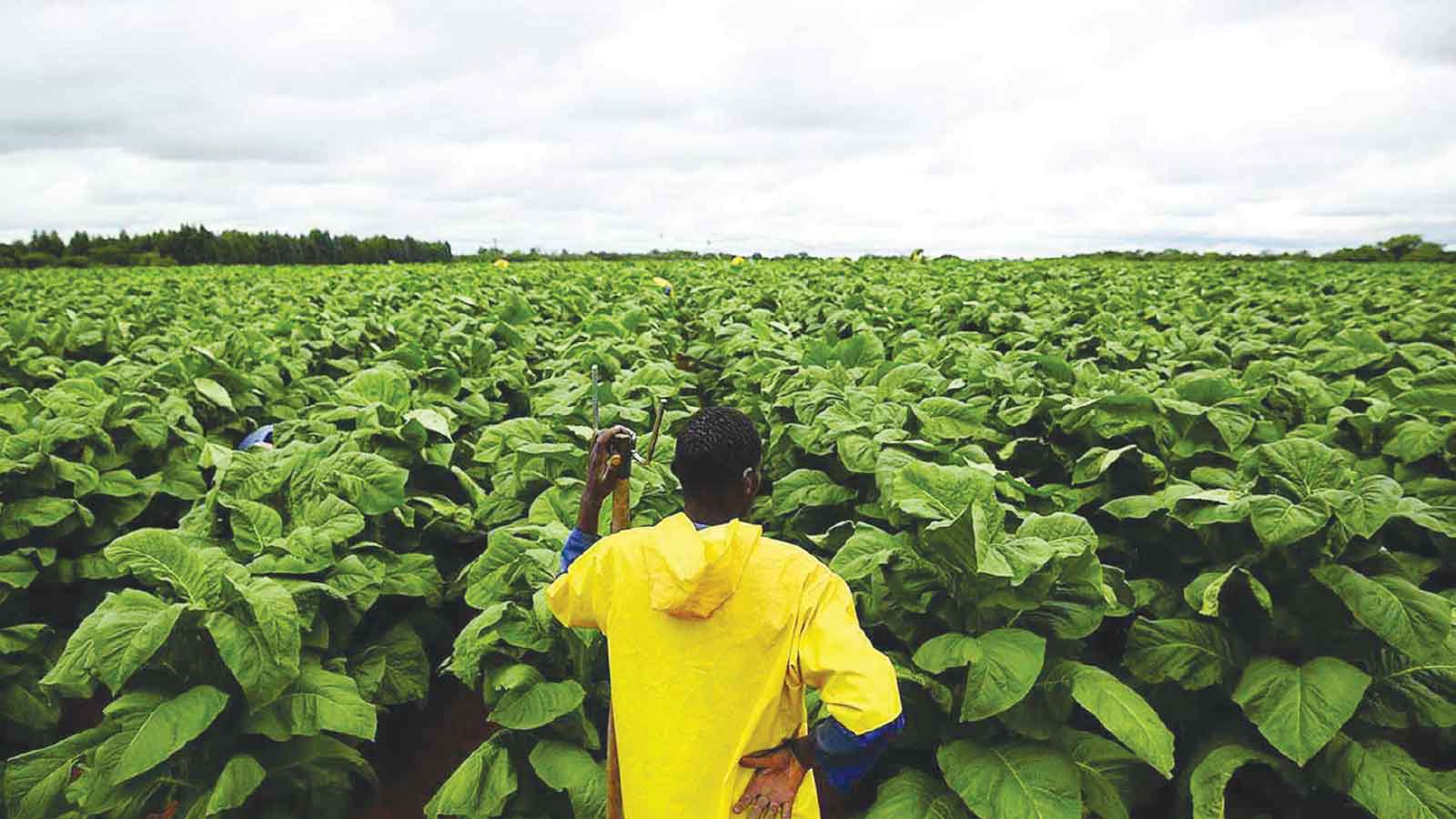
Theseus Mauruki Shambare recently in MANGWE
IN Matabeleland South, where vast stretches of land have for decades been synonymous with cattle ranching and drought survival, a quiet agricultural shift is unfolding.
Smallholder farmers are increasingly moving beyond livestock into crop production — particularly tobacco — as climate variability, market access and new irrigation technologies begin to reshape rural livelihoods.
What was once considered unsuitable land for tobacco is now producing green shoots of economic transformation.
This year’s developments were observed during a Tobacco Industry and Marketing Board (TIMB)-organised media tour of air-cured tobacco farms in Mangwe District, where farmers, agronomists and extension officers showcased emerging production models in semi-arid regions.
Breaking a historical pattern
Matabeleland South typically receives between 450 and 500 millimetres of rainfall annually, making it one of Zimbabwe’s driest agricultural zones.
For decades, this climatic reality confined most households to cattle and goat rearing, with limited crop diversification.
However, recent seasons have been marked by increased rainfall variability — including both drought spells and unusually wet periods — forcing farmers to rethink production systems.
TIMB chief executive officer Mr Emmanuel Matsvaire said the expansion of tobacco into Matabeleland South is anchored on a low-cost, climate-friendly production model that avoids environmental degradation while widening participation among smallholder farmers.
“We started the growth of tobacco in Matabeleland South by way of natural flue-cured tobacco.
“This is a more sustainable system because we don’t burn trees or coal, so there is improved environmental sustainability,” he said.
He said the model reduces production costs and lowers entry barriers for emerging farmers.
“Production costs are very low — about US$471 per half hectare and around US$1 100 per hectare,” he said.
Mr Matsvaire said yields were already encouraging across farmer categories.
“Small-scale farmers are producing about 1 600 kilogrammes per hectare, while commercial farmers are reaching about 3 000 kilogrammes per hectare,” he said.
He added that stabilising prices and improving efficiencies were strengthening rural incomes.
“With reduced costs of production and average prices of around US$2,50, there is more revenue that is going to grow livelihoods in Matabeleland,” he said.
TIMB officials say this volatility, combined with improved contract farming models and irrigation support, is gradually opening the door for tobacco cultivation in the region.
A farmer’s transition from uniform to soil
Among the emerging growers is Mr Reuben Khumalo of Marula in Mangwe District, a former soldier and Zimpost employee who retired into farming.
He now cultivates tobacco on up to two hectares under contract arrangements facilitated through private partners working with TIMB.
“I really wanted to do something different from all that I’ve been doing. I saw tobacco as a very lucrative crop,” he said during a field engagement with journalists.
But Khumalo’s journey reflects the uncertainty that defines farming in a changing climate.
In his first season, erratic rainfall forced him into unconventional planting methods, including night-time manual watering as he waited for rains to stabilise.
“I was planting using water, pouring water into it, waiting for the rains until the moon set,” he said.
The following season brought the opposite extreme — excessive rainfall that caused waterlogging and crop damage in parts of his field.
“My field is that sort of inematoro… there is too much water when there is rainfall,” he said.
Despite these setbacks, tobacco has already begun to reshape his household economy. Earnings from his first harvest enabled him to purchase a grinding mill that now serves surrounding communities.
“Out of the process of last year’s tobacco, I bought a grinding mill,” he said.
Household transformation through diversification
Other farmers in the same programme are reporting similar shifts.
Ms Lydia Ndlovu said income from her previous tobacco season allowed her to acquire household furniture — a milestone she described as a shift from survival to asset building.
“This crop changed how we see income. It is no longer just survival, but something that builds the home,” she said.
First-time farmer Ms Sibongile Mathe said tobacco farming had introduced new possibilities for expansion.
“I started small, but I am planning to expand next season if conditions remain favourable,” she said.
For many households, tobacco is increasingly becoming part of a broader diversification strategy that includes maize production and small livestock such as goats.
The economics of a growing crop
Nationally, Zimbabwe’s tobacco industry remains one of the country’s top foreign currency earners, with production in recent seasons hovering around 200 million kilogrammes annually, according to industry estimates.
However, expansion into new regions such as Matabeleland is being driven less by traditional large-scale growers and more by smallholder contract farmers entering the value chain.
TIMB says this inclusivity drive is part of efforts to decentralise production and expand rural participation in high-value crops.
The introduction of air-curing systems, including Marula barns, has also been central to this expansion.
Unlike conventional flue-curing systems used in Mashonaland, which rely on firewood or coal-fired furnaces, air-curing barns use solar heat and controlled ventilation.
Environmental pressure and innovation
The shift has important environmental implications.
According to the Forestry Commission of Zimbabwe, the country loses an estimated 262 000 hectares of forest annually, with tobacco curing identified as one of the contributing factors due to heavy reliance on firewood.
Studies have shown that flue-curing tobacco can require up to 14 kilogrammes of firewood to cure one kilogramme of tobacco, placing significant pressure on indigenous woodlands in major producing provinces.
During the 2019/20 marketing season, when Zimbabwe produced nearly 260 million kilogrammes of tobacco, industry estimates suggested that more than two million tonnes of firewood were consumed in curing operations.
In contrast, solar-assisted curing systems being introduced in Matabeleland are being promoted as a more sustainable alternative, reducing reliance on wood fuel while improving climate resilience.
Climate change is reshaping farming geography
Agricultural researchers say the expansion of tobacco into semi-arid regions is part of a broader structural shift in Zimbabwe’s agricultural geography.
Climate variability, rising temperatures and shifting rainfall patterns are altering what crops can be grown and where.
In Matabeleland South, farmers now face alternating seasons of drought stress and excessive rainfall, both of which present production risks.
Yet these same conditions are also pushing innovation.
Solar-powered irrigation systems introduced through TIMB and Government partnerships are helping farmers reduce dependence on rainfall, enabling crop establishment in previously marginal areas.
A calculated risk, not just a gamble
Despite optimism, farmers and extension officers acknowledge that tobacco expansion in the region remains experimental.
Challenges include labour shortages, limited mechanisation and the technical demands of curing in high-moisture environments.
Moisture control and ventilation management remain critical, particularly in air-curing barns where poor airflow can result in mould and quality loss.
However, farmers say experience is gradually improving outcomes as they adapt to local conditions.
A shifting rural economy
What is emerging in Matabeleland South is not a replacement of livestock farming, but a diversification of rural economies.
Cattle remain culturally and economically important, but farmers are increasingly combining livestock with crop production to spread risk and improve incomes.
For households like Khumalo’s, tobacco is no longer just a crop — it is part of a broader economic restructuring that includes milling businesses, crop diversification and small livestock enterprises.
Conclusion: resilience through diversification
Agricultural diversification is steadily redefining Matabeleland South’s rural landscape, turning a region long associated with drought and livestock into an emerging site of experimentation in cash crop farming.
While challenges remain, particularly around climate unpredictability and production costs, farmers are increasingly viewing diversification not as an option, but as a necessity.
As TIMB continues to promote inclusive participation in the tobacco value chain, the success of farmers like Khumalo, Ndlovu and Mathe suggests that Zimbabwe’s agricultural future may be increasingly shaped not only by rainfall patterns — but by adaptation, innovation and risk-taking in regions once written off as agriculturally marginal.



