

 Online Reporter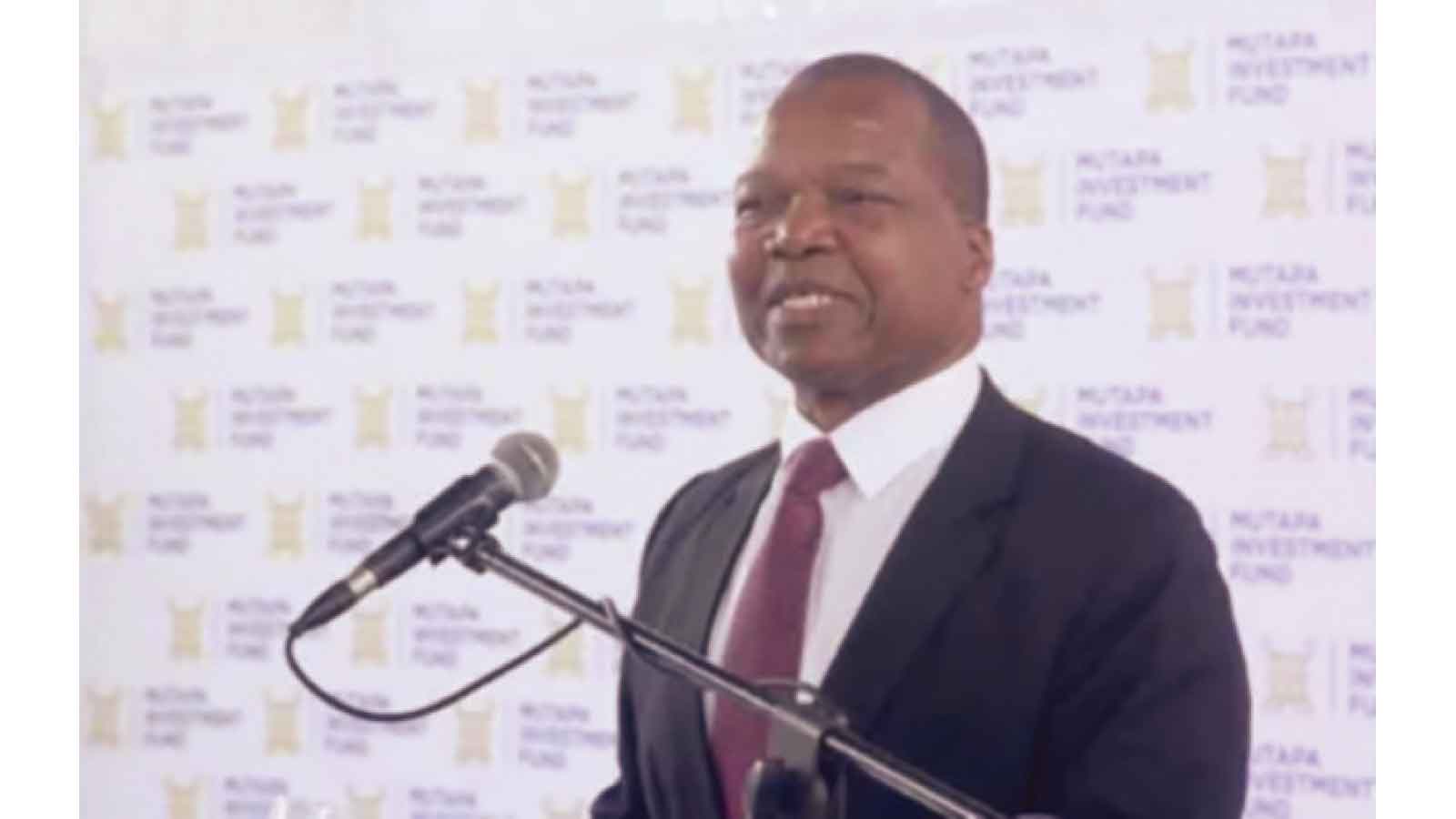
Taurai Kandishaya
When the slave ships sailed from the coasts of West and Central Africa, it was Pan‑Africanism, the raw, unbroken recognition of a shared destiny, that kept the spirit of the captives alive.
From the sugar plantations of Saint‑Domingue to the cotton fields of the American South, enslaved Africans built secret networks, shared resistance tactics and eventually rose in coordinated revolts.
Then, when the cost of suppressing slave revolts became too high, when the moral and financial price of holding human beings in chains began to outweigh the profits, the European powers did not abandon exploitation. They merely changed its form.
They abolished the trade in bodies but invented colonialism: slavery practiced abroad.
Instead of shipping Africans across the Atlantic, they shipped armies across the Mediterranean and the Indian Ocean. They carved up the continent at the Berlin Conference (1884‑85), imposed forced labour, stole minerals, and called it “civilisation”. The chains became taxes, the whip became the passbook, but the extraction continued.
When colonialism came, Pan‑Africanism answered again. From the 1920s, thinkers like William Du Bois, Marcus Garvey, and George Padmore forged a movement that turned colonial subjects into freedom fighters.
By the 1990s, every African nation had won formal independence. Pan‑Africanism had delivered the political kingdom.
When neo‑colonial violence, including coups, proxy wars, and economic sabotage, threatened to tear newly independent states apart, it was again Pan‑Africanism that created the Organisation of African Unity in 1963, and later the African union in 2002. It built early warning systems, peacekeeping missions, and frameworks for conflict resolution. It did not stop every war, but it ensured that Africa had its own table to sit at, its own mediators, its own voice.
For every national question, from slavery to colonialism to neo‑colonial aggression, Pan‑Africanism has been the answer.
Today, the question is poverty and unemployment. The deeper problem is structural. Africa has historically been positioned by the global economy as a supplier of cheap raw materials and cheap labour. International systems, from trade rules to financial institutions to labour migration policies, have evolved to reinforce that role rather than to dismantle it.
It must be recognised for what it is: an architecture designed to keep Africa poor so that others may remain rich.
The result is a trap that Africa did not create. The continent holds about 30 percent of global mineral reserves, 65 percent of arable land, and 12 percent of the world’s oil. Yet African countries process less than 20 percent of what they extract.
Africa contributes less than 3 percent of global manufacturing output and accounts for barely 2,5 percent of world trade, despite having 18 percent of the global population.
It exports coffee, cocoa, copper, and crude to Europe, Asia, and America; those regions turn them into finished goods; then Africa buys them back at several times the original price. This is not a reflection of African incompetence. It is a legacy of colonial extraction and ongoing structural imbalance.
No continent developed by waiting for charity. The United States built its wealth behind tariff walls, protected infant industries, and later used its own currency as a global weapon.
China lifted 800 million people out of poverty by state‑led industrialisation, strategic control of its resources, and a relentless focus on internal markets. Germany, Japan, South Korea: all followed the same path. They integrated globally only after they had built strong domestic production and trade systems.
Africa has rarely been allowed to follow that path. But one country is showing the way. Zimbabwe, under President Mnangagwa, has become a laboratory for Pan‑African sovereign economic transformation.
Guided by the philosophy Nyika inovakwa nevene vayo, Zimbabwe has deployed concrete instruments that directly address the challenges of poverty, unemployment, and labour imperialism.
Zimbabwe stands as a model for sovereign economic transformation. Under President Mnangagwa, the country has built an integrated system of statecraft that directly confronts the structural traps described above.
The gold‑backed ZiG currency re‑anchors monetary policy on domestic resources, specifically gold and other minerals held by the central bank. Zimbabwe’s money is backed by Zimbabwe’s wealth, not by the promise of a foreign government or the whims of international markets.
This is monetary sovereignty. It gives the country control over its own interest rates, inflation, and credit conditions. Businesses can plan for the long term, and workers’ wages retain their value.
The fragility this resolve is familiar across Africa: currencies tied to the US dollar or the euro collapse when external conditions shift, destroying savings and making long‑term planning impossible.
From monetary sovereignty, move next to industrial capital and the Mutapa Investment Fund, headed by Dr John Mangudya. The fund owns most parastatals operating across sectors, from energy and mining to transport and manufacturing. This structure consolidates state‑owned assets under a single, strategic holding company.
The fund does not simply capture mineral revenues; it actively directs the operations and investments of these parastatals to serve national development goals. China built its manufacturing miracle on precisely such centralised state ownership and strategic capital allocation.
The United States, Germany, and Japan also used state‑owned or state‑directed enterprises during their early industrialisation phases.
The Mutapa Fund is building a local industrial powerbase by coordinating parastatals across the economy. What this corrects is fragmentation: without a centralised ownership structure, parastatals operate in silos, compete against each other, and fail to pool resources for large‑scale industrial projects. The fund turns that fragmentation into coordination.
But education alone is not enough, so Zimbabwe has introduced Parliamentary youth quotas and Empower Bank to cater for youths. This ensures that young Africans sit at the table where capital is allocated and laws are written, turning the demographic budget into a governance asset. What these instruments solve is the exclusion of educated youth from decision‑making; if they have no voice in capital allocation or lawmaking, their energy is channelled into protest or emigration, not production.
A further element is the presidential decision to establish vocational training centres in every district. These centres bring skills training to the doorsteps of rural and urban youth alike.
China’s comparative manufacturing advantage came not only from elite universities but from a vast network of technical and vocational schools that produced millions of skilled workers located near each other, near raw materials, and near transport hubs. Zimbabwe is building that same dense, decentralised skills network. Every district becomes a node in a national industrial grid. The issue this resolves is the concentration of skills: without district‑level centres, technical training is limited to a few cities, leaving rural youth unskilled and the majority of the population underutilised.
These are not isolated policies. They are an integrated system of statecraft. And they are replicable. What Zimbabwe has built under President Mnangagwa can, and must, be exported across the Global South.
The African Continental Free Trade Area (AfCFTA) is the ideal vehicle. It is the institutional expression of Pan‑Africanism for the 21st century: a single market of 1,4 billion people with a combined GDP of US$3,4 trillion. If fully implemented, AfCFTA could raise intra‑African trade by over 50 percent by 2030, create 30 million new jobs, and help end the dependency on external processing of African raw materials. But AfCFTA alone is not enough. The global trading and financial order is still structured by institutions born in the era of slavery and colonialism.
The IMF, the World Bank, and even the UN Security Council were designed when Africa had no voice. They reward raw material extraction, punish industrial policy, and lock African currencies into dependency on the dollar or the euro. This is not a conspiracy; it is a structural inheritance. But it is also a structure that can be changed, if Pan‑Africanism is applied with the same ferocity that defeated colonialism.
A reformed global order is a Pan‑African demand. Africa needs an international financial system that recognises African credit ratings based on real assets, not colonial biases.
Pan‑Africanism has never been about replacing one domination with another. It has always been about making Africans the architects of their own fate. In the 19th century, that meant ending the slave trade. In the 20th, it meant ending colonial rule. In the 21st, it means ending economic dependency.
Poverty and unemployment are not punishments for African failure. They are outcomes sustained by a global system that profits from Africa’s fragmentation. But the answer is not to wait for rescue from the same system. The answer is to use the instruments that Africans have built: AfCFTA, the African Union, the Pan‑African Youth Congress, and a million daily acts of continental solidarity. These are the tools to build the Africa we want.
The poverty and unemployment embedded in a reactionary global order will also be overcome, if Africa remembers the lesson of every previous struggle: Pan‑Africanism is the answer.
Taurai Kandishaya is the chairperson of the African Youth Congress and is also the national Deputy Political Commissar of the ZANU PF Youth League.



