

 admin
admin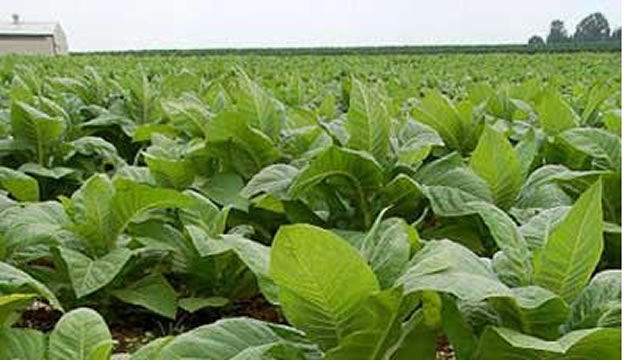
 Midlands Bureau
Cotton farmers who turned to tobacco farming following the tumbling of cotton prices on the world market are facing a number of challenges, the main one being lack of knowledge to cultivate the new crop, an agricultural expert has said. Mr Peter Chamisa, Provincial Agricultural Extension (Agritex) Officer for Midlands, said in a wide ranging interview that the challenges faced by the new tobacco farmers in Midlands were mainly expected since the crop was largely new to most farmers.
“Our farmers, especially communal farmers, who were into cotton farming, were affected by low cotton prices. This forced most of them to divert to tobacco. Tobacco is a new crop in the province and farmers require a lot of resources to grow it. Few farmers used to grow the crop but now it is being done extensively.
The biggest challenge facing farmers is that of knowledge. As a new crop, we have not been incorporating it in our field days and meetings’ agenda because there was no demand for knowledge,” he said.
Mr Chamisa said in the past, tobacco farming was limited to commercial farming areas around Mvuma and a few isolated farms in Gweru and Kwekwe.
He said the crop was now being grown at an extensive scale as tobacco farming was spreading all over the province.
“A mixture of farmers across all sectors that is A1, A2, communal farmers and commercial farmers in the Midlands province are now growing the crop.
The high number of communal farmers that are now growing tobacco is attributed to the low prices that the cotton crop is fetching on the market,” he said.
Mr Chamisa said Agritex was conducting extensive in-house training programmes for field extension workers and farmers.
He said the department was also working in conjunction with other key stakeholders in tobacco farming like Tobacco Research Board (TRB) to enhance its field workers’ knowledge in cultivating the crop.
“We are conducting most of our tobacco farming training programmes in conjunction with the Tobacco Research Board. They (TRB) have been very supportive and helpful in our programmes as they host people at their research centre and provide resource persons during training. The TRB also help in tobacco seedling production,” he said.
Mr Chamisa urged farmers to first consult their local Agritext officer for advice before venturing into tobacco farming.
“This is necessary because tobacco farming has a number of processes involved like registration. You have to be a registered grower for you to sell your crop. Tobacco auction floors only buy from registered farmers.
The other challenge is that of unsuitable soils. This is one of the challenges facing farmers in cotton growing areas like Gokwe South and North. Some of these areas have unsuitable soils. Tobacco is quite a demanding crop in terms of knowledge. It is a specialised crop, hence the need to consult broadly,” he said.
Meanwhile, Mr Chamisa has urged farmers to intensify their preparations for the summer crop season by starting to work on land preparation and buying seed and other farming inputs.
He called on private players to come on board and help farmers till their plots as the District Development Fund which traditionally conducts the tillage programme could only meet 10 percent of the demand.
“Farmers who can afford buying tractors for land preparation should do so. There are lots of opportunities in land tillage as the DDF can only meet 10 percent of the demand. This means 90 percent of the tillage should be done by either the farmers themselves or private players,” said Mr Chamisa.
The Midlands Agritex Officer said preparations for the farming season should be an ongoing process since farming was a cycle.
He said farmers should practise conservation agriculture as mitigation against the effects of climate change.
“Farming is more of a cycle. It has no break. Farmers should know what they want to grow in advance. This helps them budget for the inputs for the coming season. We also urge farmers to practise conservation agriculture in the wake of climate change. Research across the province has proved that in areas where conservation agriculture has been practised, farmers realised better yields compared to those still using conventional methods.
Farmers should also practise crop rotation to enhance productivity on their farms,” said Mr Chamisa.
He said field extension officers have been meeting farmers across the province at agricultural shows and field days, encouraging them to form buying clubs to help them purchase inputs.
“We always encourage farmers at our meetings to be prepared well ahead of the rainy season. This is why we urge them to form buying clubs to help them buy inputs like seed, fertiliser and all the required inputs,” he said.


 Online Reporter
 derick.khumalo