Moffat Mungazi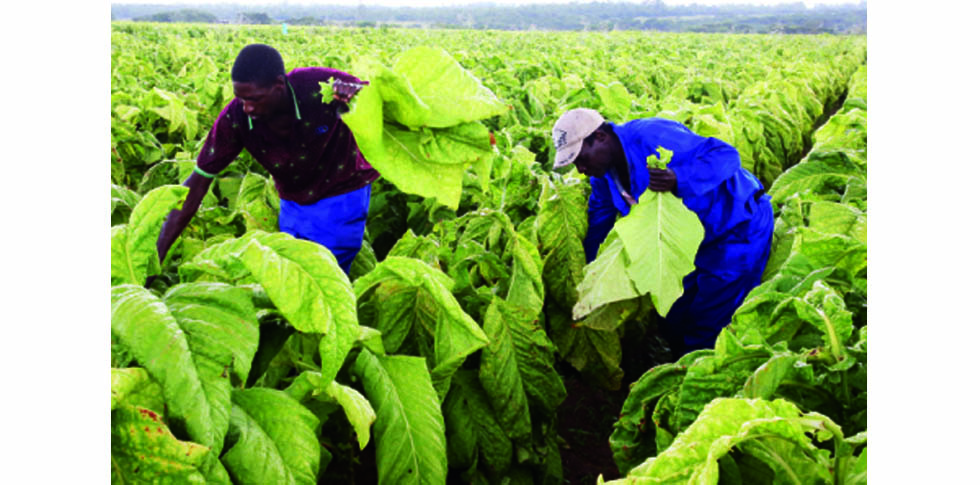
Lovemore Kadzura
Post Reporter
IN Zimbabwe, tobacco farming has become a significant contributor to the economy, with the sector being the backbone of agricultural activity.
However, the environmental costs of this lucrative industry are increasingly becoming apparent.
One of the most pressing environmental issues associated with tobacco farming in the country is deforestation.
Tobacco curing, which requires large amounts of firewood, has led to widespread deforestation, with many farmers resorting to cutting down indigenous trees to fuel their curing barns.
This is, not only contributing to climate change, but also destroys habitats for wildlife and increase soil erosion.
Tobacco farmers, often smallholder farmers, rely on wood fuel to dry their tobacco leaves.
This has led to widespread tree cutting, with many forests being cleared to meet the demand for firewood.
The consequences of deforestation are far reaching – as the loss of forests has led to soil erosion, decreased biodiversity and increased greenhouse emissions.
Government has implemented initiatives to promote sustainable tobacco practices, including reforestation programmes, and the use of alternative energy sources.
However, more still needs to be done to address the root causes of deforestation and ensure that tobacco farming is done in a sustainable and environmentally friendly manner.
While the tobacco industry continues to thrive, it is essential to consider the long term consequences of its practices.
The fate of the country’s forests in tobacco producing areas hangs in the balance, and it is up to policymakers, farmers, contracting companies and traditional leaders to work together to find a lasting solution that balances economic needs with environmental sustainability.
Forestry Commission of Zimbabwe spokesperson, Mrs Violet Makoto said they have come up with new initiatives to help farmers use energy efficient curing systems.
They have also made arrests on individuals, including tobacco farmers, for violating the country’s forest preservation laws.
“We do not have selective laws that target tobacco farmers, but they are all-encompassing. The laws cover forest products regardless of purpose. People have been arrested for wrongful possession of forest products. We have the Tobacco Wood Energy Programme that we are rolling out where we are encouraging people to grow fast growing trees. Many farmers have benefited from that programme. They are being encouraged to grow gum trees for tobacco curing.
“We are also working with institutions like Kutsaga to also monitor how they are trying to improve the technology on tobacco curing because they are specialists in that area. We take particular interest in energies that are more efficient because in the long term this will help us on deforestation that is directly linked to tobacco curing.
“As for other technologies, we look to other institutions, particularly in the Ministry of Lands, Agriculture, Water, Fisheries and Rural Development, for them to also come up with interventions that help us in minimising the environmental damage caused by tobacco curing.
“We are establishing central nurseries and issuing out gum trees to farmers. We are using resources that we are getting from the Afforestation Levy to develop the seedlings base that we are giving to farmers. In four to five years, a farmer will be able to harvest the gum tress for curing tobacco,” said Mrs Makoto.
National tree ambassador and environmental activist, Mr Never Bonde said there is need for stricter measures to monitor farmers and contractors’ activities.
Mr Bonde said tobacco should not end up as a ‘curse’ due to laxity in the implementation of regulations on natural resources.
“Tobacco contracting companies are indeed supplying farmers with tree nurseries, but unfortunately the trees are not being taken care of. There is need for tight monitoring on the part of authorities to ensure that trees are grown. Usually farmers receive nurseries during auction time, and this is proving not to be effective, and the trees should be delivered directly at the farming plots.
“Small-scale farmers must be pushed to adopt coal for curing their tobacco. Contracting companies who are not supplying farmers with gum trees for curing must be fined heavily or suspended. They are also culprits in this challenge.
“The gumtrees being given to farmers are also not good for the environment. There is need to find other alternatives, both exotic and indigenous trees. It is everyone’s responsibility to safeguard our natural resources before they become extinct. The issue has been topical for too long, and a solution has to be found,” said Mr Bonde.
Tobacco Industry and Marketing Board spokesperson, Mrs Chelesani Moyo-Tsarwe said they have, in conjunction with the Sustainable Afforestation, planted 150 hectares of gum trees in each tobacco growing province.



 Online Reporter