Vusumuzi Dube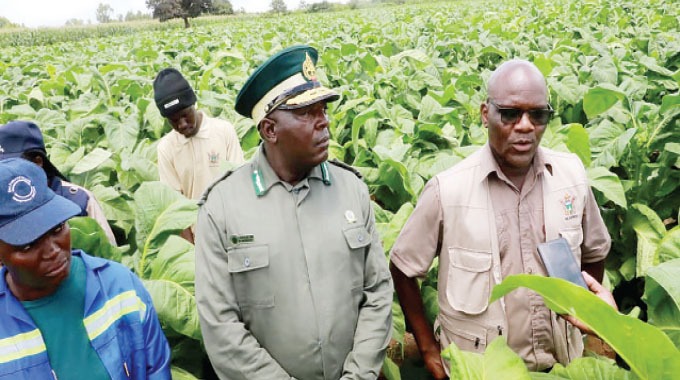
Raymond Jaravaza, [email protected]
A TOBACCO revolution is taking shape at Khami Prison Farm on the outskirts of Bulawayo, where a thriving five-hectare crop is ready for harvest, placing the institution on firm ground to tap into Zimbabwe’s lucrative cash crop industry.
The project, a first for Zimbabwe Prisons and Correctional Services (ZPCS) in Matabeleland, is expected to yield an impressive 3 000 kilogrammes of tobacco per hectare — a remarkable figure considering that some farmers in drought years harvest less than 1 000 kilogrammes per hectare.
Inmates participating in the venture are receiving hands-on training from ATLAS AGRI, led by tobacco expert Mr Rodrick Musiiwa, who described the Khami crop as “one of the best golden leaves” he has seen in the region.
“Our aim is to gradually expand to 50 hectares, depending on land availability. The skills gained here will help inmates become active contributors to the economy once released,” said Mr Musiiwa.
The tobacco initiative reflects the commercial farming revolution that began in 2023 in Mangwe District, where a handful of villagers switched from small grains and maize to tobacco. The project now involves over 300 communal farmers in Matabeleland South.
Tobacco is predominantly grown in Mashonaland provinces with a few farmers involved in the Midlands province and not so common in the entire Matabeleland region, which majors in cattle ranching.
When tobacco growing was introduced to Marula villagers in 2023/24, only 17 communal farmers heeded the call to switch from traditional small grains and maize to commercial tobacco farming.
The project has, however, grown to include over 300 communal farmers in Mangwe and Bulilima districts.
Inmates who are part of the project will also reap the benefits of the tobacco farming venture.
Government support has been critical in promoting tobacco expansion in Matabeleland, traditionally a cattle-rearing region.
Through the Ministry of Lands, Agriculture, Fisheries, Water and Rural Development, authorities have provided training, inputs, and technical support to encourage smallholder and institutional farmers to diversify into commercial tobacco farming.
This intervention is aimed at boosting agricultural productivity, creating employment, and enhancing national revenue while opening new opportunities for rural economic empowerment.
ZPCS Officer Commanding Bulawayo Metropolitan Province, Commissioner Mkhulunyelwa Ngwenya, said the initiative forms part of a broader rehabilitation programme.
“The inmates that we call trainee farmers who are part of the project will be paid and that money will be sent to their families to assist with their upkeep. The tobacco project is part of our broader rehabilitation programme that aims to empower inmates with skills that will assist them to be active participants in our economy when they are released,” he said.
“From this project, the prison will generate money that will be sent to the national fiscus to assist in the development of the country for the attainment of Vision 2030, as led by President Mnangagwa.”
Comm Ngwenya said together with their partners ATLAS AGRI, they want to expand the project and utilise more land.
“This will mean that more trainee farmers who are the inmates will be attached to be part of the tobacco farming project. Like I said the trainee farmers have contracts with ZPCS and they will be paid after the crop has been harvested,” he said.
Agricultural and Rural Development Advisory Services’ director for Matabeleland North Province Mr Mkhunjulelwa Ndlovu hailed the project as a game-changer for rehabilitation and skills development.
“Agriculture has always been the backbone of Zimbabwe’s economy and it is encouraging to see our correctional services embracing this vital sector. The skills and knowledge gained here will undoubtedly have a positive impact on rehabilitation and reintegration of inmates when they are released from prison,” he said.
“Tobacco is a big deal in Zimbabwe, and leveraging it as a commercial crop in ZPCS Farms is a game-changer. This project will create employment for inmates, generate revenue for the economy and increase financial independence for ZPCS.”
Mr Ndlovu said the Ministry of Lands, Agriculture, Fisheries, Water and Rural Development remains a key enabler in the success and sustainability of such projects.
“To our partners who are helping reintroduce tobacco in the region, our message is that there is a need to collaborate and engage all key players in the sector for the continued growth of tobacco farming,” he said.
Inmate Cleopas Manhiri (33), due for release in 2028, said he intends to continue learning tobacco farming to build a career post-release.
“I want to continue being part of the trainee farmers until I’m released in 2028 so that I can learn as much as I can about tobacco farming. This is a crop that anyone who is interested in growing can try on their piece of land,” he said.
“I have been given an opportunity to learn to grow a crop that can change my life when I’m released from prison and I’m not letting that opportunity go to waste.”
The trainee farmers are provided with personal protective clothing such as face masks, gloves and overalls so that they can work in a safe environment.


 Online Reporter