Chronicle Editor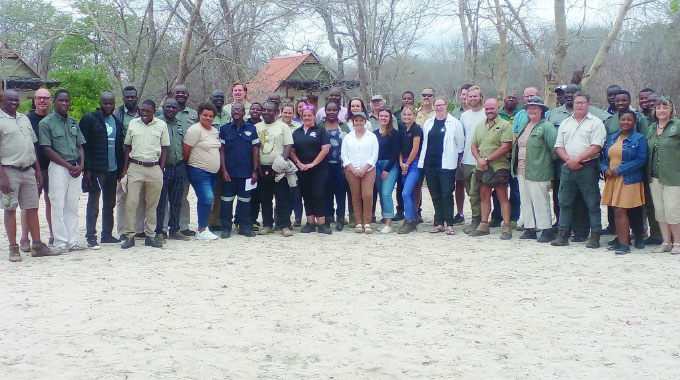
Fairness Moyana in Hwange
TOURISM stakeholders in Hwange have launched a co-ordinated effort to address wildlife conservation and environmental management challenges, aiming to position the region as a premier tourist destination.
During a meeting held at Gwango Cultural Resort in Mabale, the Association for Tourism Hwange (ATH) chairperson, Mrs Elisabeth Valerio, said it is critical to take collective action in tackling pressing issues impacting both tourism and conservation in the area.
She said the meeting was a platform for tourism players to assess the current state of Hwange from a tourism and conservation perspective while charting a way forward.
“One of the key themes of the meeting was environmental management, particularly waste management, which is increasingly becoming both an environmental and health issue,” said Mrs Valerio.

“This meeting was drawing tourism players from Hwange and there were specific issues we wanted to talk about in terms of trying to understand the current state of Hwange from a tourism and conservation perspective while looking towards the future on what we can do as tourism stakeholders.”
To address these concerns, stakeholders formed a sub-committee dedicated to environmental issues, including waste disposal and management of the dumpsite in Dete.
“We are seeing a lot of waste generated by lodges, and we need a responsible approach to disposal. The current state of the dumping site is worrying, especially with children scavenging for items, which poses health and safety risks. The sub-committee will work with the community and Hwange District Council to find sustainable solutions,” said Mrs Valerio.
One proposed initiative is establishing community projects, such as piggeries, that could utilise wet waste, including food scraps from lodges.
“We are exploring ways to turn waste into resources. By supporting community-led piggeries, lodge waste can be repurposed as pig feed, creating a circular economy.
“Additionally, we will engage the council to improve waste management services, as the current method of burning waste has environmental implications, including air pollution,” said Mrs Valerio.
A major highlight of the meeting was a presentation by Professor Andrew Loveridge, a wildlife scientist from Oxford University’s Wildlife Conservation Unit. He outlined the threats faced by lion populations in Hwange and the broader region, linking them to global trends in poaching.
Prof Loveridge shared insights on the impact of poaching, noting how the near-extinction of tigers in India has inadvertently increased pressure on African lion populations.
He said with tigers no longer an option for poachers, lions are now at greater risk, requiring intensified protection measures.
Stakeholders also raised alarm over recent poaching incidents in Hwange National Park, where seven giraffes were killed in September, followed by the poaching of four lions whose heads and paws were hacked off. These incidents undermine ongoing efforts to translocate giraffes into the park and preserve the region’s biodiversity.
Illegal activities such as charcoal production were also discussed, with stakeholders urging authorities to clamp down on the practice due to its role in environmental degradation.
“There’s an urgent need for co-ordinated anti-poaching exercises and environmental protection awareness campaigns.
Education will play a vital role in involving local communities and fostering a sense of stewardship for the environment,” said Mrs Valerio.
The meeting underscored the importance of a unified approach among tourism players, conservationists, and local authorities to address these challenges.



 Online Reporter