Chronicle Editor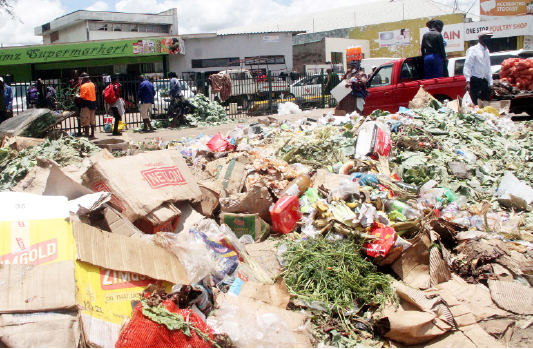
Matthew Mare, Correspondent
COMMUNITIES are neglecting their duties and responsibilities towards pandemic response. There is over reliance on the Government and donors by communities even on minor aspects they have the capacity to do on their own. It is the duty of communities to practice basic good hygiene, like washing hands regularly, notifying community health practitioners upon noticing cholera and typhoid-related signs and symptoms, provision of oral treatment such as sugar and salt solution, not to transport any person showing signs and symptoms of cholera, not to gather or cook food when attending a funeral of a person who has died from cholera among other measures.
Cholera and typhoid are not new diseases unlike Covid-19 was to humanity. By now, communities should have full knowledge on the first line of defence to cholera and typhoid. Citizens must be responsible and demonstrate maturity.
The Ministry of Health and Child Care recently highlighted that 50 percent of the boreholes in Harare are contaminated with sewer and human waste. The presence of E. coli in water being consumed by residents demonstrates that councils let residents drill boreholes without the necessary approvals thereby increasing the risk of contracting typhoid and cholera.
The most affected areas are Highfield, Glen Norah, Mbare, Dzivarasekwa, Budiriro, Kuwadzana, Kambuzuma, Mabvuku, Tafara and Hatcliffs among others where illegal settlements are prevalent and council by-laws are not being adhered to.
These are human errors that trigger cholera and at the end the Government is sometimes blamed. The council by-laws are very clear and highlight that certain procedures including testing contamination of water is done before a borehole is drilled and water is consumed as safe and clean water.
In Budiriro, some people have settled themselves in swampy areas and council waits for them to build illegal structures before demolishing them years later.
Councils are to blame for some of the urban challenges residents face. The responsibility is with the council to routinely conduct water quality checks to ensure citizens are drinking safe and clean water.
There is also a need for significant behaviour change if collective social responsibility is to be achieved. There is a lot of human error when it comes to responding to pandemics in Zimbabwe. Efforts should be made by communities to put together resources in order to be the first line of response.
Community leaders, traditional leaders and all like-minded citizens should engage collectively to respond to cholera.
If communities are well organised, they can contribute meaningfully towards development and other human insecurities such as cholera and typhoid.
Communities must help the Government in policing each other so that litter is not thrown everywhere. It is the duty of local authorities to collect garbage but a responsible community would not throw litter everywhere.
Each party must play its role responsibly.
The national clean-up campaign must be made law while environmental laws need to be reviewed towards behaviour change.
Communities play a key role towards the change they aspire to see even at global level.
The 21st agenda, “Let the communities lead”, explains why countries are devolving to ensure that there is meaningful involvement of communities.
President Mnangagwa says, “Nyika inovakwa nevene vayo/Ilizwe lakhiwa ngabanikazi balo”, because communities are now more involved than ever before.
There is a need for a collective social approach to complement Government efforts. The social collective response is the important layer and first line of defence in disaster and pandemic response.
Cholera and typhoid should have been a thing of the past but councils continue to fail to deliver social services and enforce by-laws that help to keep the environment clean.
It is the duty of councils to keep the environment clean.



 Online Reporter