


 admin
admin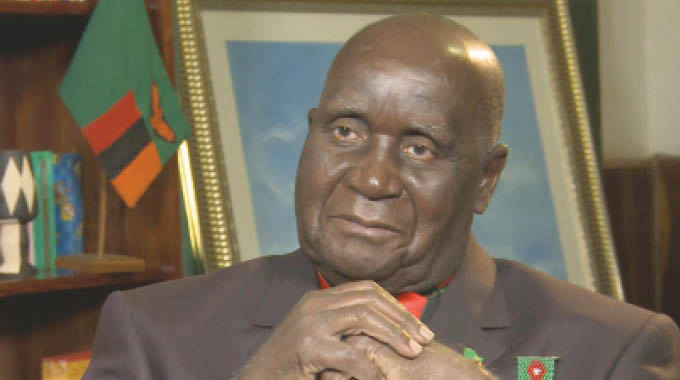
Cetshwayo Mabhena
PART of the huge struggle that peoples of the Global South, especially Africans, must fight is the struggle to recover what they have lost in the present world.
The African in particular is the true robbed, dispossessed, displaced and under-developed child of the universe. One of the capital human assets that the African has been orphaned of is confidence in himself as a human being, a thinker and producer of knowledge, science and wisdom. The Euro-American Empire and the world system that it created produced a regime of power in the world that reduced the black African to a passive consumer of other peoples’ knowledges, sciences and wisdoms.
The black African, as a result lost confidence and power in himself and herself as a producer of things modern, things beautiful and things powerful in the form ideas and artefacts. The very first weapon of the black African in this struggle to recover lost humanity and lost confidence under the sun is to establish and know the fact that the black African is the deprived and underdeveloped child of nature and the universe.
That Africans are poor, undeveloped and sick, and they require charity and philanthropy of others in order to live and progress is only propaganda that conceals that they have been impoverished, underdeveloped (said Walter Rodney) and sickened by a capitalist world economy that is structured and systematised by the Euro-American Empire.
When the philosophers of Africa say “African know thy self” they mean exactly that the African and the black persons must know what happened to them, why they are where they are in the world; and why things are what they are under the sun.
The white African must also take his place and her position not as an ally but as a compatriot in restoring to Africa and all Africans things lost. Solidarity and empathy are not enough, what is required is presence and belonging in the struggle for Africa and for humanity.
The Battle for African Properties and Assets
First is the land in Africa. Second is mineral and other natural resources that through slavery, colonialism and neo-colonialism have been siphoned from Africa to the Euro-American world and lately parts of Asia and the East at large. Third is the large scale cultural and spiritual Westernisation, through colonisation, of every part of Africa and Africans themselves.
What is called Western imperialism in Africa is that expansionism of Europe and North America that has sought to turn the African continent into a shadow and indeed and imitation of the West. People, decoloniality says, can modernise and civilise themselves without being colonised or enslaved as a precondition. Oppression and domination is a crime and not the natural price that a people must suffer and pay in order to progress.
In my view, and in the view of legion other decolonial philosophers is that the freedom to know and understand the world, what Sabelo Ndlovu-Gatsheni has called “epistemic freedom” is our first weapon. First weapon because fundamentally we cannot decolonise a world that we do not know and cannot understand.
So, for researchers, lecturers, journalists and other knowledge labourers to sit in a closet and read; and to think, is to fight. To write, lecture, teach and disseminate decolonial and liberatory sentiments and ideas is to engage in combat. Yes, the right and the power of the African to reason is a human right and one of the properties and assets that Africans and blacks at large must recover from where they are hidden.
The land, mineral and other natural resources and artefacts will continue to mean nothing to the African and the black if we do not reclaim and own our humanity and power to think and know. Africans that do not think, and that do not know, will have no good use for natural resources, the land and other ancestral and natural assets of the continent.
For an African in the academy, the polity and the economy of the continent and its countries to participate in not thinking and to practice ignorance and foolishness is to conspire with and sell out to the colonialists and imperialists. When Africans decay their economies through corruption, rot their polities through tyranny and kill the academy through pretending, laziness and plagiarism, Empire laughs because Empire loves it so.
Empire laughs when on the world stage we parade foolery, tyranny and lack of wisdom. It is a boring cliché to say but I will still say it; in actuality the democracy that Empire boasts of owning and of teaching to Africa are values of Ubuntu that Empire learnt first and foremost in Africa. To allow Empire to pretend to be the inventor of democracy is to betray Africa and to practice the satanism of sinking our own continent in the name of cheap partisan and personal power.
The Future is the past in the Humanities of Africa
When Karl Marx read Plato’s The Republic, a classic of political philosophy, he shook his head and pulled his beard, and remarked that Plato was drunk with ideas that he learnt in Africa, Egypt in particular. Marx was critically thrilled by Plato’s novelty of thought. It is a historical fact that Plato was a diligent student of Egyptian philosophers in 390 BC. Martin Bernal, in the classic, Black Athena, has proven beyond doubt that classical ancient Greece which is the cradle of Western philosophy and science was formed by Africans and Asians.
Cheik Anta Diop, Valentin Mudimbe and other African scholars have worked overtime to prove, and have proven the African origins of civilisation. Africans only need to go to the past of Africa to recover pride and dignity in order to approach the future with some power. Great inventors and philosophers lie buried in the psyche of young Africans, its only our borrowed education systems that do not allow them to resurrect and see the light again.
Recovering the lost Causes and Lost Persons
When one talks about liberation and revolution itself in Africa people generally become bored and tired, and want another subject to be brought up. Why? Because those that have previously spoken of liberation and revolution in Africa have messed up. They have proven that liberation and revolution are false or what Edward Said called “lost causes” that must be recovered, all the same. It is the job of the youth in Africa to bring back into intellectual and political fashion such grand ideals as revolution and liberation. Young scholars, journalists and activists should be invested once more in liberation, take the tiredness and the treachery out of the ideas and give them new blood and new oxygen. Recovering and restoring the critical humanities is one way decolonial young people of the Global South can recover the lost causes of our province of the world. Slogans and catch-phrases of the past, catch-phrases and buzzwords of yesteryear must be found a resting place, museums and cemeteries, where they can rest in peace. Not all is lost yet in the struggle for establishing the Global South, Africa in particular, as a producer and not a consumer of things of the world. The youths of Latin America have severally done it, and they are continuing to do it.
In Africa we are not bereft of starting points and role models. Among many of our great political leaders and heroes is Kenneth Kaunda of Zambia. He, at great risk opened Zambia for military bases of many African liberation movements. Some of the countries have not thanked Zambia for the kindness as yet. Kaunda preached political and intellectual humanism where the shedding of blood for power was not permissible. He asked African leaders to lead in such a way that they don’t have to fear their own people, or fear the loss of political power. For that, Empire punished Kaunda and the Zambian polity and economy. When he lost power Kaunda gracefully conceded defeat. As I write, Kaunda still walks the streets of Zambia and plays with children on the backs of their mothers in the market place; they call him KK. He did not perform miracles; he just did his best under difficult circumstances created by Empire. Kaunda fell and still falls where his pieces can be picked up as the Nigerians say.
– Cetshwayo Zindabazezwe Mabhena writes from Manda Hill, Lusaka, in Zambia: [email protected]


 Online Reporter