Online Reporter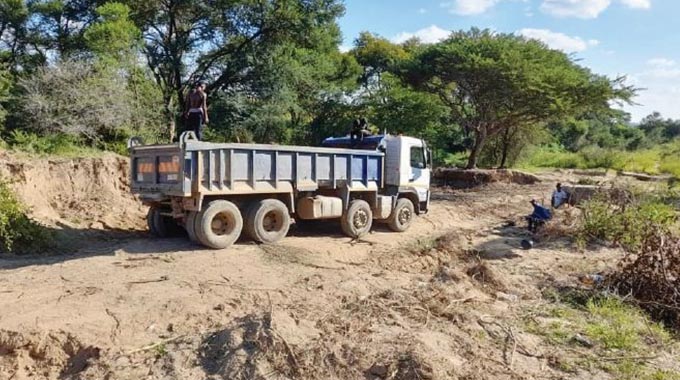
Patrick Chitumba, Midlands Bureau
FOR Gogo Emmaculate Njanji (89), the Mutebekwi River in Shurugwi District, Midlands Province, was more than just a water source — it was a lifeline.
She and several other villagers used to bathe and wash in its waters, but those days are long gone, as they now depend on boreholes.
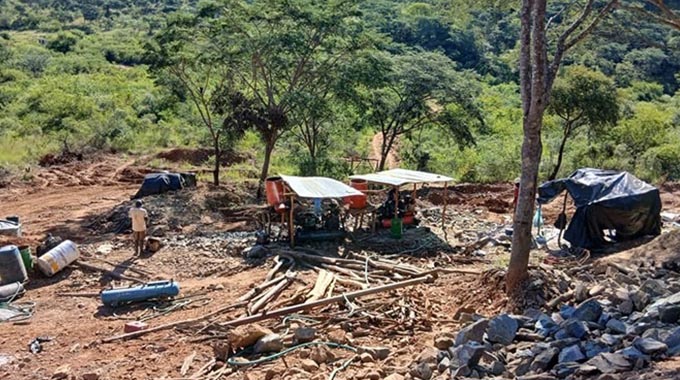
Parts of the river are contaminated by mercury and waste from the menace of illegal gold mining, which has been taking place unabated for years.
“Something must be done to rehabilitate the river,” she says, her voice betraying her frustration.
Gogo Njanji’s story is just one of thousands in the Midlands Province, where rivers and wetlands are being ravaged by illegal mining activities.
The environmental toll in the Midlands Province is staggering, over 100 kilometres of degraded riverine ecosystems and about 1 000 hectares of destroyed land.
Mutebekwi River’s fate is a stark reminder of the devastating impact of illegal mining on Zimbabwe’s environment and its people.
The challenge in the Midlands is mainly caused by small-scale gold miners who carry out panning activities along rivers such as Mutebekwi and Mutebekwana in Shurugwi and Dove River in Mberengwa District, among other water sources.
The Environmental Management Agency (EMA) is trying to crack down on offenders.
Recent inspections in the Midlands Province yielded 168 tickets for environmental offences, including non-compliance with Environmental Impact Assessment regulations.
“Compliance with environmental regulations is not optional,” warned EMA Midlands Provincial spokesperson Mr Osward Ndlovu.
“It is essential for safeguarding ecosystems, protecting communities and ensuring the long-term viability of the mining sector.”
But will it be enough? The agency’s efforts are a step in the right direction, but the destruction continues.
As Gogo Njanji looks out at the polluted river, she is left wondering if anyone will stop the devastation before it is too late.
“We have tried but in vain to fight these miners who have no regard for what the future holds in terms of the riverine environment and the effects of these chemicals on the water and land. All they want is proceeds to buy vehicles and other things,” she said.
The community that once relied on the river for survival is now grappling with the consequences of its destruction.
Irrigation schemes lie in ruins, and aquatic life is vanishing.
The devastation is not limited to rivers in the Midlands Province, across Zimbabwe, wetlands are being ravaged and ecosystems torn apart.
In Mashonaland Central Province, Mazowe Dam has also been affected by mining activities, with the watercourse having been diverted and as a result, the dam is empty at a time when other dams are spilling.
The Government is now leading efforts to rehabilitate Mazowe Dam, with the Ministry of Mines and Mining Development having banned alluvial gold mining although the damage continues with the disposal of mercury by mining companies into rivers to the detriment of the environment, humans and animals.
Vehicles also plunge into abandoned mining pits and cattle drink mercury-laced water, leading to poisoning and death.
Recently two young artisanal miners drowned after a vehicle they were travelling in plunged into a water-filled mining pit at Bonsor Mine along Coronation Mine Road in Shurugwi.
The deceased were identified as Joshua Muredzi and Thomas Nenge.
They were travelling in an Isuzu double cab with four other passengers when the vehicle reportedly skidded on a slippery road and plunged into the open pit at a mine owned by a Chinese national.
Shurugwi District Development Co-ordinator Mr Romeo Shangwa confirmed the incident, describing it as a devastating loss to the district.
“As Shurugwi District, we are mourning the loss of two young and promising men who had gone to mine at Bonsor. The vehicle they were travelling in slipped and fell into a very deep, water-filled mining pit,” said Mr Shangwa.
While EMA is struggling to keep up with the problem, recent inspections in the Midlands Province have yielded some results.
EMA inspectors visited 229 mining and industrial sites, assessing compliance with environmental laws and regulations.
The inspections resulted in the issuance of 168 tickets for various environmental offences, including 69 for non-compliance with EIA regulations.
The most common violations were operators undertaking mining activities without Environmental and Social Impact Assessment certificates or with expired certificates, storing and using mining chemicals without licences and violating Solid Waste Management regulations.
EMA served 14 Environmental Protection Orders to offenders, requiring them to halt harmful practices and implement remediation measures.
Mr Ndlovu reiterated that compliance with environmental regulations is not optional but essential for safeguarding ecosystems, protecting communities and ensuring the long-term viability of the mining sector.
EMA’s efforts are a step in the right direction, but the problem runs deep.
Mr Ndlovu explained that EMA is a statutory body responsible for ensuring the sustainable utilisation of natural resources and the protection of the environment, as well as developing plans to prevent pollution and environmental degradation.
“The Agency derives its authority from the Environmental Management Act Chapter 20:27 and section 73 of the Constitution of Zimbabwe, which guarantees every citizen the right to an environment that is not harmful to their health and well-being,” he said.
Mr Ndlovu said EMA recently conducted an extensive inspection and audit exercise in the mining and industrial sectors in Midlands Province between 26 January and 5 February 2026.
He said the blitz covered key mining districts including Kwekwe, Chirumanzu, Gweru, Shurugwi, Mberengwa, and Zvishavane, where EMA inspectors visited 229 mining and industrial sites to assess compliance with environmental laws and regulations under the thematic areas of Environmental and Social Impact Assessments, ecosystems protection, hazardous substances, hazardous waste, air pollution, solid waste and effluent management.
“The most common violations were related to Environmental Impact Assessment (EIA) regulations, accounting for 69 tickets, indicating that a number of operators were undertaking mining activities without Environmental and Social Impact Assessment certificates, while others had expired certificates in breach of Section 97 of the Environmental Management Act Chapter 20:27,” he said.
Added Mr Ndlovu: “In addition, 37 tickets were issued to miners found storing and using mining chemicals without the required hazardous substances storage and use licences.”
He said transporters were also penalised for transporting coal and fuel without hazardous substances transportation licences, in breach of Section 10 of Statutory Instrument 268 of 2018.
“In addition, 50 tickets were issued for violating Solid Waste Management regulations, largely linked to improper disposal of waste in business centres and failure to put in place litter receptacles in shops, in contravention of Section 83 of the Environmental Management Act Chapter 20:27,” he said.
Mr Ndlovu said limestone mining operations were being conducted without an Environmental and Social Impact Assessment certificate in Gweru District.
EMA reported that the highest number of environmental offences were recorded in Kwekwe, followed by Gweru, Zvishavane, Shurugwi, Mberengwa and Chirumanzu districts, reflecting the intensity of mining activities in these areas and the need for strengthened compliance measures.
“To compel corrective action, EMA served 14 Environmental Protection Orders to offenders in terms of Section 37(4) of the Environmental Management Act. The orders require responsible parties to immediately halt harmful practices and implement remediation measures within specified timeframes,” he said.
Mr Ndlovu reiterated that the blitz forms part of its ongoing mandate to promote environmentally sustainable mining practices and protect natural resources from degradation.
“Compliance with environmental regulations is not optional. It is essential for safeguarding ecosystems, protecting communities and ensuring the long-term viability of the mining sector,” he noted, while urging all mining operators to regularise their operations, obtain necessary licences and implement proper waste and chemical management systems, as well as integrate environmental safeguards in their operations.
Mr Ndlovu said similar inspections will continue as part of broader efforts to strengthen environmental governance and accountability in Zimbabwe’s extractive industries.
Minister of State for Midlands Provincial Affairs and Devolution Owen Ncube said the environment should be protected for the benefit of future generations, in line with Vision 2030.
He said while mining accounts for a significant portion of the country’s gross domestic product, artisanal miners and companies should ensure they rehabilitate the environment and plant trees to replace those destroyed during mining operations.
“It is of utmost importance that mining companies close the pits they have explored — whether gold, chrome, or other minerals. You cannot leave open pits, which are a danger to ecosystems and local communities,” he said.