Online Reporter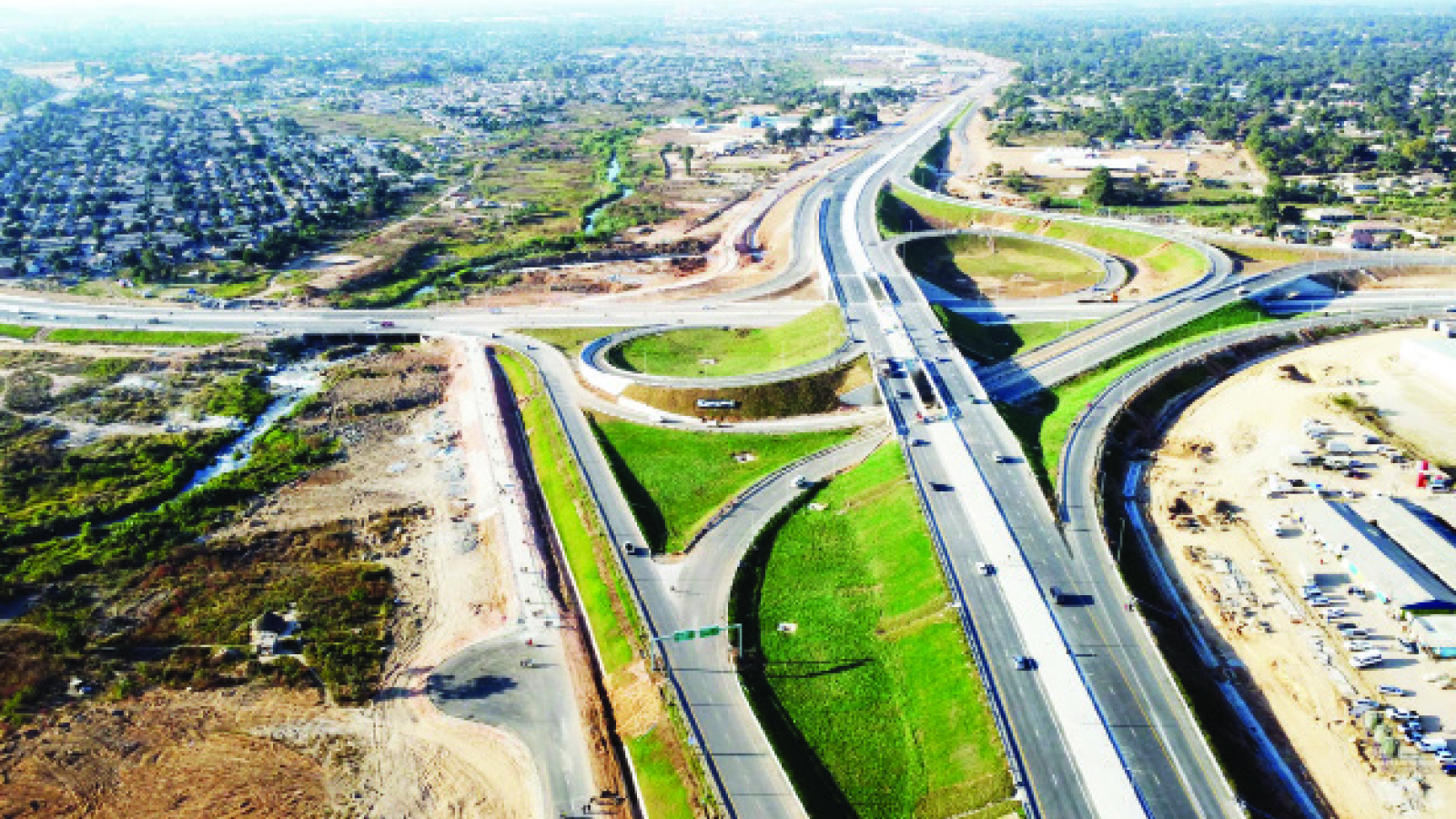
Nyore Madzianike-Senior Reporter
The completion of the state-of-the-art Trabablas Traffic Interchange, a landmark infrastructure project that underscores the Second Republic’s unwavering commitment to modernise Harare and decongest routes within the metropolitan area, continues to prove its worth.
President Mnangagwa commissioned the flagship project in May this year.
Constructed at a cost of US$88 million, formerly known as the Mbudzi Roundabout, the signature project is already breathing new life into the capital’s transport, trade, and business sectors.
It was a notorious bottleneck synonymous with gridlocked traffic, delayed goods movement, and economic inefficiencies that stifled commerce along one of Zimbabwe’s busiest corridors.
Today, thanks to President Mnangagwa’s visionary leadership under the Second Republic, the area has been completely decongested and transformed into a modern transport hub, setting the pace for further infrastructure development across the country.
For years, the then Mbudzi intersection was a nightmare for motorists and commuters alike, particularly those navigating the Harare-Masvingo Highway—Zimbabwe’s busiest regional trade artery.
While the roundabout, one of the largest in the country, was functioning as designed and was a considerable improvement on traffic lights, the very dense traffic with three routes converging at a single intersection necessitated the multiple interchange.
Long-haul trucks would often spend hours navigating the crowded roundabout, leading to a loss of time and revenue for both local and regional businesses.
Now, the new interchange, complete with 13 bridges, slip lanes, and seamless connectivity, has drastically cut travel times and facilitated the smooth flow of goods and services.
Businesses along Simon Mazorodze Road and in surrounding areas have reported a marked increase in activity, while fuel costs and delivery schedules have improved notably for freight operators.
“Before, I would avoid this route altogether. Now I can pass through Mbudzi in under five minutes.
“This is progress we can see and feel,” said Baison Mutonhori, a truck driver with over two decades of experience.
Trabablas was part of the broader Harare-Masvingo highway rehabilitation, one of the flagship projects under President Mnangagwa’s Vision 2030, which seeks to transform Zimbabwe into an upper-middle-income economy.
The Government has stated that infrastructure development remains a key pillar in its development agenda, recognising that efficient transport systems are fundamental to national growth.
Since assuming office, President Mnangagwa has prioritised roads, bridges, dams, and urban renewal across provinces, with Harare receiving special attention as the capital and commercial nerve centre.
In his remarks during the commissioning of the project, President Mnangagwa stated that the growth of the economy and the increased performance of sectors exerted pressure on roads, resulting in congestion, accidents, and frustrating delays.
“In view of this, my Government developed a comprehensive, long-term strategy to transform our transport system to make it more efficient, sustainable, and people-centred. The implementation of this multi-pronged approach focuses on improving the current infrastructure, upgrading public transport, and ensuring behavioural change among road users and transport stakeholders.
“One project under this strategy was the construction of this state-of-the-art interchange.
“With its completion, we expect a transformation in the way we travel, a reduction in congestion, and improved connectivity, not only regarding local transport but also along the North-South Corridor.”
Another milestone will soon be achieved when the under-construction Mabvuku interchange, which is along the Harare-Mutare highway, is completed.
The Harare-Mutare Highway not only links the capital to Mutare and Mozambique but also services heavy commuter and commercial traffic from Mabvuku, Tafara, Ruwa, and surrounding suburbs into central Harare.
Known for massive congestion, slowing traffic flow, and fatal accidents, the interchange will alleviate these challenges, restoring lost production time when commuters were stuck in traffic jams.
Another three interchanges at Harare Drive/Mutare Road, Liberation Legacy Way/Harare Drive, and Liberation Legacy Way/Churchill Road are in the pipeline.