Peter Tanyanyiwa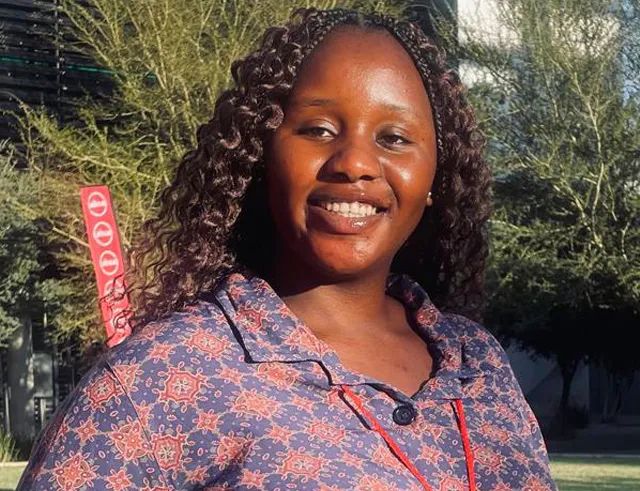
Peter Tanyanyiwa
Herald Correspondent
In an era where headlines often flicker and fade within hours, Zimbabwean-born journalist Tracy Tafirenyika is carving out a different legacy, one defined not by speed, but by persistence, courage and an unflinching commitment to the public interest.
Based in Namibia, Tafirenyika has steadily emerged as one of the region’s notable investigative voices, tackling stories that many would rather leave untouched. From exposing the exploitation of vulnerable students to interrogating the uneven benefits of Africa’s mineral wealth, her work reflects a deeper calling: to give voice to those often left unheard.
“Journalism, for me, is not about chasing noise,” she is quoted as saying. “It is about staying with a story until the truth becomes impossible to ignore.”
Her reporting has consistently navigated the delicate intersection of power and accountability, shining a light on issues that sit at the heart of Southern Africa’s socio-economic challenges. In one of her widely recognised investigations, she brought attention to the disturbing scale of online sexual exploitation affecting children in Namibia — a story that not only stirred public debate but also drew institutional attention.
That work earned her recognition at the One Economy Foundation Media Awards, where she placed second in the print category in 2025. Yet, for Tafirenyika, accolades are not the destination.
“Awards are encouraging, but they are not the mission,” she said in a recent interview. “The real reward is when a story forces change or even just starts a conversation that society has been avoiding.”
Her earlier recognition at the Editors’ Forum of Namibia journalism awards, where she was first runner-up in the mining and energy category, further cemented her reputation as a journalist willing to confront complex development questions. Her reporting from Uis, a town at the centre of Namibia’s lithium rush, captured the growing frustration of communities witnessing wealth pass them by.
“People see trucks every day, but they do not see jobs or opportunity,” she noted. “That gap between promise and reality is where journalism must step in.”
However, it is not just her storytelling that has drawn attention, it is also her resilience in the face of adversity. Earlier this year, Tafirenyika found herself at the centre of a storm following her report on a senior Namibian government official over unpaid utility debts. The story struck a nerve, triggering a wave of criticism and, more worryingly, personal attacks.
Rather than retreat, she has remained steadfast.
“There are moments when the cost feels very real,” she admitted. “But if journalists walk away from difficult stories because of pressure, then we surrender the very purpose of our profession.”
Media organisations across the region rallied in her support, condemning the attacks and reaffirming the importance of press freedom. For many observers, the episode served as a stark reminder of the risks faced by investigative journalists in Southern Africa.
Tafirenyika believes these challenges underscore a broader issue confronting the media landscape.
“Across SADC, newsrooms are under pressure financially, politically and digitally,” she said. “But that is precisely why investigative journalism must not disappear. It is the backbone of accountability.”
Her journey also carries a strong message for young Zimbabwean journalists aspiring to make their mark beyond the country’s borders.
“Where you come from should never limit the questions you are allowed to ask,” she said. “If anything, it should strengthen your resolve to seek truth wherever it may be.”
Colleagues describe her as meticulous, grounded and deeply committed to ethical reporting qualities that have enabled her to navigate sensitive topics with both rigour and empathy.
As Southern Africa continues to grapple with governance challenges, social inequalities and economic transitions, voices like Tafirenyika’s are becoming increasingly vital. Her work does more than inform; it challenges, provokes and, ultimately, empowers citizens to demand better.
In a profession often tested by shifting priorities and shrinking resources, Tafirenyika’s story is a reminder that journalism, at its best, remains a powerful instrument of change.
And as she continues to pursue the stories that matter, one thing is clear, her byline is not just a name on a page, but a symbol of the enduring fight for truth in the face of resistance.
“Truth does not always come easily,” she reflected. “But it is always worth pursuing.”


 Online Reporter