Online Reporter
Prosper Ndlovu, National Editor
THE deepening geopolitical tensions — from the United States-Iran conflict and the Israel-Palestine crisis to the Russia-Ukraine war — continue to disrupt global trade flows, drive up energy costs and pile pressure on businesses, economies and livelihoods.
Against this turbulent backdrop, the spotlight is increasingly turning to Africa’s ability to leverage the African Continental Free Trade Area (AfCFTA) and deepen intra-African trade as a strategic buffer against external shocks while unlocking greater value for ordinary citizens.

As one of Southern Africa’s fast-growing economies, Zimbabwe is positioning itself to capture a larger share of this emerging regional trade opportunity. Driven by accelerating technology adoption, domestic value addition and beneficiation, alongside rising private-sector investment supported by Government reforms and incentives, the country is seeking to strengthen its productive capacity, expand exports and maximise the benefits of AfCFTA for its economy and people.
To unpack these issues, Zimpapers National Editor, Prosper Ndlovu (PN) recently engaged in an in-depth conversation with youthful businessman Mr Jermaine James Chapfiwa (JC) Zimbabwe’s country representative and chairman of the International Trade Council Zimbabwe Chapter.
In the wide-ranging interview, Mr Chapfiwa shares his perspectives on Zimbabwe’s economic and trade prospects, the opportunities opening up for the country, and how his position and international network within the ITC can be leveraged to support Zimbabwe’s interests in collaboration with key business stakeholders.
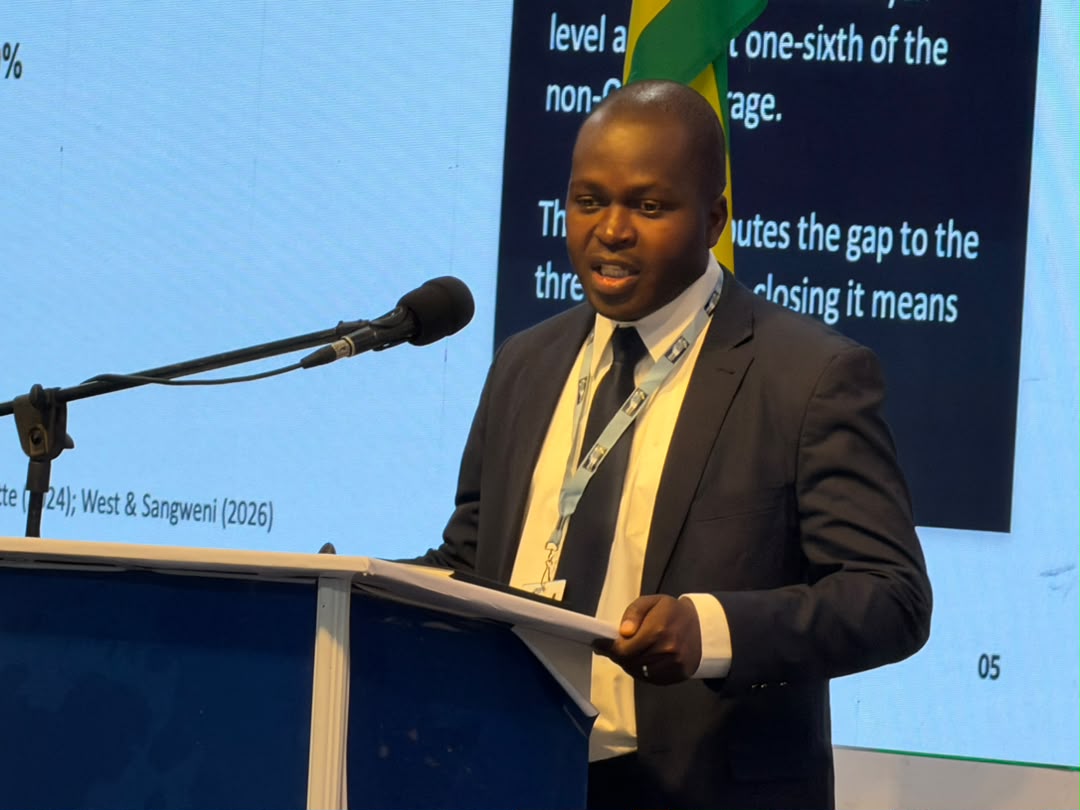
He also reflects on the positive signals emerging from the recent Ghana Investment and Trade Week 2026 (GITW 2026), which coincided with the official launch of the International Trade Council Africa Headquarters. At the event, Mr Chapfiwa presented Zimbabwe’s investment and trade opportunities, placing the country’s vast economic potential on the regional and international business agenda.

PN: Congratulations on your appointment as the International Trade Council’s Country Representative and Chairman for Zimbabwe. What does this appointment entail, and why is it significant for Zimbabwe at this stage of its economic development?
JC: The appointment took effect on 25 June 2026 under a Letter of Credential and Instrument of Appointment issued by the International Trade Council’s Board of Directors. Subject to the Council’s statutes, policies and written directives, it authorises me to represent the Council in formal institutional engagements and to cultivate constructive relations with public authorities, diplomatic missions, chambers, industry associations, economic-development bodies and legitimate private-sector stakeholders.
In practical terms, I regard it as both an honour and a working responsibility. My role is to serve as the Council’s principal point of co-ordination in Zimbabwe and to connect credible Zimbabwean enterprises, public institutions and investment opportunities with the Council’s African and global network.
The tools available include market intelligence, export and investor readiness, buyer and investor introductions, trade education, standards and certification support, international visibility, missions, roundtables and constructive feedback on barriers encountered by business.
PN: What is the scale of this ITC network? Can you give a practical perspective of how this is crucial for local companies and locate the Zimbabwe Investment and Development Agency (Zida) and ZimTrade relevance in it?
JC: The scale of that network is useful because it is institutional as well as commercial. The Council’s latest overview records representation across 176 countries, more than 28 000 corporate members, 418 chambers and industry associations, and 513 government economic-development, export and FDI agencies.
This creates access not only to companies, but also to organisations that understand how trade and investment systems work in their own markets. However, this role is intended to complement, not replace, Zimbabwe’s existing structures. Zida remains the country’s lead institution for investment promotion, facilitation, licensing and aftercare.
ZimTrade remains the national export-development and promotion agency. Ministries and regulators retain their policy, approval and compliance mandates, while chambers and sector associations represent the practical needs of business. My role is to help connect these institutions and the companies they support to additional international data, expertise, promotion channels and qualified counterparties.
I am, therefore, undertaking a formal institutional-engagement process to present the credential for the attention of the Presidency, introduce the Council to relevant ministries and seek guidance on appropriate liaison arrangements. This is a protocol and coordination exercise; it should not be interpreted as a request for Government to confer the appointment, as a claim of Government endorsement, or as the creation of a parallel public structure.
Any substantive collaboration must be agreed with the institution that holds the relevant mandate.
The appointment is significant because Zimbabwe has a strong resource base, skilled and entrepreneurial people, a strategic position in Southern Africa and new continental opportunities under AfCFTA. The opportunity is to add another layer of international reach to work already under way nationally, so that Zimbabwe presents a coordinated investment and export proposition rather than several disconnected messages.
PN: Zimbabwe is actively pursuing an export-led growth strategy under Vision 2030. How do you see your new role contributing to attracting foreign direct investment and creating new export opportunities for Zimbabwean businesses?
JC: The best model is a joint pipeline rather than a parallel one. On investment, Zida and the relevant ministries can identify and validate official opportunities, clarify the regulatory pathway and lead investor facilitation.
Working from that verified base, the Council can help translate suitable projects into concise opportunity profiles, targeted investor presentations, sector roundtables, digital and video showcases, investment-attraction missions and direct introductions through its international network.
Zida remains the authoritative national gateway; the Council adds reach, market feedback and connection. On exports, ZimTrade already performs the essential work of exporter development, market preparation and trade promotion.
The Council can add value to selected ZimTrade-supported or association-supported companies through granular trade intelligence, company and decision-maker contact data, customised trade leads, market entry research, international business councils, buyer introductions and global communication channels.
PN: What is your view and impression about the role of Government in this context, especially what it has done or is doing on the ease of doing business front?
JC: Government is putting sound, practical policies in place to improve the ease of doing business. These include S.I. 17 and S.I. 18 of 2026, which reduced a number of Zida general-investment and special-economic zone fees; the Model Fees By-laws under S.I. 41 of 2026, as amended by S.I. 89 of 2026, which rationalise specified local-authority charges; S.I. 76 of 2026, which extended the company re-registration transition period; and S.I. 27 of 2026, which revised tourism licensing fees.
Transport-related reforms under S.I. 6, S.I. 10 and S.I. 113 of 2026 have also reduced or removed selected fees, while S.I. 59 of 2026 consolidated a previously fragmented import-and-export licensing framework. S.I. 103 of 2026 revised broadcasting fees, and S.I. 111 of 2026 removed the short-lived telecommunications ownership cap introduced by S.I. 101 of 2026.
These are concrete regulatory signals, not merely statements of intent. For accuracy, the steel measure often referred to simply as “S.I. 46” is S.I. 46 of 2025. It placed specified iron and steel products under import-permit control and has since been repealed and consolidated into S.I. 59 of 2026. S.I. 46 of 2026 is a different instrument dealing with the excision of identified communal land in Hwange.
It is relevant to location-specific land due diligence, not to the general steel-import regime. The wider regulatory picture must still be assessed transaction by transaction. For example, S.I. 215 of 2025 governs foreign participation in reserved sectors, while S.I. 59 of 2026 retains permit obligations for specified goods.
The strongest investment message will come from transparent rules, efficient administration and consistent implementation. The Council can help channel investor and exporter feedback to Zida, ZimTrade and the responsible authorities, but policy interpretation and regulatory decisions must remain with the institutions legally mandated to make them.
PN: During Ghana Investment and Trade Week 2026, you signed two strategic Memoranda of Understanding with the AfCFTA Young Entrepreneurs Federation and the Elizka Relief Foundation. What tangible opportunities do these partnerships create for Zimbabwean entrepreneurs, SMEs and established businesses?
JC: The two MoUs create structured channels through which Zimbabwean enterprises can connect with continental networks, knowledge and potential partners. With the AfCFTA Young Entrepreneurs Federation, the immediate value is in youth-enterprise participation: practical
AfCFTA education, peer networks across African markets, market intelligence, mentorship, business-to-business introductions and opportunities to take part in relevant trade and entrepreneurship programmes.
The partnership with the Elizka Relief Foundation broadens the platform to inclusive enterprise development, capacity building, knowledge exchange and sustainable, community-linked value chains. This is relevant to women-led enterprises, youth-led ventures, social enterprises, cooperatives and businesses whose commercial growth can also produce measurable development outcomes.
PN: Please expand on this, what would be ideal to you?
JC: In Zimbabwe, I would prefer these opportunities to be channelled through relevant existing structures rather than through a separate beneficiary system. Depending on the programme, that could mean working with ZimTrade on export-ready enterprises, Zida on investment-ready ventures, the ministries responsible for youth, women and SMEs on inclusion, and chambers or sector associations on identifying credible businesses.
Council resources such as Export Ready, the International Trade Academy, ADAMftd trade intelligence, webinars, business councils and international visibility can then support cohorts selected and prepared with these partners.
Subject to local partner agreement, capacity and sponsorship, Future Builders Lab Africa could also provide a problem-led pathway through which young people develop and test solutions to real challenges submitted by businesses, institutions and communities.
For established businesses, the relationships can support distributor and partner searches, cross-border collaboration, supplier-development initiatives and access to credible local knowledge. An MoU is a framework for action, not an automatic promise of funding, contracts or market entry.
Tangible results will depend on joint programme design, proper selection, due diligence, clear responsibilities and disciplined follow-through.
PN: Many Zimbabwean businesses acknowledge the opportunities presented by the African Continental Free Trade Area (AfCFTA) but struggle to fully participate. In your assessment, what are the major barriers preventing local companies from benefiting from AfCFTA, and how can these be overcome?
JC: The first barrier is an information-and-capability gap. Many firms know AfCFTA offers opportunity, but do not yet know which tariff line applies to their product, whether the relevant tariff concession is operational, what rule of origin they must satisfy, which certificate is required, what standards the destination market applies or who the credible buyer is.
A tariff preference has little value if a company cannot prove origin, deliver consistently or meet the buyer’s technical requirements. The second group of barriers is structural – limited and expensive trade finance, weak production scale, inconsistent quality, packaging gaps, transport and border costs, payment risk, foreign-currency constraints and insufficient capacity to negotiate and enforce cross-border contracts.
Fragmented institutional information and changes in administrative practice can add further uncertainty. S.I. 59 of 2026 helps by consolidating the principal import-and-export licensing framework, but each firm still needs product-specific HS-code, permit and rules-of-origin guidance. Overcoming these barriers requires institutions to work as a chain.
ZimTrade can lead exporter development and market preparation; Zimra can provide customs and origin guidance; the Standards Association of Zimbabwe and sector regulators can address certification and technical requirements; banks, insurers and development finance institutions can test financing needs; and associations can organise viable sector cohorts.
PN: What role can the ITC play to closely assist Zimbabwean institutions and business players at large?
JC: The Council can complement that chain with cross-market intelligence, comparative regulatory information, international training resources, buyer and distributor identification and introductions to counterparts in other African markets. This coordinated model can support export-readiness diagnostics, pooled logistics or production where scale is a constraint, stronger packaging and documentation, and better contracts covering payment, governing law and dispute resolution.
Digital tools can help scale the process: Export Ready can structure readiness plans and progress reporting, while ADAMftd can help firms test buyer activity, pricing, demand, tariffs and counterparty risk before committing scarce resources. AfCFTA participation must be treated as a commercial process with clear institutional hand-offs, not simply as attendance at events.
PN: The establishment of the International Trade Council Centre for Africa in Tema has been described as a game changer for resolving cross-border commercial disputes. How will this facility enhance investor confidence and reduce the risks associated with doing business across African markets, including Zimbabwe as a member?
JC: The Centre for Africa can reduce risk by giving businesses a practical continental point of support closer to the markets in which they operate. From its base in Tema, the Centre can combine market-entry guidance, credible local expertise, partner and service-provider referrals, meeting and soft-landing facilities, commercial problem-solving and support for mediation or arbitration where parties have agreed to use those mechanisms.
Investor confidence improves when disputes can be addressed early, professionally and at a proportionate cost. The Centre can encourage better contracts before problems arise, including clear terms on payment, delivery, governing law, jurisdiction or arbitral seat and enforcement.
When a disagreement does occur, a neutral process can preserve commercial relationships and prevent a manageable issue from becoming prolonged litigation.
For Zimbabwean investors and exporters, the Centre should be viewed as an additional continental support and referral point.
Where appropriate, it can work alongside Zida’s investor-facilitation and grievance channels, ZimTrade’s exporter support, diplomatic missions, chambers, regulators and qualified legal professionals. This helps ensure that a cross-border problem is directed to the right institution rather than creating a competing mechanism.
It is important to be precise: the Centre is not a substitute for national courts, regulators or legal advice, and it cannot eliminate all enforcement risk. Outcomes will still depend on the parties’ contract, applicable law, the chosen dispute mechanism and the jurisdictions in which an award or judgment must be enforced.
Its contribution is to improve prevention, visibility and access to a credible resolution pathway.
n To be continued in next instalment