Online Reporter
Mbulelo Mpofu [email protected]
AMID a food scene increasingly swept up by global trends and fashionable imports, a young woman from Matabeleland North is gently — but unmistakably — pulling Zimbabwe back towards its roots.
While many chase international flavours, Messiah Immaculate Moyo is doing the opposite: she’s bringing Zimbabwe’s indigenous ingredients and ancestral culinary wisdom back to the centre of the national conversation, serving them with pride, flair, and a refreshing sense of purpose.
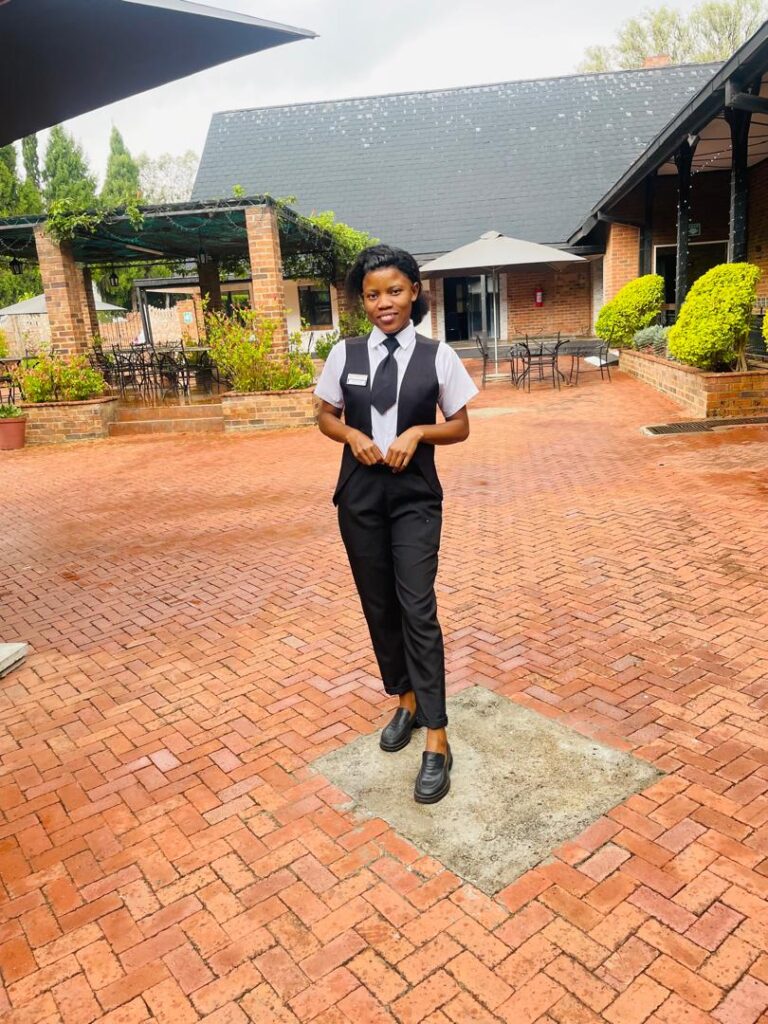
Known affectionately as Chef waKwaNhliziyo, Moyo isn’t merely preparing meals; she’s breathing life into a cultural revival, one dish at a time. And as the country celebrates Women’s Month, her journey from a Lupane State University (LSU) student to a widely recognised culinary ambassador feels especially meaningful — a story stitched together with ambition, resilience, and a deep love for where she comes from.

A Tourism and Hospitality graduate (Class of 2025), Moyo never limited herself to what was on the syllabus. She went after every opportunity that could sharpen her skills or broaden her understanding.
It’s this drive that saw her representing LSU, her province, and her community at national events: the Zimbabwe International Trade Fair Exhibition (2022), Amai’s Traditional Cook Out Competition (2025), the Zimbabwe Tourism Authority Sanganai Tourism Scholastic Competitions (2025), and, most memorably, the National Good Seed and Food Festival Chef’s Competition (2025), where she earned the Runner-Up title.
And the accolades keep coming. Mahatma Rice Zimbabwe recently recognised her as a national winner in their cooking challenge — another step in a career that already looks promising and purposeful.
But it was the Good Seed and Food Festival that truly transformed her path. The festival’s celebration of local agriculture and traditional seed diversity resonated deeply with her. Winning Runner-Up didn’t just secure her an engraved cutting board and chef’s knife; it opened the door to intensive training in Harare. It was there that she plunged into the world of indigenous ingredient innovation.
“I got to rub shoulders and learn from industry professionals. Connecting with inspiring individuals re-imagining our food systems,” Moyo recalled.
She learned how to turn everyday staples into fresh, modern creations — sweet potato flat-bread paired with cowpea curry, cowpea burgers, and other imaginative combinations that honour tradition while embracing creativity.
Yet the most eye-opening moments came outside the kitchen. Meeting farmers, including one producing sweet potato chips, gave her a fuller picture of how food moves from field to plate — “from planting the sweet potato . . . Nursery-Harvesting-Post harvesting-Value Chain-Packaging- up to putting the product in the market.”

Seeing this full cycle expanded her understanding of Zimbabwe’s food ecosystem and its potential for innovation.
“The most important insight I gained is that traditional ingredients are not limited to old cooking methods — they can be re-imagined in contemporary cuisine, and can also be value-added. I am now applying this knowledge by experimenting . . . incorporating them into modern dishes at home,” she emphasised.
Her journey has been shaped by mentorship as well, particularly from Dr Makhosi Mahlangu, Food Science Lecturer at LSU and Director of the African Food Revolution (AFR). Their work together has deepened her understanding of how tradition and modernity can coexist in the kitchen.
“Through this mentorship, I gained deeper insight into the importance of preserving traditional food knowledge while embracing innovation,” Moyo states.
She now recognises that indigenous foods are carriers of far more than flavour: “I have learned that preserving indigenous ingredients is not only about culture but also about nutrition, sustainability, and food security.”
This blend of science, history, and culinary curiosity lies at the heart of the African Food Revolution. For Moyo, preserving these foods goes far beyond nostalgia.
“Preserving these foods is crucial because they carry our history, identity, and knowledge systems . . . ensuring future generations remain connected to their cultural heritage.”
She has taken these beliefs from kitchens to stages — presenting at the 2024 Food Indaba Symposium in Bulawayo and discussing Culinary Tourism on Skyz Metro FM under the AFR banner. For her, food is never just sustenance.
It is, “not only considered as nourishment but as culture, identity, and heritage.”
Yet being a young woman championing traditional cuisine — especially in a space often seen as male territory — comes with challenges.
“One of the challenges is that some people still underestimate traditional foods and some associate it with poverty, especially the youngsters. As a young female chef, I sometimes have to work even harder . . . proving my skills and the value of our traditional dishes,” she acknowledged.
But rather than dimming her flame, these obstacles strengthen her resolve.
Women’s Month, for her, is a reminder of what women bring to the table in every sense.
“It reminds me that women can lead, innovate, and make a strong impact in the culinary industry . . . they have power because of the high influence they have . . . while preserving our cultural heritage.”
Her vision is bold and beautifully clear: to become Zimbabwe’s leading indigenous cuisine chef — and ultimately open a traditional restaurant that merges culture, storytelling, and modern dining.
She paints the dream vividly: “Guests (would) enjoy well-presented traditional dishes while learning the stories and cultural significance behind them . . . not just a meal but a cultural experience.”
She notes the beloved Boma in Victoria Falls as her source of inspiration.
Culinary tourism is central to this dream.
“Through my restaurant, I hope to give both locals and international visitors the opportunity to explore Zimbabwe’s rich food heritage,” she affirmed.
Her motto says it all: “Let’s bring back Heritage on the table!”
And she offers a recipe that captures the spirit of her work — Amasi omcaba.
“Boil sorghum, grind it and mix with amasi (sour milk). It is easy to make, very nutritious . . . Sorghum is a smart climate crop . . . improving food security.”
Moyo is quick to credit her support system, especially her LSU lecturers — Dr K Ngwenya, Dr T Gango, Mrs S Ndiweni, Mr A Chauke, Mr P Mugwagwa, and Dr S Simango.
“Their guidance, mentorship, and encouragement played a vital role . . . showing they taught me well,” she said warmly. Her family, who recognised her gift back in 2021, remain her backbone.
With awards already lining her shelf — from the Runner-Up medal to certificates in culinary innovation and representation — Chef waKwaNhliziyo is only at the beginning of what looks to be a remarkable culinary journey.
And as Women’s Month casts its glow across Zimbabwe, she stands tall as a reminder of the transformative power of heritage, heart, and a cooking pot that refuses to forget where it came from.