Online Reporter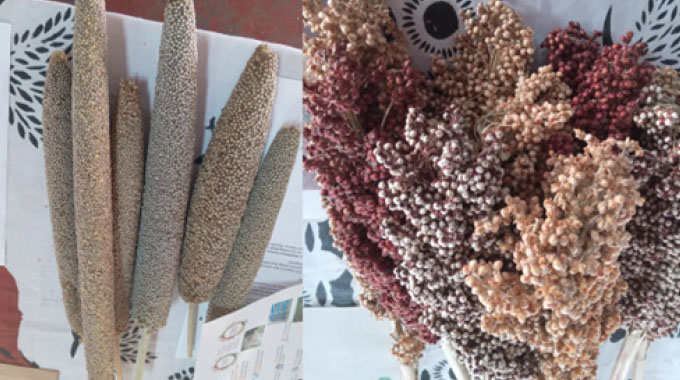
The global movement towards sustainable, climate-resilient food systems is no longer a choice but an imperative.
In Zimbabwe, this challenge is acutely felt as the frequency of devastating droughts has dramatically increased from roughly 1 in 10 growing seasons (1902-1979) to a concerning 1 in 4 seasons (1980-2011). This escalating climate threat demands a decisive shift in our agricultural strategy. The answer lies in our heritage: Traditional grains, namely sorghum, pearl millet and finger millet.
These indigenous crops are emerging as a national cornerstone, not only for their superior nutritional value but for their critical role in building a prosperous, food-secure and resilient dryland tropic, directly echoing the vision of the International Crops Research Institute for the Semi-Arid Tropics (ICRISAT). Research work on breeding and product development in this area is central to the national agenda.
The suitability of traditional grains for Zimbabwe’s challenging semi-arid environment stems from their inherent genetic superiority, making them the ultimate climate-smart crops. Traditional grains require significantly less water, ensure a harvest even in marginal rainfall conditions and provide crucial household food security where maize fails.
These crops have low yields as they are naturally adapted to the dominant, nutrient-poor sandy soils that constitute nearly 70 percent of arable land in smallholder systems. Their productivity thrives with minimal external inputs, responding well to locally available resources like organic manure. This makes them economically viable and perfectly suited for the resource-constrained communities we serve.
Fostering a circular economy in rural Zimbabwe
The cultivation of traditional grains is not just about producing food; it is about establishing a Circular Economy that minimises waste, optimises resources and regenerates ecosystems. This model is critical to reducing poverty and environmental degradation. In rural Zimbabwe, crops and livestock are inseparable. As maize failures become common, drought-tolerant traditional grains provide a reliable dual source of human food and quality animal fodder.
The crop residues close nutrient loops, build soil organic matter and contribute to the overall health and resilience of the farming system.
Valorisation of By-Products i.e post-harvest by-products like husks, bran and germ are being actively repurposed. The product development work transforms these materials from waste into valuable inputs for nutritious animal feed or innovative human food ingredients, creating new revenue streams for farming families.
Natural Pest Resistance and Storage- Traditional grains like finger millet possess natural resilience that allows them to be stored for up to five years without synthetic chemicals if properly dried and stored in airtight storage. This extended shelf life is a massive win for food security, drastically reducing post-harvest losses and ensuring a stable food reserve against shocks.
In partnership with the Australian National University (ANU) through an ACIAR-funded project, ICRISAT is working with pilot communities to integrate and lift the broader dryland cropping and livestock sectors around functioning, publicly owned irrigation schemes in Bubi and Insiza districts under the Circular Food Systems in Africa Project. The project also support traditional grains within rain-fed subsystems to enhance circularity, promoting practices/interventions including:
-Organic fertilisation
-Intercropping and minimum tillage
-In-field rainwater harvesting
-Low-cost urea stover treatment, which significantly boosts the crude protein, digestibility and palatability of crop residues, transforming low-value stalks into highly nutritious ruminant feed.
-Mechanised business models to empower local entrepreneurs and reduce post-harvest losses e.g mobile, mechanised threshers, local Milling Hubs etc
These interventions directly addresses poverty and hunger by increasing both crop and livestock productivity while mitigating environmental degradation.
Driving product development and impact
ICRISAT is actively translating this potential into reality, driving tangible change on the ground, in direct alignment with national development goals and ICRISAT’s commitment to the dry land tropics. A critical aspect of our success is the strong partnership with the Crop Breeding Institute (CBI), an institution under the Ministry of Lands, Agriculture, Fisheries, Water and Rural Development. Our collaboration directly supports the CBI’s mission “To facilitate increased agricultural production and productivity and to improve people’s livelihoods through the development, evaluation and release of improved crop varieties for sustainable socio-economic development.”
Joint research for development is focused on:
Breeding and variety development: Identifying and promoting superior varieties of sorghum and millets that combine high yields, nutritional density and exceptional drought tolerance. This ensures the products delivered to farmers are the best possible tools for climate adaptation.
Product development for market access: Moving beyond subsistence farming, we are supporting the commercialisation of traditional grains. This includes developing new products (e.g. fortified flours, snacks and beverages) that meet the demands of urban markets and increase the value of the crop for the farmer.
Investing in Zimbabwe’s resilient future
Traditional grains are not a relic of the past, they are the foundational element for building a resilient and sustainable agricultural future in Zimbabwe. Their inherent drought tolerance and ability to thrive under low-input conditions make them the most pragmatic and effective climate adaptation strategy available to our nation’s smallholder farmers.
By continuing to champion, invest in and promote the breeding and commercial development of these indigenous crops, Zimbabwe can secure its national food supply, uplift the livelihoods of its rural communities, and fulfil the shared vision to sustainably reduce poverty, hunger and malnutrition across the dry land tropics. The resilience of the grain is the resilience of the nation.