admin
admin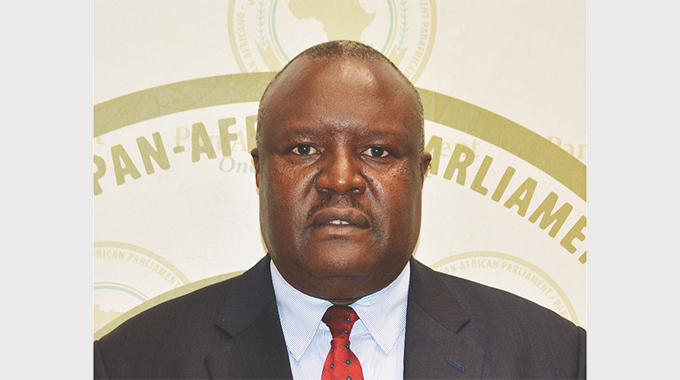
Nqobile Tshili
Bulawayo Bureau
TRADITIONAL leaders have denounced Western sanctions imposed on the country since the turn of the millennium and rallied Zimbabweans to speak with one voice in calling for their unconditional removal.
Citing the disruptive impact of the embargo on the economy and major development projects such as the construction of roads, bridges, schools, and drilling of boreholes, traditional chiefs have said Zimbabwe could be far had it not been for sanctions.
Speaking ahead of the Sadc Anti-Sanctions Day, traditional leaders said the illegal sanctions must be urgently removed.
National Council of Chiefs deputy president, Chief Fortune Charumbira, said illegal sanctions have led to the gross underdevelopment of rural communities.
“The illegal sanctions have had an impact on rural development in many ways.
“They have had an impact on the performance of the economy, which meant that the Government would take longer in rehabilitating rural roads,” he said.
“When there are natural disasters such as cyclones, the Government would take longer to mobilise resources to address the disaster due to illegal sanctions.”
While the Government allocates resources to key sectors, he said these were not enough to meet the economic needs in the absence of global lines of credit and grants.
Due to illegal sanctions, those grants are no longer there. This means that school development committees have to request parents to raise funds to close the gap.
“Government also pays fees for vulnerable learners through the Basic Education Assistance Module (BEAM) but the disbursement of funds is erratic and this even came out during the recent Parliament public hearings,” said Chief Charumbira.
He said the country should be commended that despite the illegal sanctions, there has been some growth in various sectors of the economy, mainly agriculture, mining and tourism.
Chief Masendu from Matabeleland South said the rural communities have suffered the most as a result of the illegal sanctions.
He said any country needs friends to develop, but sanctions isolated Zimbabwe making the country an investment risk.
“We need to speak in one voice and denounce the illegal sanctions imposed on the country.
“However, I’m concerned that as citizens we do not seem to share the same view on the impact of the sanctions on our people,” he said.
“As a country, we need the whole world to partner with us as we pursue the development agenda.
“This is just like what happens in rural areas, communities conduct ilima to help develop themselves but as a nation, we are unable to attract ilima at the global stage due to the illegal sanctions.”
Chief Masendu said the development of schools, roads, and clinics among other social amenities has suffered due to illegal sanctions and Zimbabwe deserves a breathing space to develop.
Acting Chief Mabhikwa, Mr John Khumalo from Lupane, Matabeleland North, said illegal sanctions have been a drawback as they have resulted in massive de-industrialisation.
“One of the clear impacts of sanctions is the loss of jobs that has happened in most cities.
“Right now, industrial areas have been turned into churches and the illegal sanctions are to blame for suffocating economic growth,” said Acting Chief Mabhikwa.
He said the Government should, however, be commended for innovating towards addressing some of the problems that arose as a result of the embargo.
Acting Chief Mabhikwa said through trading with China and other friendly states, there have been job opportunities for locals where new mines have been opened.
“You will recall that the Look East policy is part of the measures that the country has adopted to mitigate against the illegal sanctions.
“The country is now doing a lot of business with Asian countries as a measure to withstand the illegal sanctions,” he said.
“Also, as a social protection measure, the Government is providing farming inputs to rural communities.
“These farming inputs promote household food security for families but unfortunately, due to climate change we are now also vulnerable to droughts.”


 Online Reporter