Vusumuzi Dube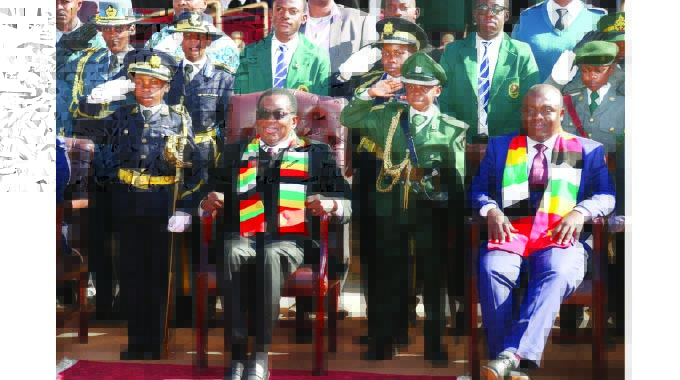
Zvamaida Murwira-Senior Reporter
MORE than 2 million young people will be empowered with relevant skills through vocational training centres as the Government moves to grow, modernise and industrialise the economy, President Mnangagwa has said.
Officially opening the 32nd Session of the Junior Parliament of Zimbabwe and Commemoration of the Day of the African Child at the New Parliament building in Mount Hampden yesterday, President Mnangagwa said the Government was committed to developing young people to become productive citizens and responsible future leaders.
“The education transformation agenda also includes putting in place strong laws and regulations for inclusive education policies. Technical and vocational education is being strengthened to go hand-in-hand with the requirements of an education system of the 21st century,” he said.
“More than two million youths have the potential to be empowered with relevant skills through Vocational Training Centres. These can in-turn help grow, modernise and industrialise our economy. Many more young people must be given the opportunity to learn and acquire trades to improve their livelihoods. No one and no place must be left behind.”
The President implored more young people to enrol for the National Youth Service Zimbabwe Programme that he launched two months ago at Nhakiwa Vocational Training Centre in Uzumba, Mashonaland East province.
“This will instil discipline, patriotism, the ethic of hard honest work, as well as the spirit of Ubuntu/Hunhu, while encouraging volunteerism and service to the community and nation. Nyika inovakwa, inotongwa, inonamatigwa nevene vayo/Ilizwe lakhiwa, libuswe, likhulekelwe ngabanikazi balo,” he said.
The Junior Parliament, established 32 years ago, has not only served as a leadership development and advocacy arm, but also a vehicle for youths to participate in governance of the country.
“As such, we believe that you, our young people, have a role to play in building our motherland by bringing to our attention the challenges faced by the children of Zimbabwe. Hence, the convening of the Junior Parliament must, therefore, not be taken lightly. You have made history by meeting for the first time here at the New Parliament Building, which will also be hosting the SADC Summit in August,” President Mnangagwa said.
“It is also critically important that you use this opportunity to also learn about the policies and developmental projects that are happening in our country. Additionally, the experiences you gain from here should enhance your patriotism, skills, humility and sensitivity to a wider range of issues, as you learn the principles of servant leadership. This will help you to better understand and explain various issues to your peers. The Government is committed to developing you, our young people, into productive citizens and responsible leaders of tomorrow.”
He said education, science and innovation, as well as vocational training and skills development were major tools for sustainable development anchored on access to quality, inclusive and equitable education.
“The Second Republic continues to roll out a learning system based on digital and other ICT-related platforms. As a result, more children now have access to a wide range of educational material and information, including access to specialised teachers, that way guaranteeing improved pass rates,” the President said.

“My Administration is also implementing commitments made during the Transforming Education Summit, held at the 77th Session of the United Nations General Assembly in 2022. The recent commissioning of the 17 schools funded by the OPEC Fund, along with the ongoing construction of many schools under the devolution and decentralisation agenda, shows that my Government values quality and relevant education for our children.”
He said it was worth noting that this year’s 32nd Session of the Junior Parliament had been expanded to include a Junior Senate, which is made up of former Child Parliamentarians as that would help enrich debate.
President Mnangagwa commended the quality of debate that had been held earlier on, coupled with subsequent responses from Cabinet ministers.
“As you all grow as leaders, I urge you to always remain yourselves as Zimbabweans. You are the descendants of the Great Emperor Munhumutapa. Do not be swayed from our rich heritage, moral values, norms, culture and identity,” he said.
The President chronicled the origin of the Day of the African Child and its significance to Africa, saying it was set aside to remember the three-day Soweto Massacre, which took place from June 16 to 18, 1976.
On that day, he said, hundreds of unarmed school-children were massacred while holding a peaceful protest against the oppressive apartheid system in South Africa.
“This sought to use education and other oppressive practices to suppress the freedom and independence of the black majority. Our African philosophy of Ubuntu/Hunhu underscores that ‘I am because we are’. Therefore, the young people of Africa should remain inspired by this rich philosophy,” President Mnangagwa said.
“In that same spirit, many young people across our Southern African region took up arms to fight protracted liberation wars for independence, freedom and sovereignty. Through such acts of bravery, they stood for the freedom, dignity and the well-being of the black majority. It is pleasing that you have read the documented uprisings and massacres that took place throughout the country and across our borders. These include Pupu, Kamungoma, Chindunduma, Chimoio and Nyadzonia, among others. At these sacred places, many of our people, including women and children, were killed, tortured and injured. That is our painful past. A past you must never ever forget.”
He said this year’s theme, “Education for all Children in Africa: The Time Is Now”, speaks to the memories of that fateful day of the Soweto Uprisings.
President Mnangagwa said it was sad that a notable number of young people, together with their families, have had drugs and substance abuse taking a toll on their lives.
“At Government level, a National Committee and a Multi-Sectoral Drug and Substance Abuse Plan is in place to coordinate our national response. I challenge you, the young people, to raise your voices and scale-up your activities to fight and reject drug and substance abuse. You must be at the forefront of developing youth-friendly activities, music and messages that help echo our calls for ‘a drug-free Zimbabwe’. I call upon the youth to report to adults and responsible authorities, those who deal and peddle drugs,” he said.
Speaking at the same occasion, Vice President Constantino Chiwenga hailed President Mnangagwa for his visionary leadership, which he said had helped improve the education system in the country.
“His steadfast commitment in investment in education has been a catalyst for development that has transformed lives,” he said.
Yesterday’s event was attended by Cabinet ministers, legislators, diplomats accredited to Zimbabwe, and senior Government officials, among others.


 Online Reporter