Chronicle Editor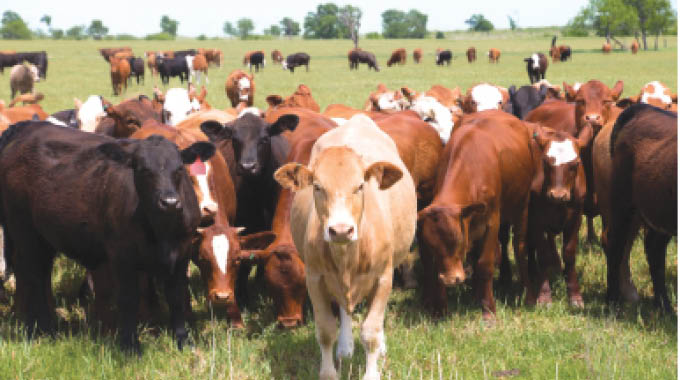
Mhlupheki Dube
THERE is a raging debate among livestock stakeholders regarding the fate of indigenous breeds especially for cattle.
One side is composed of genetic preservation advocates who feel that indigenous breeds are being pushed into extinction by the drive to promote exotic breeds which are better performers in terms of traits of economic importance.
The gene pool enthusiasts feel that indigenous breeds are better suited to withstand local harsh conditions as they are well adapted to resist such stress factors as drought and diseases especially in this climate which is increasingly getting harsh every year.
The proponents feel these indigenous breeds place very minimal burden of management requirements especially for resource strained smallholder livestock farmers.
On the other side crusaders of commercial beef production and maximum economic benefits advocates argue that at the very least no livestock farmer is interested on the gene pool gospel but their intentions of venturing in that enterprise is purely for economic benefits and hence they will pick the highest rewarding option and preservation of a particular gene pool is purely by congruence of intentions.
They argue that while livestock farmers are known to pick a certain breed and specialise in producing animals of that breed, half the time the intentions have nothing to do with preserving the genetics but deriving personal satisfaction from performance of that breed regarding his or her production objectives.
I have no conclusive opinion on this matter but my view is that this kind of debate exposes a yawning gap that livestock breeders are failing to fill.
Why should farmers be made to choose between a very resilient animal which unfortunately performs poorly on traits of economic importance and an animal which scores high on traits of economic importance but is very fragile in so far as the local conditions are concerned?
Why can’t breeders produce an animal which walks the middle ground, that will score decently well for traits of economic importance but still put on a good show of withstanding harsh local conditions? It’s not in question that ultimately what matters to the farmer is how fast the animal grows and how much weight it gives him or her at maturity.
The weight will influence how much you will be paid for the animal while the growth rate determines how long you will babysit the animal before you sell it.
Any rational being will want a fast growing animal which will reach a decent marketable weight in the least possible time. You don’t want to produce an animal which despite being five years old still passes for a weaner!
Our animal breeders therefore should help farmers get that animal which can give them a fair performance in both worlds, otherwise the local indigenous breeds will eventually be phased out not by natural selection but by preference selection if I am maybe allowed to introduce a new breeding term!
We are seeing more of various kinds of professionals diversifying their investments into cattle ranching and these people are in it purely for the top dollar, not for draught power, manure or household milk production or any such trivial reasons of cattle.
These are guys who are looking for high performing animals which can be on his farm for the shortest possible time before being loaded to the market.
The sentimental gibberish of preserving a particular gene pool does not fly with them. This simply does not pay bills!
Now with the proliferation of such farmers, resistant but poorly economically performing indigenous breeds may surely be driven to extinction.
The Afrikander breed is almost extinct because, despite its huge frame size its fertility was on the low side.
Put simply, farmers are rational beings hence they will choose what’s working for them and that may condemn the other into extinction. I therefore plead with our animal breeders to try and produce an animal which has the infusion of local genetics for resilience and also exotic genes for economic performance.
That way we will keep part of the genes from both worlds and still derive a decent benefit from the resultant product.
In my books a breeder who will produce this kind of animal or anything closer, deserves the title of being called an animal breeder not this situation where someone who has never even bred a rat but calls himself or herself a breeder!
Uyabonga umntakaMaKhumalo.


 Online Reporter