

 Online Reporter
Sikhumbuzo Moyo and Patrick Chitumba, Chronicle Writers
PUBLIC transport operators, civic society organisations and churches in Bulawayo have joined growing calls urging Zimbabweans to ignore the planned July 31 protests, saying peace, stability and uninterrupted economic activity are critical to the country’s continued socio-economic development.
The organisations urged citizens to continue with their daily activities and reject calls for demonstrations, saying constitutional rights should be exercised peacefully and within the confines of the law.
Transport operators said commuter services would run normally on Friday, while church and civic leaders appealed for dialogue, national unity and the preservation of peace.
They said while every citizen enjoys constitutional rights, these should never be exercised in a manner that undermines national security, destroys property or disrupts economic activity.
Tshova Mubaiwa Transport Corporation and the Bulawayo United Public Transport Association (BUPTA), which operate a combined fleet of about 1 600 commuter omnibuses transporting at least 100 000 passengers daily, said it would be business as usual on July 31.
Tshova Mubaiwa Transport Corporation spokesperson Mr Ndabazabo Mabunda said the transport sector had benefited from a stable operating environment.
“Since the coming in of the Second Republic, our business environment has been smooth and there are no fuel shortages. In fact, we have seen fuel prices going down, which is good for us in the transport sector,” he said.
“We have had more positives for the sector under the Second Republic and spare parts are readily available. As for the so-called business shutdown, we are a cooperative organisation and we are not taking part in that.”
Mr Mabunda assured commuters that transport services would not be disrupted.
“We will be there without interruption in transport services,” he said.
BUPTA board chairperson Mr Morgan Msipha echoed similar sentiments, saying stability had enabled transport operators to plan and sustain their businesses.
“In the past, fuel prices were changing almost daily, making the business environment very unstable. However, under the Second Republic, the changes we are seeing are favourable to our business,” he said.
Mr Msipha said service delivery had also improved following the decentralisation of key licensing services.
“This means we no longer have to incur costs travelling to Harare for such services. These are positive developments for our sector. We cannot therefore condone calls for people to stay away from work or bring economic activity to a standstill,” he said.
“On July 31, our entire fleet will be on the road because providing transport services is our core business.”
Churches and civic society organisations also urged Zimbabweans to remain peaceful and avoid being manipulated into engaging in unlawful activities.
National chairperson of the Churches and Civic Society Joint Forum, Dr Anglistone Sibanda, said previous protests had mainly benefited the organisers rather than ordinary citizens.
“You remember the Tajamuka and This Flag movements. People made money and became millionaires overnight, so let us not be used by these people. We must go about our usual business, fend for our families and support Vision 2030,” he said.
Dr Sibanda urged Zimbabweans to resolve differences through lawful and peaceful means.
“No one will build the country for us. It is our heritage, which our fathers fought for, and therefore we must guard it jealously,” he said.
“We hear people calling for protests, but as civil society we are saying the era of protests and anti-government activism is gone. The Second Republic is driving an inclusive development agenda and we are calling on everyone to participate in the country’s development.”
He added that some of those calling for demonstrations were not resident in Zimbabwe but were using social media platforms to mobilise people.
President of the Council of Churches in Africa and the Pan African Religious Leaders Assembly, Bishop Rocky Moyo, said churches would not support the planned demonstrations.
“We want to tell those groups and churches, some of whom we know are behind these calls, that Bulawayo, Harare and indeed the whole country will remain peaceful as usual,” he said.
“There will be no protests at all. As church organisations, we represent large numbers of people and our message is clear: we say no to protests and no to violence.”
Bishop Moyo said churches would continue promoting peace, unity and reconciliation, adding that dialogue and respect for the rule of law remained the best way to resolve differences while safeguarding national peace and stability.
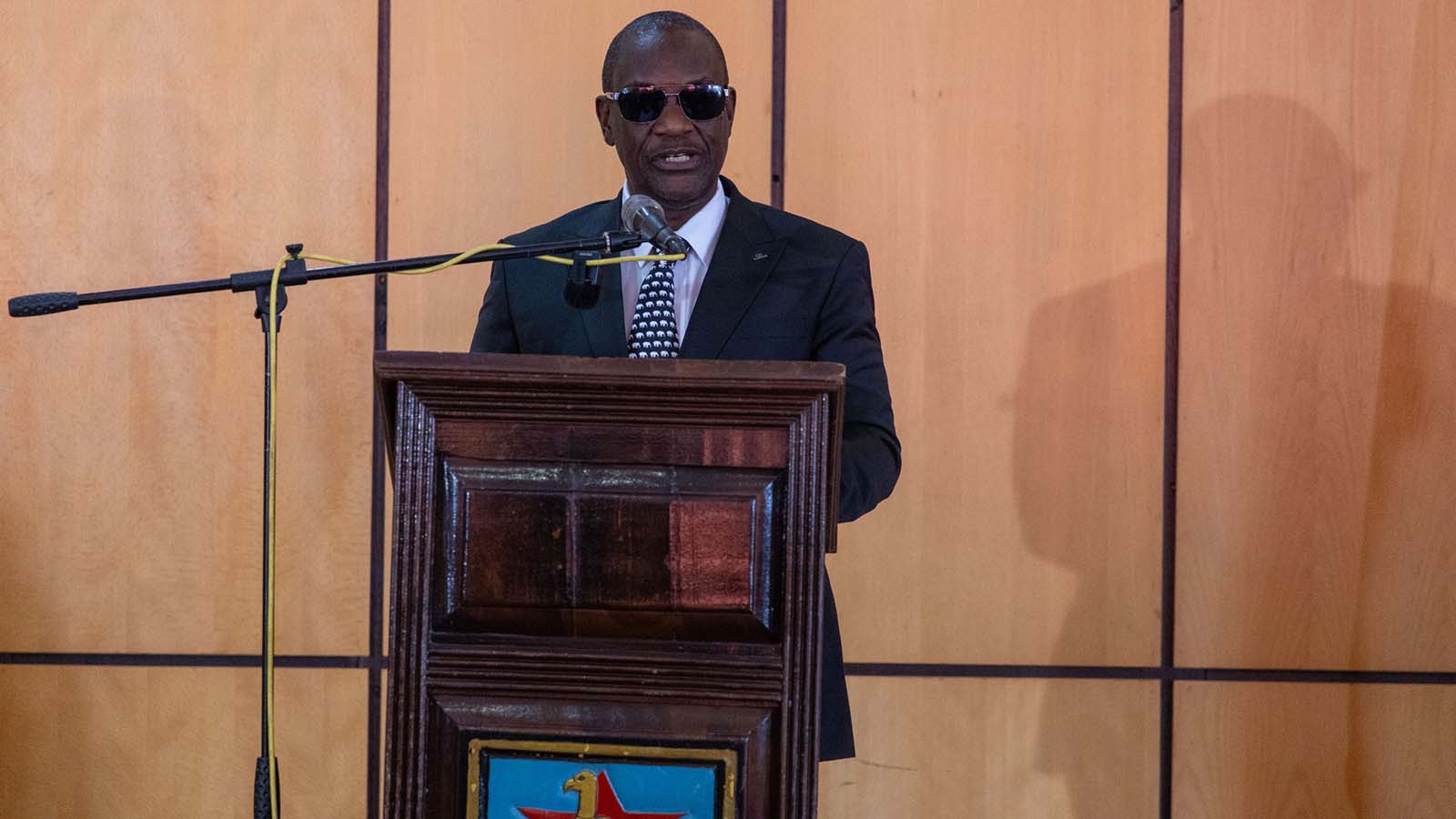
Meanwhile, in the Midlands Province, Minister of State for Provincial Affairs and Devolution Cde Owen Ncube also urged residents to ignore calls for the planned protests.
Speaking during a media briefing at the Gweru Government Complex yesterday, Minister Ncube said security services were on high alert to ensure peace and normal business operations.
“The security forces are on high alert to ensure peace and tranquillity prevail and to allow normal business operations in the province and across the country,” he said.
Minister Ncube said the Midlands Province had consistently rejected calls for shutdowns and demonstrations.
He said Constitutional Amendment Act No. 3 was adopted through established democratic and parliamentary processes.
“Parliamentary processes were observed and adhered to and Constitutional Amendment Act No. 3 received overwhelming support during public consultations and written submissions,” he said.
“The Bill, which guarantees political stability, investment inflows, supports policy consistency and leadership continuity, received unanimous support from both Houses of Parliament across the political divide.”
Minister Ncube said President Mnangagwa had since assented to the legislation, making it part of the Constitution.
He also cautioned against the misuse of social media to incite unrest.
“I once again advise peace-loving Zimbabweans in general and the Midlands Province in particular to ignore social media platforms that incite unrest and lawlessness. July 31 is a normal business day for both public and private sector operations,” he said.


