Online Reporter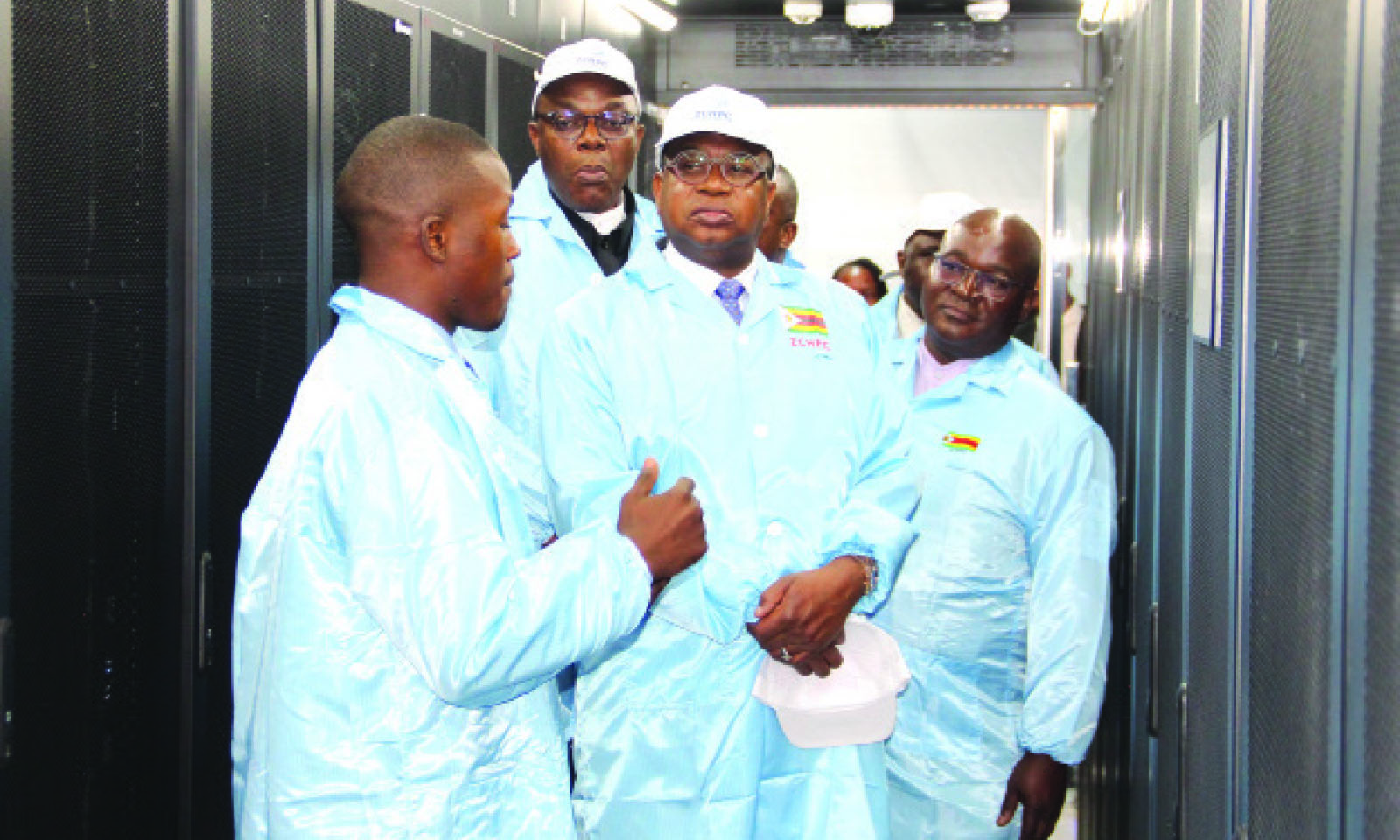
Mukudzei Chingwere
Herald Reporter
GOVERNMENT is set to embark on an ambitious initiative to enhance the nation’s technological infrastructure, signalling commitment to advance the digital economy.
During a recent visit to the Zimbabwe High-Performance Computing facility, the Minister of Finance, Economic Development and Investment Promotion, Professor Mthuli Ncube, unveiled plans for increased funding from Treasury aimed at driving innovation and fostering a more competitive digital landscape.
High-performance computing (HPC) uses large groups of computers, called clusters, to perform complex calculations and simulations at speeds far beyond standard commercial systems.
HPC enables scientists and engineers to solve massive problems in fields like medicine, product design, weather forecasting and AI by breaking down tasks and processing them in parallel across many connected computers.
Committing more Treasury funds is part of the Government’s bold steps to invest in Artificial Intelligence (AI), which is seen as a vital infrastructure that can drive innovation and enhance the capabilities of various sectors.
This investment is seen as crucial for advancing the country’s digital economy and positioning Zimbabwe as a leader in the AI revolution within the region and beyond.
Government is preparing to allocate seed capital in the upcoming budget for 2026, specifically aimed at enhancing the capabilities of the high-performance computing facility, as well as to collaborate with international partners to secure necessary funding and resources.
Prof Ncube said this funding will be critical in advancing the AI infrastructure needed to support various governmental and economic functions.
“High-performance computing is a critical infrastructure for driving our digital economy, putting Zimbabwe at the forefront of the AI revolution within our region and globally,” he said.
“We cannot escape the AI revolution, so we believe that this can be one of the hubs, a critical hub, that’s why I came here to appreciate it”.
Prof Ncube said Government, working with global partners, wants to invest in high performance computing facilities to ensure that the country has enough AI capability.
“As for the Budget, we will put in seed capital because we are trying to raise capital from elsewhere. For 2026, there will be a budget line to cover this high-performance computer.
“We are aware that they need to upgrade phase two, but then we need to launch phase three, which will ensure that we are AI-enabled,” he said.
The high-performance computing facility is already playing an integral role in various government departments as part of a broader e-government and digitalisation programme.
For instance, the Ministry of Health is utilising the facility to improve its electronic health record system, which streamlines health services and is also working on biometric fingerprint systems to enhance border management.
Prof Ncube said this is just the beginning, as the facility aims to provide better weather forecasting and other essential services to the public.
“In Treasury, I have encouraged my team to launch a project where we will be using machine learning to begin to forecast the economy, where we can monitor the neuromeric models on the current data,” he said.
“We are trying to innovate to see how we can use some of the large language models, the LLM, ChatGPT and others to see if we can derive information on sentiment.
“I am pleased the high-performance computer is already working with various Government departments as part of the broader e-government and digitalisation programme”.