admin
admin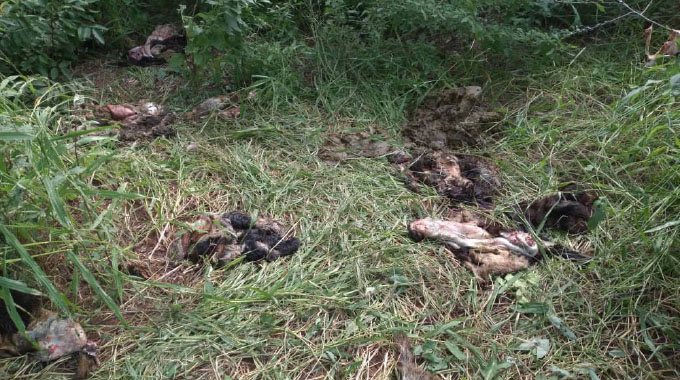
Walter Nyamukondiwa Kariba Bureau
The distant roar of a lion breaks the quiet of the night, sending shivers down the spines of everything within hearing distance, including humans who despite the relative safety of the house remain on edge fearing for their livestock.
In past years, villagers would keep their livestock in the house during the night to protect them from wild animals, including lions, leopards and hyenas.
In some cases, people have also fallen prey to the wild animals.
When all else fails in the wild, domesticated animals become the target.
Wild animals in or on the peripheries of national parks and conservancies end up straying into human habitats while in some cases humans encroach into wildlife areas.
For the people of Mola (Ward 3 and 4) in the Nyaminyami area of Kariba District, elephants, hyenas, lions and other trophy animals are a blessing and a curse.
If not for cases of human and wildlife conflict, the community has had some of its needs such as clinics, bridges and schools met through proceeds from trophy hunting and conservancies that operate in the area.
At least US$200 000 is being realised annually from wildlife conservation and related activities such as trophy hunting but for that money they live with wild animals and resultant conflict.
This is shared in the wards with Nyaminyami Rural District Council also taking a fraction of the money.
With wild animals closer to human habitation, most of the people in the community have lost cattle and goats while grazing or at the homestead.
Some have lost entire herds while those left with a few cattle and goats are contemplating selling them to cut their losses as the situation becomes untenable.
“I have recently lost eight cattle to lions which are roaming in Masaba area of Mola and I am thinking of selling the remaining six cattle so that I can at least salvage something,” said Mr Edison Kayungwa, who is also kraal head Masaba.
Others said lions could be seen during the day. Sabhuku Siamavu, Patrick Siambale said if not addressed urgently, the lions which they have come to know by their collars, would start attacking humans.
“We are pained by the loss of our livestock but we are afraid that the lions would soon get used to killing our cattle and goats as they are easy prey. We also fear that one day they will attack people,” said Mr Siambale.
Chief Mola corroborated the distress in the community saying the lions terrorising villagers were now known with their collars which would suggest they are being tracked.
“There are four lions coming from the Bumi Hills area and one of them just recently had cubs. They have become daring by being spotted in communities during the day,” said Chief Mola.
In a bid to address the challenge of people losing their livestock to wild animals, Carbon Green Africa erected a 21km buffer fence to keep out animals from communities.
The erection of the fence was met with mixed feelings as some felt strongly that it would cut them off from accessing the Zambezi River where they go to fish.
Others felt that there should be no restrictions while some peddled information that erection of the fence was a precursor to people in the community being relocated to other areas to make way for wild animals.
The fence was eventually vandalised or stolen with only 700m of the 22km fence remaining.
Chief Mola said two camps had emerged with one in favour of having the fence maintained and extended to cover more areas but others were against the decision.
“This is an emotive issue and as the Chief, I cannot come up with a unilateral decision but I must support the view of the majority,” said Chief Mola.
“If my people say they need the fence, I will stand with that position. What I can say is that the lions have become a menace and we believe something should be done to manage them before they cause more damage or worse, kill people,” he said.
Chief Mola said the community appreciated the importance of wildlife conservation in their area but said problem animals should be removed from the area or killed.
Carbon Green Africa general manager Mr Charles Ndondo said his organisation was waiting for the community to come up with a resolution and they would implement it. “When it comes to the buffer fence, we are going to do what the communities want. If the community feels that they now need the fence, we should be able to assist,” said Mr Ndondo.
“The conservancies are set up to assist the communities and they should be involved in coming up with solutions on how they can have their domestic animals can be protected.”
Villagers in Ward 3 generally want the fence erected after realising a drop in the number of domestic animals being killed before it was stolen. Mr Siambale said the fence made a great difference before it was vandalized.
“In Ward 3, I think we need the fence because we started experiencing challenges with wild animals attacking our cattle in 2019 when we the fence was removed,” he said.
Carbon Green Africa, which also has rangers on the ground combing the area for poachers, snares and attending to problem animals said they were prepared to erect 44km of the buffer fence to reduce cases of human and wildlife conflict.
It is suspected that the fence materials were sold in Zambia after the thefts.
To people in the Zambezi Valley, the Zambezi River is what the umbilical cord is to an unborn. The major point of contention is the issue of guarantees that members of the community would have unfettered access to the river to fish.



 Online Reporter