admin
admin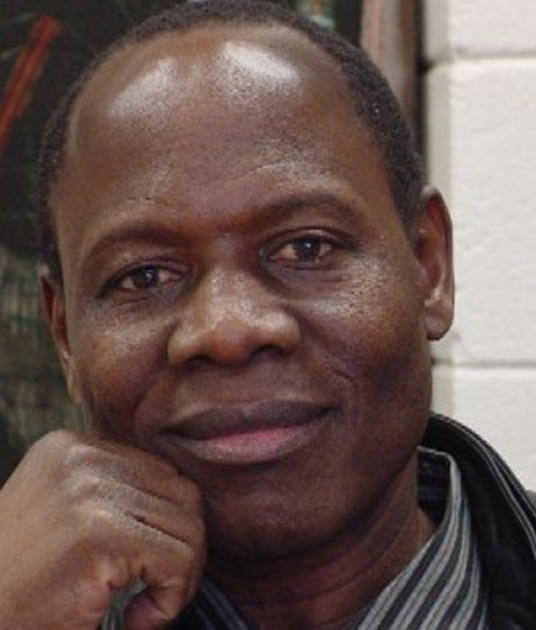

Vuso Mhlanga Correspondent
The time is 1pm, Tuesday November 24, 2015. I am listening to the radio and the mention of Dr Vimbai Gukwe Chivaura makes my mind alert. All of a sudden my heart sinks, something inside me grows numb and dies. I learn with astonishment and disbelief that Vimbai Gukwe has died.
My mind begins racing, it retrieves everything Vimbai stood for, his legacy in life.
I suppress my tears, I refuse to allow them a flow, take a few steps toward my ramshackle pile of books, take a paper and a pen. I apply myself to writing.
I am not going to shed tears for Dr Gukwe, as we fondly called him at University. Instead I am going to vent my emotions through writing, as literature has taught me.
Shakespeare, one of the distinguished voices in the trade of words, said that one should give words to sorrow. Thus, I intend to write about Gukwe – his contribution to the discourse on being a person of colour, what he has worked for, what he has bequeathed to posterity.
I recall with vividness when I was admitted into the Honours in English Programme at the University of Zimbabwe in 2006 – the honours programme was a preserve of those who had excelled in year 1 Bachelor of Arts (General).
Thus, a handful of us, about eight, were elated and felt a measure of honour. We had excelled in English ahead of others! Dr Gukwe was going to be one of our lecturers taking us for the course Theories of Literature in Africa and the African Diaspora.
As a Doctor in Literature we all thought he would speak in the most eloquent and elaborate English and with the greatest finesse like a Caucasian. We knew nothing of the man at that turn in life.
Dr Gukwe, a cordial, clean-shaven man, with a spirited voice, twinkling eyes full of conviction, and a small build, spoke to us using the most simple but clear language and in a “down-to-earth “ fashion.
Expectations ran high as we eased ourselves into the chairs around his office like people of colour in a hearth manner.
“Unonzi ani?” he began, focusing his gaze on a jovial girl seated beside me. Laughing coyly she replies, “Godess Bukutwa”. Doctor Gukwe asks a follow up, “kuti Godess kuti chii, pane anonzi Godess kudzinza renyu here?” (Is there anyone by the name Godess among your people?)
“Unoerei?” (What is your totem?)
“Moyo,” she says in a rather coy and pleading fashion.
Doctor Gukwe is happy; he flashes his set of white teeth and says, not only to her but to all of us,
“Mudzimai wangu uyu, ndimainini vangu VaMaMoyo, mhoroi amainini, VaNyachide,” (She shares the same totem with my beloved wife so she is my younger wife.)
As minutes passed, like a ritual, Dr Gukwe had asked us almost predictable, similar questions. At the end of that introductory lesson, we had established a sense of kinship and we had to work together harmoniously and with fellow feeling.
The lesson was taken to heart in each of us from that moment – Dr Gukwe wanted us to feel a sense of kinship, a sense of belonging, of oneness. He firmly implanted in us, in each thread of the lessons, the belief that as people of colour we are a collective entity – people of colour in our continent and those in the Diaspora.
Nothing mattered to him so much as his vision to see people of colour embracing their culture. That was testament to his love for totems and the use of the vernacular language.
He wanted us to recognise language, especially the mother language as it is – a vehicle for transmitting a culture and a sense of oneness for the purposes of development. “To carry a language is to carry a culture,” he said.
He liked to refer to the Afro-American author Ralph Ellison’s book “The Invisible Man”. He would say: “The object lesson I learnt from this book is simple; if you know who you are, you are free.”
Dr Gukwe never wanted us to lose sight of our place in the universe as people of colour – what we had gone through, what we have achieved, and the fight that is in our hands; to gird our loins in a manly style and fight against historical injustices, and to fight forces that continue seeking to render us insignificant.
He endeavoured, like a father figure, to instil a sense of collectivism among us. He also wanted us to avoid using big words that clutter thoughts and muffle what could have been simple thoughts.
Dr Gukwe hated nothing more than plagiarism. He wanted us to coin our home-grown thoughts, to say what we meant. All writing, he said, is a war, there is no middle ground.
Thus he wanted us to be wary of what we read. The author may say something with a borrowed voice, the voice of other people with an agenda other than his, unbeknown to him.
“Literature is you and I, it did not originate with the written word. When our mothers, to ease the burden of toiling on the soil, used to sing, “ndorima musana wondirwadza, pakudya ndomera manhenga (loosely translated ploughing is hard, but the reward of the produce how sweet!) that is literature, the literature created by our people, and chronicling their story,” he said.
How that made us swell with pride! Literature that is true is born out of our collective human experiences; our past, our struggles, and our aspirations. Dr Gukwe would buttress his point by reaching for a copy of Paulo Freire‘s book “The Pedagogy of the Oppressed”.
In the said book, he would find a portion on the role of colonial education. I still see in my mind a red copy of the book. Freire argues that the “banking” concept of education is steeped in colonial education.
That is when information is deposited into the mind of the learner, the same manner in which an account holder puts money in his bank account. The point; education should involve the learner if he is to benefit from it.
The learning process should revolve around the learner, making him understand himself, his world, his responsibilities, and his obligations in the lives of his fellowmen.
Dr Gukwe also painstakingly alerted us to the dangers of forfeiting our cherished heritage. He would focus on the proverbial lore character Tibukai, who cut the branch of a tree on which he was seated. How foolhardy and tragic! The lesson could not be more pertinent; safeguard your cultural heritage.
Tears trickle as I write. The tears remind me of the man Dr Gukwe is. I use the present tense because his thoughts will never die. He represents a rare sentinel of culture and values that bind us as a people.
In the UZ Department of English I think of what Dr Gukwe has outlived. Almost everyone there has been taught by him; Dr Ruby Magosvonwe (the current chairperson of the department), Mrs Muganiwa, Mr Mandizvidza, Mr Tanaka Chidora and the celebrated author, Memory Chirere.
They know the song of Dr Gukwe. Many Zimbabweans sing the song heartily in their heart. Many academics and cultural watchdogs of our generation also pour their voices in that song – it is the song of people of colour.
As a teacher, I intend to teach like Gukwe, simple but with an agenda to help my students appreciate who they are without wavering.
Gukwe, hatisari tichiita sa Tibukai. We promise.
- Vuso Mhlanga, the writer, holds an Honours degree in English from UZ. He is a former student of Doctor Gukwe Chivaura.



 Online Reporter