admin
admin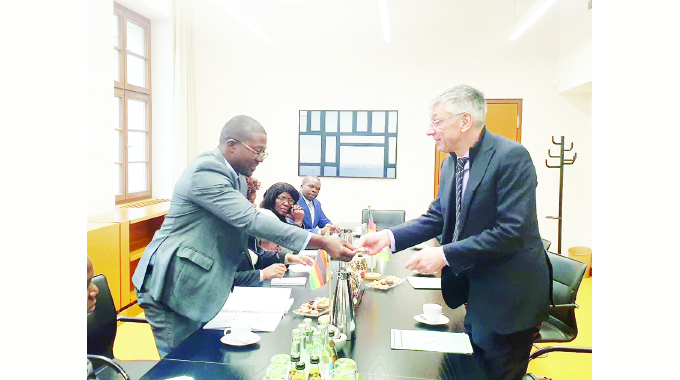
Ivan Zhakata-Herald Correspondent
Trophy hunting is an important industry in Zimbabwe and other African countries as it promotes tourism and generates foreign currency, Environment, Climate, Tourism and Hospitality Industry Minister, Mangaliso Ndlovu, has said.
Speaking during his meeting with the Secretary of State for the federal ministry of Environment, Nature Conservation, Nuclear Safety and Consumer Protection of Germany, Mr Stefan Tidow, Minister Ndlovu said trophy hunting has proven to be robust and hunters come when many other tourists won’t.
Trophy hunting, he added, promotes conservation and wildlife protection in areas where wildlife numbers are marginal, and where photographic tourism is not viable.
“It provides benefits to communities, promotes co-existence of wildlife and people in community areas and is an important enterprise for the private wildlife sector,” said Minister Ndlovu.
“Trophy hunting is being ‘attacked’ by the growing number of anti-hunting campaigners, largely in Europe and America.
“Non-Governmental Organisations (NGOs) that advocate for the ban on trophy hunting have a lot of support in these countries as the majority of people are predisposed against killing of animals, especially large charismatic ones such as elephants and lions, are unaware of the benefits of hunting and the consequences of bans and would not be materially affected should trophy hunting be stopped.”
NGOs often promote misinformation to increase the impact and justification of their campaigns and to discredit data and narratives that support the role of trophy hunting for conservation and communities.
Campaigns to stop trophy hunting are gathering momentum across the world, largely through advocating for hunting trophy import bans.
But Minister Ndlovu said keeping and displaying the trophies from a hunt was important for most hunters and if they cannot import their trophies back to their country of abode, then they were unlikely to go on safaris hunts.
He said Zimbabwe abides with the CITES provisions in trade with sustainable quotas for 500 elephants, 500 leopards, 200 crocodiles and 50 cheetahs.
Presently, Zimbabwe has over 83 000 elephants, the second highest in Africa and over 1 000 rhinos.
“Zimbabwe uses an adaptive management approach to conservation with quotas set below the growth rates of all species.
“The country has species management plans for keystone species, for example, elephant, rhino, lion, leopard, cheetah and African wild dog and vulture, among others,” said Minister Ndlovu.
About 28 percent of Zimbabwe was under some form of conservation with 13 percent under parks and wildlife conservation.
There are growing human-wildlife conflicts across Zimbabwe as the number of wild animals continues to grow resulting in the depletion of successful conservation efforts and the need to offset costs which trophy hunting contributes towards.
Minister Ndlovu said the Government has just approved the establishment of the Human-Wildlife Conflict Relief Fund to assist conflict victims. Zimbabwe has six transfrontier conservation areas, KAZA, GLTFCA, GMTFCA, Chimanimani, LOZA-MAP and ZIMOZA.
Minister Ndlovu also said Zimbabwe was set to learn from Germany’s experiences in urban air quality management, particularly from the Immediate Action Programme for clean air which ran from 2017 to 2020.
Under the programme, funding was provided to municipalities with particularly high NOx pollution, to improve air quality and sustainably in the short term.
Minister Ndlovu said the German government provided around €2 billion to towns and cities to combat air pollution by electrifying public transportation and retrofitting diesel buses.
Zimbabwe can also benefit from cooperating with Germany in technology transfer in air quality monitoring instrumentation.
“Currently, no reference-grade ambient air quality monitoring stations exist in Zimbabwe, and good quality emissions monitoring technologies are scant, making it difficult for the country to make science-driven policy interventions to the air pollution problem,” he said.
“Therefore, cooperation with the Federal Ministry for the Environment, Nature Conservation, Nuclear Safety and Consumer Protection of the Federal Republic of Germany in the area of air quality and emissions monitoring will significantly benefit Zimbabwe.
“Sharing experiences in liquid, solid and hazardous waste management will be beneficial for both countries. This can cover the design, construction and operation of landfills and other waste repositories.”


 Online Reporter