admin
admin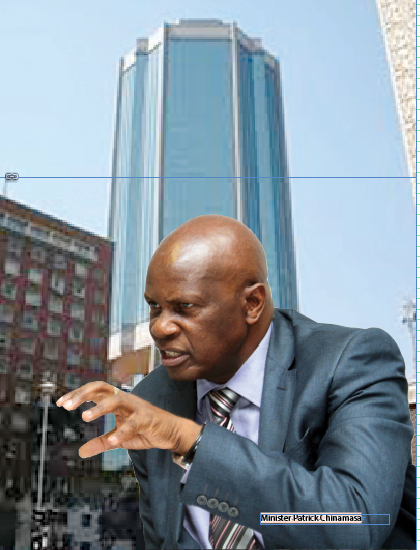

Mernat Mafirakurewa Business Editor—
FINANCE and Economic Development Minister Patrick Chinamasa says troubled banks will be excluded from taking part in the interbank market in the interim. Last year the government and Africa Export and Import Bank (Afreximbank) launched a $100 million facility to revive the interbank market and help increase liquidity.
The interbank is a market in which banks extend loans to one another for a specified term. Most interbank loans are for maturities of one week or less, the majority being overnight.
Chinamasa told a media briefing recently: “Those banks which are troubled will obviously be excluded. I won’t mention by name because in interbank activity, it’s all to do with lending. One bank is lending its money to another bank and it wants to be assured that the other bank can pay, so you can’t lend to a bank which you know maybe insolvent. But right now the major banks are involved.”
Since the adoption of a multi currency system in February 2009, the country has faced a liquidity crunch leading to economic stagnation as industries are failing to access working capital to stimulate productivity to competitive levels.
According to the World Bank Zimbabwe Economic Briefing for the month of April, vulnerabilities remain high in the banking sector, exacerbated by macro-economic inconsistencies and low levels of confidence.
Non-performing loans are high at 15,9 percent.
“Solvency concerns especially in smaller banks also remain a drag in the periphery, making the Reserve Bank of Zimbabwe to intensify the monitoring of troubled banks. The RBZ floated treasury bills worth $103 million in March 2014 to clear part of the $1,35 billion RBZ debt taken over by government. The treasury bills will facilitate interbank lending as they will be used as security,” the World Bank said.
Statistics by the World Bank show that growth in annual broad money edged up by 5,5 percent to reach $4 billion in February 2014. Private sector credit growth inched up 1,5 percent, reaching $3,6 billion, while the loan to deposit ratio remains elevated at 90 percent in the first two months.
Meanwhile, Chinamasa said his ministry was looking forward to investing in infrastructure projects using resources from pensions and insurance funds as well as the Diaspora bond in order to attract investors into the economy.
“Primarily I am looking at investing in small hydro power schemes so that we boost the energy sector to enhance productivity in the economy,” he said.
“For companies such as the Cold Storage Company (CSC), we’ve no money to revive estates by CSC, but we can find joint ventures to revive them. What we need in this economy is the production of goods and services which we can sell to each other and which we can export.”


 derick.khumalo