Online Reporter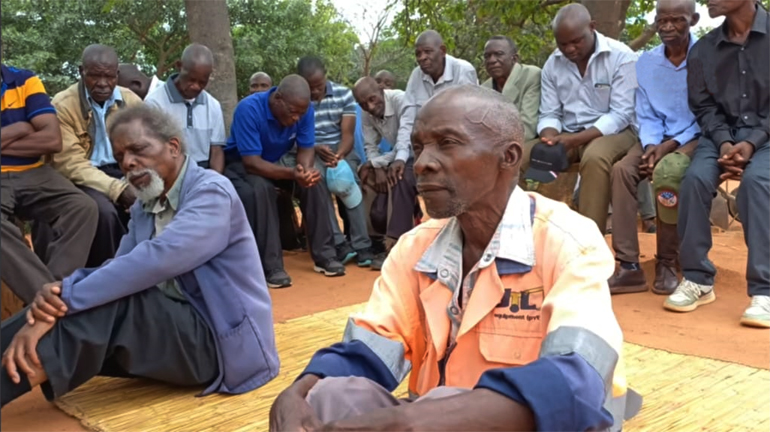
Lovemore Kadzura
Weekender Reporter
A LONG-STANDING family debt saga has resurfaced in Chief Hata’s community court, where Sekuru Nicholas Pfungwa Gwete is suing his brother-in-law, Sekuru Antony Mbawa, over a debt equivalent to US$250, dating back to 1978.
Gwete claims he entrusted Mbawa with handbags to sell in Harare, instructing him to remit the proceeds to his wife in the rural areas.
Despite repeated requests, Gwete alleges Mbawa withheld the money, forcing him to seek the traditional court intervention.
The original debt was pegged at R$2 500 in 1978, later converted by the court to US$250.
“I was working in Bulawayo when I bought handbags on special offer. Since they were easily available there, I sent them to Harare through a courier, asking my father-in-law, Antony Mbawa, to sell them.
“He sold the first batch and asked for more. I instructed him to give the money to my wife, but she never received it — only R$30 from my younger brother. Mbawa was supposed to hand over R$2 800, but he withheld R$2 500, claiming I had not finished paying my wife’s bride price. That was false; I had fully paid,” Gwete told the court.
Mbawa disputes the claim, insisting the amount was only R$250.
He maintains that he gave the handbags to Gwete’s younger brother to sell and retained the proceeds.
He further argued that Gwete is raising the matter now because key witnesses—his wife and younger brother—are deceased.
“It is true that he sent the bags to me for resale. The value he is claiming is not correct at all because during the Rhodesian era, very few black persons could have access to those amounts.
“The correct amount was R$280. After I sold the bags, his young brother who was based at Ruda, Honde Valley was harassed by the Rhodesian soldiers after they had been ambushed there. I decided to take him to Harare where I stayed with him at my house in Kambuzuma.
“Gwete was working at Monarch in Bulawayo. I informed Gwete that his young brother, who was not employed, would sell the bags, and he agreed with the arrangement. Later, I facilitated Gwete’s young brother employment where I worked. I trained him to use the machine I operated till he rose to be the quality controller.
“Gwete would visit us at our workplace, and I would request my employer to allow me to entertain him at our workplace. I would buy him beer that he would drink inside the company premises. I continued to interact with the Gwetes even after my retirement in 2011, and they never raised the issue of me owing them. Gwete only started raising the issue after the death of his young brother, but I explained to people what happened,” said Mbawa.
Chief Hata ruled that Mbawa owes Gwete US$250.
The court noted that Mbawa did not hand the money to Gwete’s wife, but to Gwete’s young brother, which was not part of their arrangement.
“Gwete managed to prove that he gave Mbawa the bags to sell. Mbawa confirmed that he sold the bags. Mbawa did not follow instructions to hand the money to Gwete’s wife. He is claiming that he handed the money to Gwete’s young brother, which was not the agreement. Therefore, Mbawa still owes Gwete R$250 in today’s value of US$250.
“If Mbawa is genuine that he gave Gwete’s young brother the money, he should make a follow-up with his children. A debt can bring an omen to families. Mbawa should pay the debt through this court while Gwete is still alive,” ruled Chief Hata.