admin
admin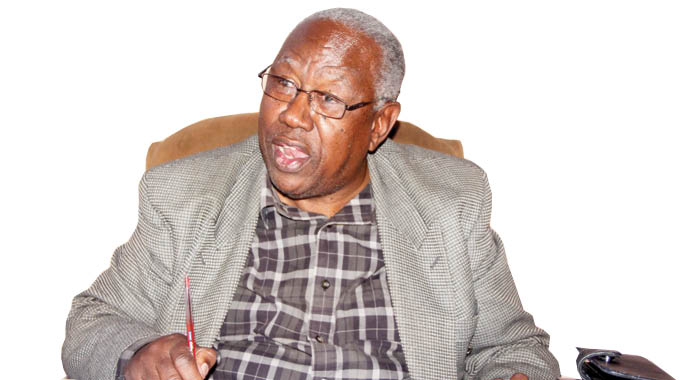
We continue our interview with Cde Macleod Tshawe who during the armed struggle served as an intelligence operative in the National Security and Order Department (NSO), a Zapu intelligence unit.
In last week’s instalment in an interview with our Assistant Editor Mkhululi Sibanda (MS), Cde Tshawe, the former Zanu-PF provincial chairman for Bulawayo and iso (eye) for King Zwelonke of AmaXhosa in the Eastern Cape in South Africa spoke about his early life in his rural home in Bubi District in Matabeleland North, education in South Africa where he got entangled in political activities of the African National Congress (ANC) before returning home, his work experience in Bulawayo where he encountered racism and in one instance found himself slapping a white colleague, who had racially abused him. The incident resulted in Cde Tshawe losing his job at the Edgars Group. Today the interview continues with Cde Tshawe talking about how he outwitted the Rhodesian security details who were hunting for him after he had supplied three guerillas with clothing taken from his workplace. Below are excerpts of the interview.
MS: You say when you gave those people the clothes, it seems their movements were being monitored. Tell us more about what happened after that.
Cde Tshawe: Like I said that incident defined my life. When those guys approached me, they told me that they were on a mission, to carry out an urban warfare operation, so they were in need of clothes. That was 1976 and they had been given my name. I obliged and gave them jeans, shirts and pairs of trousers. While all that was happening, it looks like some security details were monitoring their movements. As for me I was in the dark with what was happening. There was a detective called Godfrey Cubard, the son of Curbad who was director of the Terrance and Ginger crew who had a farm in Inyathi and the other man called Swean, they were handling my case. Luckily I had a brother-in-law, Nani Moyo a detective sergeant, owayethethe umntaka mama omncane who tipped me off about my pending arrest. He just told me that if there was a way of not sleeping at home that night I should do so and when I asked the reasons for that, he said I should not ask him as I knew what I had done at my workplace. I then thought of what I was going to do and immediately went into hiding. I was a wanted man now.
Then while in hiding another brother-in-law of mine, uNcube who was married to my elder sister and was working for the Rhodesia Railways together with the husband of my other cousin’s sister, udadewabo womkaNani assisted in crafting my escape route. The way out was to leave the country and join others in fighting the regime. So those two gentlemen, osibare laba were chefs at the Rhodesia Railways and used to travel in the train preparing meals and so on. Usibare uNcube then told me not to worry as he had a plan. He said the following day I should go to his workplace as he was in the morning shift where they will give me the chef’s attire, a move to disguise myself. So I went there and everything was done according to plan. I was kept in the train cabin, now dressed as one of the chefs while those gentlemen were busy with their work. The train was going to Botswana and I patiently confined myself there. The train then left Bulawayo and I was a bit relieved, but it suddenly stopped at Khami, you know there was a siding near Khami River, some kilometres where there is Mbokodo Abattoir now. When the train stopped I panicked.
MS: What was going through your mind when that was happening?
Cde Tshawe: I was taken aback. You know the train stopped at Khami for about 30 minutes and I was so afraid because I thought the Rhodesians had managed to trace me. At that time I was sure they knew that I was in the train, in fact I almost bolted out and melted into the bush, but my sixth sense told me to hold on. Little did I know that the white travellers were having their meal, just enjoying their food and drinks. Later the train pulled off and we travelled without any incident until we reached Francistown. I had a sister who was already there in Francistown and I stayed with her for some time. While I was with my sister in Francistown and before I could move into the camp lapho okwakulabo krustant (recruits), my sister and I went to Gaborone where I met Douglas Dube, who was married to a black American woman. Dube, whom I believe is late now was teaching at Moideng College. At home I had left my wife and two daughters, it was still a young family. Back home the situation became terrible for my family with my wife and other family members being harassed as the regime was not leaving any stone unturned while looking for me.
MS: It was tricky situation.
Cde Tshawe: It was. Buza uLuke Mnkandla, the radio personality, who is now also the Highlanders Football Club board chairman. I was supposed to be his best man at his wedding and when he was not seeing me around, he approached my employer to ask about my whereabouts, ikhiwa laphosa lambulala uLuke. We are still friends with Luke and at times we laugh about it. Anyway in Gaborone I met Fetress who is now married to Themba Mkhwananzi, a Bulawayo City Council official. While in Gaborone my wife followed me. I then organised a British passport and also did the same for my children because it was easy to do so at that time if you were a refugee. My wife and children then remained behind with my sister. My sister also assisted my wife get a job at BCL Hospital in Selebi-Phikwe as she was a nurse by profession. For me now there was no turning back, I was ready to join the armed struggle. I then met Mnyamana, uBlack Swine lenye indoda yakoNdlovu ngiqhutshezelwa kibo ngusisi who was already working with them emsebenzini wonalo. I went to the camp in Francistown.
MS: So how were the conditions at the camp?
Cde Tshawe: Akulula ndoda ukuhlala enkambeni especially uvela ebunandini njengami engangijayele amagigi konke labo-Castle. All those nice things were no longer there. It was a new world, a challenging one. Anyway I stayed there for three weeks, after, which we were flown to Zambia. At the Lusaka International Airport we were met by Kenny Malaba, indoda eyaqiqatha and a very nice man. From the airport we were driven in a Cruz to Nampundwe Transit Camp. There were between 25 and 30 of us. When we arrived at Nampundwe I had developed some friendship with indoda yakoDlamini who was later given the pseudonym of Mazibophela Dube and operated in the northern front while I was in the south with my pseudonym being Jabulani Cele. We arrived at Nampundwe in the evening and it was very cold, the date was 17 July 1976, I can’t forget that day. Dlamini and I were given one blanket to share and shown a direction where we were told we will find our bedroom, mina ngithi kuDlamini “i-bedroom lapha” kanti batsho esiqintini baba. Sayathandela isiqinti ngengubo yonaleyo. Then early in the morning we were woken up and it was time for the roll call. I was surprised to see many people I knew and those comrades were very happy to see me as well. It was as if I had already undergone military training.
MS: You are talking about many people recognising you. Where did they know you from?
Cde Tshawe: Some of those guys sasidlala sonke amagigi lapha koBulawayo, in areas like Mpopoma and Tshabalala. Also some of the comrades I had played a part in their leaving Rhodesia to join the armed struggle. You know I used to be part of the recruitment team that was involved in political activities, it was made up of businesspeople and some socialites here in Bulawayo.
MS: Let’s go back a bit and tell us more about this group.
Cde Tshawe: That committee started off as an organisation that was made up of a certain class of people and was called African Sales Reps Association. It was led by the now late umdala, Jonathan Mhlanga, who was affectionately known as J Themba. Initially the purpose of that organisation was to teach people work in commerce and industry but we ended up turning it into a political platform as we were recruiting people from as far as Harare.
ν To be continued


 Online Reporter