admin
admin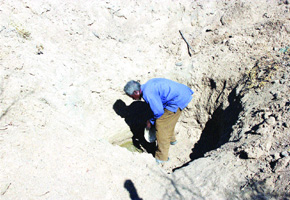
The district, which has a population of about 150 000 people is in dire need of water as boreholes, which are the main sources of water in the area, are not adequate.
Speaking to journalists on Tuesday at her offices at Tsholotsho Centre during a media briefing organised by the United Nations Children’s Fund (Unicef), Tsholotsho District Administrator Ms Nosizi Dube said the water table in the area was too low such that most villagers were drinking dirty water from unsafe sources.
“Some wards are facing a critical shortage of water in this district and the situation has forced most people to drink unsafe water from water sources they share with livestock and wild animals such as elephants,” said Ms Dube.
“We do not have dams in the district and the few boreholes are seasonal sources of water, as they do not produce water when the water levels drop during the dry season. Most infrastructure is obsolete and unreliable as it needs rehabilitation from time to time.”
Ms Dube appealed to the Government and other stakeholders to construct dams in the area, saying such a development would go a long way in alleviating the water problems.
“Most of the boreholes that we have are either non-functional or sub-functional, a situation which forces villagers, especially those in the most remote areas to drink dirty water from unreliable water sources. I would like to appeal to the Government and other stakeholders to construct dams for the district because boreholes are not bringing the water problems to an end.
“Meaningful dams will definitely bring the critical shortage of water to an end and also help villagers to do self help projects such as gardening and brick moulding. This area usually dries up in May and you can imagine what the situation would be like in October,” said Ms Dube.
She said the water problems were not only affecting the livelihood of people in Tsholotsho, but their livestock as well.
“These people have livestock which need water on a daily basis but the dams have nothing. The most affected people are those in the most remote areas as they cannot travel with their livestock to an urban centre to get water.
“Villagers from ward seven, which is the most affected came to my offices with a sample of the water that they drink, which is not safe at all and they called for help. It is unfair for these people to drink such dirty water but they have no option. It is therefore important for the Government to do something about the situation to improve the lives of the frustrated villagers,” said Ms Dube.
A visit to one of the villages in Tsholotsho, Siyaphumelela in ward six revealed that the villagers had only one source of water, while only one household had a pit latrine out of the 85 households in the village.
The village head, Mr Phillip Mpala, who has stayed in the village since 1963 told the journalists that they had one modern sand abstraction borehole, which serves all the 85 households, which have an average of six to eight family members.
“People started settling in this area in 1963 and we have never had a water source. We have been suffering for a long time. The borehole that we have was donated by Orap but it is not adequate for the whole village. We have been fetching water from Gwayi River but it has dried up and we share the water with livestock and elephants.
“We have identified three water sites and we would be grateful if the Government provides us with at least three boreholes,” said Mr Mpala.
He said low rainfall and the critical shortage of water had worsened hunger and poverty in the area, to an extent that some people could no longer take their children to school.
“We have so many children in the village that are not going to school because of lack of resources, worsened by shortage of water and low rainfall. Nothing is coming from the fields and there is no source of income for the people.
“Through education from the Ministry of Health and Child Welfare, few villagers have since resorted to constructing temporary pit latrines as we are occasionally affected by diseases due to open defecation and other unhygienic practices, which are caused by lack of proper water and sanitation,” said Mr Mpala.
The Rural Water, Sanitation and Hygiene (WASH) programme in Tsholotsho will see more than four million people in five provinces in the country benefiting from the rehabilitation and construction of boreholes and pit latrines.


 Online Reporter