admin
adminagainst it.
It was only after he had learned to play the guitar and started bringing money to the family that his parents began to reluctantly accept his interest in music.
Oliver later met Moses Kabubi who gave him further lessons in music before he went to record a single called “Pezuma” together with his sister Bybit, who was the vocalist then.
Taking several of the musicians from Wagon Wheels with him, he formed a new group, The Black Spirits.
The single, “Dzandimomotera”, sold enough copies to qualify for gold record status.
The formation of The Black Spirits in 1979 pushed Oliver into a new direction.
For a long time, his music followed rhythms with a South African mbaqanga bias but sung with Shona lyrics.
Oliver admits that Thomas Mapfumo (who was instrumental in reviving ethnic music) had a great influence on him.
His debut album with the Black Spirits entitled “Africa”, which includes two hits “Zimbabwe” and “Rufu Ndimangonyedze” also went gold.
It took Oliver a long time to reach the top and that included changes in the line-up of his backing groups such as the Zig-Zag band and The Black Spirits, who had assisted him in churning out hits such as “Mutavara”, “Ndiri Bofu”, “Nyarara Mwanawe”, “Ndipeiwo Zano” and many more.
The albums released in the late 1980s had a variety of musical styles including soul, soca, jiti and reggae.
It was not until the 1990s that Oliver realised that he needed to follow one direction in his musical output.
The chain of hit after hit followed Oliver’s career into the 1990s. Among several of his albums are “Strange Isn’t It”, “Grand Pa’s Story” and “Messenger”.
With his gusty voice, the trademark cough and a talent for writing songs that reflect on the daily life of the people of Zimbabwe, his homeland, Oliver “Tuku” Mtukudzi began to blend his Southern African music traditions which include mbira, mbaqanga, jit, and the traditional drumming of the Korekore, known as katekwe drumming, with soulful rhythms.
This created such a unique sound, which he respectfully dubbed “Tuku Music”.
It was not until the late 1990s that Tuku Music really took off to a higher level.
By 1999 Tuku had churned out 49 albums. It was not until 2001 when he released the album “Bvuma/Tolerance” that the whole country as well as the international world began to pay serious attention to Oliver Mtukudzi.
Between 1999 and 2004, Tuku also performed or recorded with several other international artistes such as Ringo Madlingozi, Carlos Santana, Taj Mahal, Baaba Maal, Toumani Diabete, Judith Sephuma, Louis Mhlanga, Lucky Dube and several others.
During his spare time, Tuku would dedicate his services to the community by taking part in HIV and Aids awareness programmes as well as giving charity performances. Among his several achievements, Tuku began to construct Pakare Paye Arts Centre in 2004 near his home in Knowe, Norton, some 40 kilometres outside Harare.
It is at this centre that Tuku began to give Zimbabwean youngsters an opportunity to develop their own skills in music and drama, free of charge.
In 2006, Oliver became Zimbabwe’s patron to Umoja, a musical outfit which embraced young musicians from South Africa, Norway, Mozambique and Zimbabwe.
In 2011, Tuku was appointed the Unicef Regional Goodwill Ambassador for Eastern and Southern Africa on June 16, 2011 at a ceremony to mark the Day of the African Child.


 leeroy
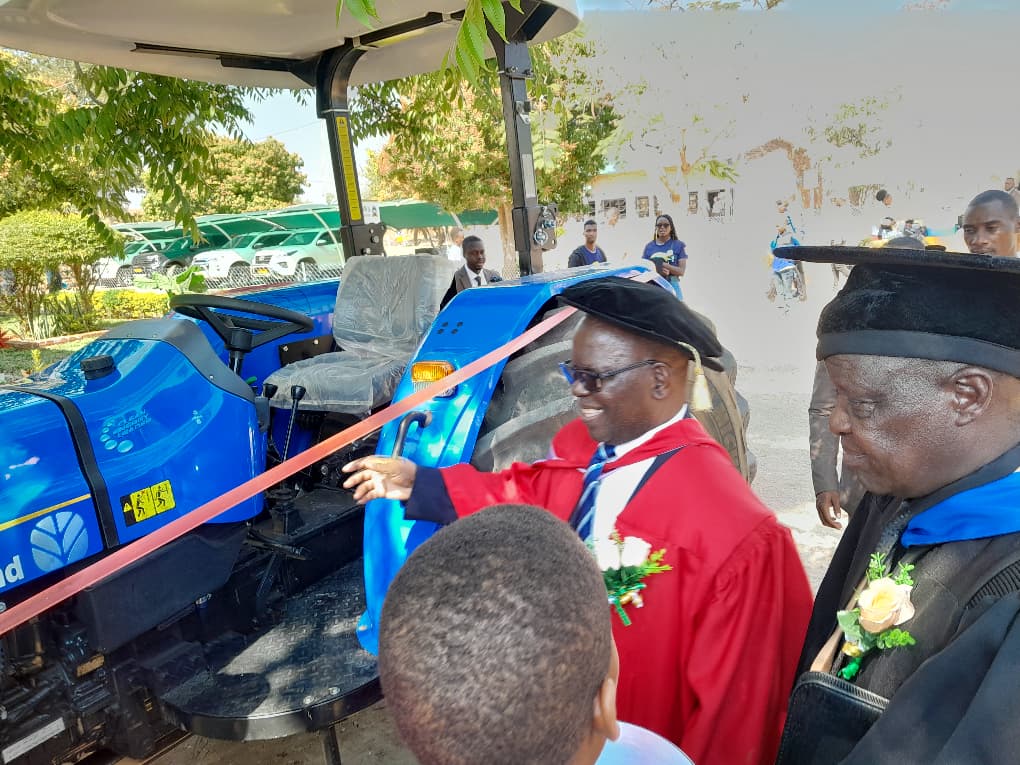
Embrace AI and innovation in classrooms, government tells new teachers
Trust Freddy Herald Correspondent The Government has challenged newly qualified teachers to drive Zimbabwe’s industrialisation by embracing digital tools, Artificial Intelligence and innovation in classrooms. This came out on…