admin
admin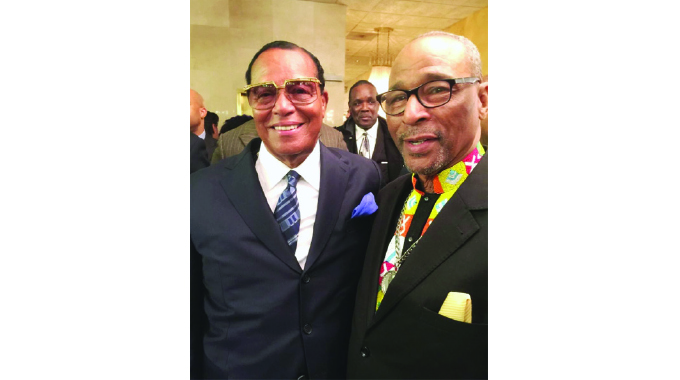
Tendai H Manzvanzvike-Head, Zimpapers Knowledge Centre
“IT was never my intention to circumvent the US government . . . I’m sorry for the mistake, but I am not sorry for attempting to help 14 million people who are starving,” Gregory Turner told a Chicago district court following charges that he wanted to be a sanctions buster on behalf of Zimbabwe.
According to a Chicago Tribune report of January 20, 2015, “in his statement to the court, Turner said he felt he was exercising his constitutional rights to petition his government for a redress of grievances by working with politicians to end the Zimbabwe sanctions.”
His mitigation was thrown out, for the Zimbabwe Democracy and Economic Recovery Act of 2001 enacted by George W. Bush had been criminalised, and successive US administrations implemented it to the full, with aid from US pawns in Zimbabwe.
Prosecutors argued that sanctions prohibited Americans and other Westerners “from providing services on behalf of or for the benefit of Mugabe and others”.
The long and short of it is that Turner ended up serving a 15-month prison term in 2015.
Following the sentencing, the US and European media on January 20, 2015 was awash with the story and skewed reportage.
Some of the headlines were: “Activist pleads guilty to illegally lobbying on behalf of Zimbabwe (2014)”; “Chicago man sentenced to 15 months in prison for violating US sanctions against Zimbabwe President Mugabe and others”; “Chicagoan sentenced to prison for illegally lobbying for Zimbabwe”; Chicago man gets jail for illegal lobbying for Zimbabwe’s Mugabe”; “US citizen sentenced for assisting Zimbabwe president”, etc.
But a headline in the Atlanta Black Star of January 22, 2015 captured the story within the story.
It read: “A Chicago man is being made an example for daring to lobby on behalf of Zimbabwe’s President Robert Mugabe.”
Thus Turner’s conviction and sentence was a deterrent measure, meant to send a message and discourage other activists who might have wanted to assist Zimbabwe in the quest to have the illegal sanctions removed.
The opening paragraph states what this was nothing, but duplicity: “In a case that highlights the hypocrisy of American foreign policy, a man in Chicago was sentenced to 15 months in prison… in an effort to get the sanctions against Zimbabwe lifted.”
But Gregory Turner died this Sunday.
We celebrate the life of a man who was the personification of the “heart and soul of Pan-African identity” according to Ambassador Christopher Mutsvangwa; and, a fierce critic and activist against the illegally imposed economic sanctions against Zimbabwe by the US and its allies.
We also reflect on whether it was fate that saw this African-American reside in Zimbabwe and pass on in his adopted home at St Anne’s Hospital at the age of 79.
The Beatles legend John Lennon says, “There’s nowhere you can be that isn’t where you’re meant to be.”
That is what it was with Turner, who according to family spokesperson Adiva Stone, “began planting his roots in Zimbabwe about 15 years ago”, five years after the enactment of ZIDERA.
At such a time as this, Turner was destined to be in Zimbabwe.
While he was called to another world, it is ironic that a day later, Brian Nichols, another man of colour and United States’ ambassador to Zimbabwe also said goodbye to Foreign Affairs and International Trade Ambassador Frederick Shava at his Munhumutapa offices.
Minister Shava spoke about the outstanding “albatrosses” between the nations, impediments that saw Turner fight for Zimbabwe and being made an example of how the US would deal with those opposed to the illegal sanctions regime, let alone lobby for their removal.
“The ZIDERA ensures that the Americans vote against Zimbabwe at international financial institutions like IMF and the World Bank among others. So I was saying this should be a thing of the past…,” said Minister Shava.
Interestingly, it was also ZIDERA that saw Turner being imprisoned under the Obama administration, another black man.
So, while some misguided Zimbabwean citizens continue to lobby for the renewal of the illegal sanctions that have ruined the country’s economy, there are in fact some Americans who have been jailed for daring the empire and calling for the removal of the ruinous sanctions.
Who is Gregory Turner?
According to information provided to The Herald by the family spokesperson, he was born C. Gregory Turner to Clarence Turner Sr and Bernice Roark on February 20, 1942 in Chicago, Illinois.
He was affectionately known as Greg or “Soldier”. He had four siblings — two living and two who pre-deceased him.
The spokesperson said Turner studied Business Administration and International Leadership. He was married to Ernestine Turner, and they raised nine children – three sons and six daughters.
On major achievements, Stone said, “His family was his motivation to make a positive impact in this world and to do his part to enhance the lives of African people through the Diaspora. His love for his people is immeasurable.”
Turner had exposure of other cultures, economies, politics and lifestyles for, “he spent the past 40 years travelling across the African continent and the Middle East, networking and aiding in development projects that created jobs to help more African people become self-sufficient.”
She added that his family “mourns the great loss of a beloved husband, father, grandfather, great grandfather and friend to many. Our hearts are pained, but we are strong and confident, knowing that he watches over us and that his legacy lives on in us.
Turner’s passing on exposes the ugly and beautiful aspects of life. It also proves that no situation is permanent, for change is constant.
It’s been two decades since the imposition of the illegal sanctions on Zimbabwe by the US and its allies, because Zimbabwe rightfully reclaimed that which belonged to it — LAND.
In the same vein, the US is commemorating two decades of the bombing of the twin towers in New York by al-Qaeda. But there was more to it. After September 11, the US and its allies invaded Afghanistan, hunting down the al-Qaeda mastermind, Osama bin Laden.
Twenty years on, instead of a sombre atmosphere and the declaration of ultimate victory against the jihadist fighters, the Americans and allies are leaving Afghanistan in a worse off situation, for the Taliban have retaken Afghanistan, and chances of another civil war are quite high.
We are bound to question why so much pain and misery was inflicted, why trillions of dollars were poured into the Afghan fight only to abandon it at the end?
Does freedom and democracy have a “sale by date?” By August 31 the embarrassed US invading force will have left Afghanistan.
When it comes to Zimbabwe and the ZIDERA project, you cannot afford to miss the irony, and to say once again that nothing is forever.
For on Monday, the International Monetary Fund deposited almost US$1 billion of Zimbabwe’s Special Drawing Rights into the Reserve Bank of Zimbabwe, the very institution that has been hounded for 20 years.
The last time the SDRs were extended to Zimbabwe was in 2009, the time when Turner used his civil rights agility to call for the removal of the illegal sanctions.
And the tranche was deposited a day after Turner’s passing on. We raised our eyebrows.
Even in 2020 when the Covid-19 pandemic ravaged the world, the IMF did not to extend an olive leaf to one of its members, despite the fact that Zimbabwe cleared its US$106 million debt in 2016.
New African magazine quotes Permanent Secretary in the Ministry of Finance and Economic Development Mr George Guvamatanga saying last year: “It is very unfair for Zimbabwe to be locked out of support to deal with a global humanitarian crisis, which it did not create, considering that we are already on our own, dealing with a drought and a cyclone induced crisis.”
He sounds very frustrated that humanitarian assistance was being blatantly politicised.
Despite the Second Republic’s engagement and re-engagement efforts, can we conclude that while the US has lost in Afghanistan, it had to rethink its policy with Zimbabwe because they could have easily blocked the IMF tranche? We continue to watch the space.
But herein lies Turner’s chivalry. The system that put him in jail and forced him to move to Zimbabwe has given in.
While the US judiciary system criminalised his humanitarian gesture, little did they know that Turner would have the last laugh.


 Online Reporter