admin
admin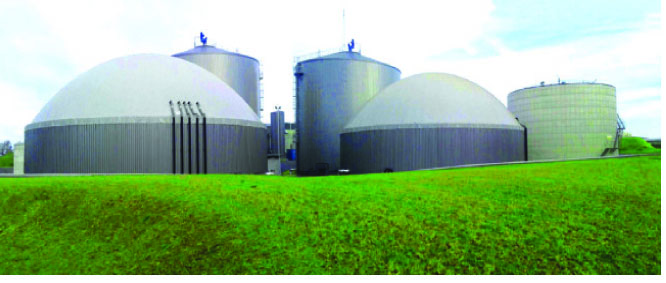
Ray Bande
Senior Reporter
WHEN his parents died one after the other as he was still undertaking his Form Three studies, life became hell on earth young Tawanda Chitiyo, the first born in a family of four.
His relatives, perhaps that old brutal generation that took advantage of gaps in inheritance laws back then, grabbed the orphans’ family house, car and household property.
“I grew up as an orphan. My relatives grabbed all the inheritance that my parents left – the house that we lived in, the family car we had, in fact everything. They took away everything. I waged a spirited fight to repossess our property, but all was in vain,” said Chitiyo.
As he grew up, now in the custody of other relatives that were sympathetic, Chitiyo took time to research on renewable energy concepts.
“That experience made me grow up fast. That was the source of my motivation to succeed in life,” said Chitiyo, who is now 35.
“I learnt all this through taking time to understand the basics of waste.
“I can also safely say this was all self-taught. I don’t know how I really came understand all this, but I have now mastered most of the stuff.
He finds himself exploring the production of renewable natural gas (RNG), otherwise known as biogas, after establishing Tawanda Energy (Pvt) Limited — a diversified group operating in the energy, bio-fuels, petrochemicals, and related industries.
His company operates community scale bio-refineries to produce petrol, renewable natural gas (RNG), electricity and green coal; all from waste.
Where we all see sewage waste, Chitiyo sees the potential transformation of the waste into clean power for the community around him.
By the end of February next year, plans are afoot to ensure that Tawanda Energy produces natural gas at Mutare Town Water Works premises in Yeovil, Mutare.
Chitiyo’s vision and mission is to become the driving force for social, environmental, and economic benefits by producing gaseous and liquid climate-friendly energy carriers.
It is a project that aims to accelerate the development and introduction of climate friendly natural fuels into households, transport, construction, farming, and energy sectors.
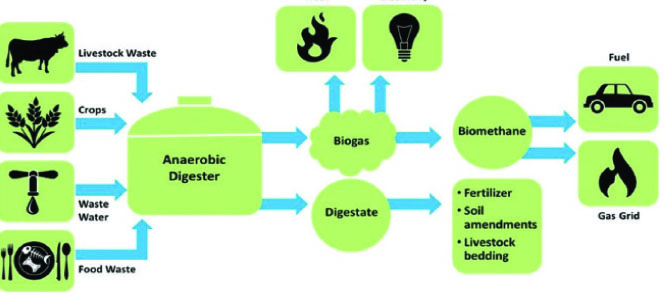
The project is entering a niche market where sewage sludge, municipal solid waste and agricultural waste have not been recycled on any sizeable scale in Mutare or in Zimbabwe at large.
Ideally, for the good of the environment, the project will create local demand for low value sewage sludge that often finds its way into streams and rivers.
It will encompass diverting sewage sludge from landfill disposal, extending the lifespan of existing disposal sites and prolonging the sitting and construction of new ones.
This is a unique and viable concept that addresses the needs of various customers, stakeholders and reaches an untapped market with tremendous growth potential that is also environmental friendly.
The beauty of it all is the ability to produce a local source of gas to displace fossil fuel derived imports and reduce air pollution in many parts of the country, thereby substituting low or ultra-low sulphur content fuels for higher-sulphur content fuels.
According to Tawanda Energy, waste is an inevitable product of society, and one of the greatest challenges for future generations is to understand how to manage large quantities of waste in a sustainable way by converting all the waste to energy.
Therefore, Tawanda Energy’s intends to collect and convert all forms of waste produced by the City of Mutare and converting it into energy carriers.
They are geared to begin by producing 1 100kg of gas every day when production commences. Operating at full capacity, they expect to produce up to seven tonnes of gas per day.
It is reported that Zimbabwe consumed 13 million kilogrammes of LPG in the first quarter of 2021 and that translates to 144 tonnes per day.
With a majority of municipalities facing serious economic, social and environmental challenges related to solid waste management, the need to design a world class biogas harnessing facility at the underutilised waste treatment plants make perfect sense.
It is an initiative that will serve as a showcase for how we can make much better use of sewage sludge generated at the waste treatment plants.
But how did he get this idea?
“The idea came from our surroundings. Coming from an underprivileged background, I needed something to do. Waste is all over the place and it is all that we had, so I decided to focus on that waste as a resource for socio-economic advancement,” he said.
In his journey in the energy sector, Tawanda has also faced several challenges.
“The major challenge is lack of funding. I had to resort to self-funding. My sister Primrose and l are working together to help finance Tawanda Energy. It is because not many people understand the concept of waste to energy and its benefits. No bank or lending institution is willing to fund the project no matter how impressive the business plan is. That is the major obstacle in the business,” he said.
“Last year we also lost the US$3 600 we had invested in an electricity generation licence application,’’ he added.
However, he also has his fair share of success stories in this journey.
“Setting up such facilities is very complicated and the energy industry is heavily regulated so that is another obstacle. A bio-refinery requires a lot of expertise and that makes it capital intensive,” he said.
“The major breakthrough was the lease agreement we signed with City of Mutare. The lease agreement ensures us of land, and an already existing infrastructure we can leverage from.
“The partnership we have with the Harare Institute of Technology is also helpful. This also applies to the technical partnership we have with a German-based organisation, Astra Innovations.”



 Online Reporter