Online Reporter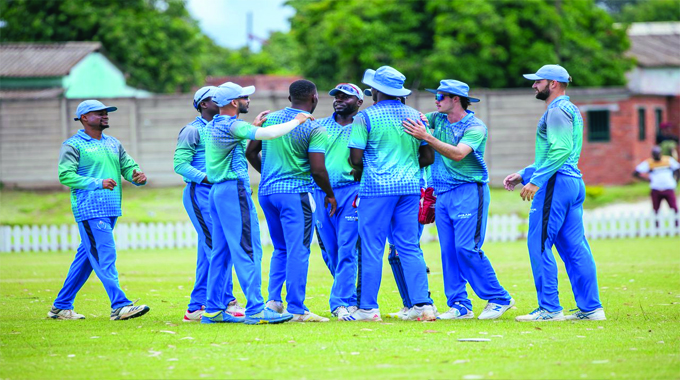
Zimpapers Sports Hub
A shadow hangs over Tuskers after a calamitous 2024/25 season. Their performances, consistently underwhelming across all three domestic competitions, have plunged the Bulawayo-based side into a critical period of reckoning. Rock bottom finishes in the Logan Cup and the Domestic T20, coupled with a near-last place in the Pro50 Championship, paint a stark picture of a team in disarray.
Throughout the season, the team’s struggles were evident, characterised by a recurring inability to perform effectively under pressure. With the season concluded, Tuskers must now engage in rigorous self-examination. Each player and coaching staff member must critically assess their individual contributions and the team’s collective shortcomings.
In the Pro50 Championship, Tuskers secured only three wins against an equal number of losses in their eight matches. In the Logan Cup, they managed a solitary victory, suffered four defeats, and drew three times.
Their performance in the Domestic T20 competition was even more concerning, as they lost all four of their matches, marking a bleak conclusion to the domestic season.

Saturday Chronicle spoke with several local cricket enthusiasts, closely associated with the provincial setup, who, on condition of anonymity, shared their perspectives on the root causes of the team’s poor performance, which they believe extends beyond this season.
“I firmly believe that a significant issue was the consistent selection of the same players across different formats. Some players are simply not suited for limited-overs cricket, yet they were consistently included in the team.
“Furthermore, the Pro50 team featured an excessive number of opening batsmen in the starting eleven. Players like Nkosana Mpofu, Tanunurwa Makoni, Brian Chari, Ali Hamid, Tafara Mupariwa, and Brian Mudzinganyama were all included, which was a recipe for failure. These players are accustomed to opening the batting and utilising the power play, but they were forced to play outside their comfort zones,” said one source.
He also suggested that the local Bulawayo setup contributed to the team’s poor performance at the national provincial level. The scheduling of local T20 matches during periods designated for longer format provincial games hindered the proper selection of in-form players.

“Our local setup is flawed. We played T20s locally in the lead-up to the Pro50 and Logan Cup. Ideally, T20s should be played in preparation for the Domestic T20 competitions, allowing us to select the best performing players. The current approach is illogical, rendering local league performances irrelevant.
“Additionally, we have relied on the same core group of players for an extended period. This approach is unsustainable. When players under-perform, there are no consequences. We should have provided opportunities for our Under-19 players,” he said.
Another source highlighted the issue of poor local planning. He attributed the team’s dismal results to inadequate preparation stemming from a lack of strategic planning. He also criticised Zimbabwe Cricket (ZC) for contributing to the team’s downfall.
“Firstly, it’s a matter of preparation. There was a lack of adequate preparation. The planning for the Logan Cup was inadequate. We were playing T20s locally during a period when players should have been preparing for the longer format games.
“I also believe that ZC has let Tuskers down. The coach resides in Harare, and some players are based in Harare, which makes cohesive practice impossible. They only meet a day or two before matches, which is nonsensical. How can a team be effectively selected under such circumstances?”
He added that selectors rarely attend practices, which hinders the selection of the best performing players. He also urged the executive to provide players with opportunities to express themselves.
“There needs to be a strong team culture. Players need to set individual and team goals. Do the coaches engage with the players? Is there a healthy relationship between the coaches and the players?” he asked.
With the season over, Tuskers must use this period for critical reflection. This introspection will be crucial in identifying the missteps and formulating a plan for rebuilding and refocusing the team.