Chronicle Editor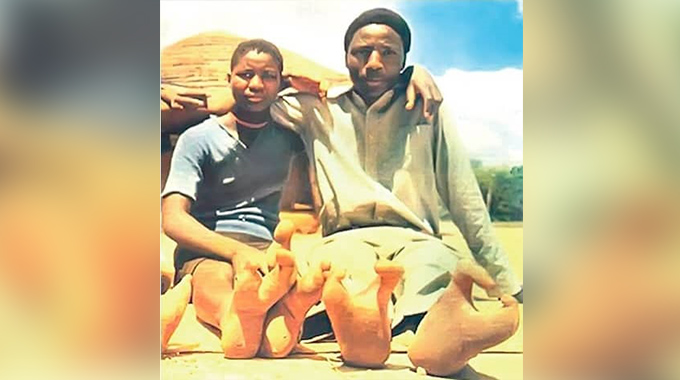
Indigenous tourism in Zimbabwe is opulent. The country is home to more than 70 different ethnic groups which is mirrored in their cultures, traditions, languages and beliefs.
Since curiosity in other cultures is natural, the Doma tribe captivated my attention and inquisitiveness on their exceptional mythology and surreptitious nature.
The Doma people are derided as the two-toed people due to a genetic mutation from which many in the community suffer.
The majority of them live with this deformity, known as ectrodactyly, also known as lobster claw syndrome, sometimes known as Karsch-Neugebauer syndrome which is a rarely common condition among the general populace of Zimbabweans.
Ectrodactyly is scientifically defined as a genetically unrelated limb growing defect characterised by the non-appearance of digital rays and syndactyly of the remaining digits which causes the toes to develop into two large toes rather than five.
In this uncommon genetic condition, the middle three toes are absent, and the two outer ones are turned in, thus this characteristic led the Domas to be known as the ostrich-footed people.
Population of the Doma tribe
According to statistics on the populations of indigenous people, the Doma tribe make up approximately 0,03 percent and are only 1 250 in total of Zimbabwe’s population. The Doma are one of the tribes in Zimbabwe that have chosen and continue to live in complete isolation from other tribes in the country.

The Doma live in the Kanyemba region bordered by Mozambique to the east and Zambia to the north in the northern part of Zimbabwe.
The Doma are currently the only hunter-gatherer tribe living in the Mwanzamutanda Mountains near the country’s border with Zambia.
Interesting facts about the Doma people
The Doma people are not allowed to marry outside of their tribe due to a tribal edict, thus, their condition remains within their cluster.
The Doma people do not view their two-toed feet as a disability.
It is believed that the Doma people are capable of disappearing in the forest and performing magic, are capricious, hard to find and can live among trees.
They still survive a nomadic life in the mountains, spending their time fishing, hunting, gathering wild fruits and roots.
The Doma people apparently don’t look at a person straight in the eye when talking to them, rather they stare at the ground.
Fostering human-centric tourism in Zimbabwe
Tourists travel for knowledge, pleasure, clarification and to satisfy the thoughts of their curious minds to appease a primeval restlessness within themselves.
Thus, the curiosity in indigenous or “human safari’ tourism is hastily increasing in this contemporary tourism.
Against this background, indigenous tourism is defined as a tourism activity in which native people are directly involved both through control and by having their culture regarded as the quintessence of the attraction.
When tourism arrives at a new cultural destination such as the Doma Village, prejudiced thinking and opinions can be dispelled so that cultural or ethnic differences can be celebrated and appreciated.

However, as ethical social thoughtfulness and respect is required, my advocacy will only apply if the Doma people are happy to receive visitors, have full control over where the tourists go, what they do in their village and receive a fair share of the profits earned from tourist’s visits.
Tourism will be a valuable source of income for the Doma community and indigenous-tourism will foster a greater awareness of various tribes, many of whom face coercion, forced land relocation and challenges to economic and socio-cultural integration.
Interestingly, visiting ethnic groups is nowadays appealing and gaining popularity for other itinerants and YouTubers who are enthusiastic to experience cultures very unlike their own.
For example, tribes such as the Himba in Namibia and the Maasai in Kenya/Tanzania have welcomed tourists into their villages and they have become tourist attractions respectively.
However, tourism has a share of its adverse impacts as it has always been culturally damaging and exploitative to local ethnic groups as they are taken advantage of in the name of economic development and a repugnant form of voyeurism.
A visit to Doma Village is a must for anyone interested in local cultures to help provide a reference position to the development of indigenous tourism in Zimbabwe.
Before visitors go to the Doma community, it should be ethically permissible whether alone or as part of an organised tour, that the visitors should ensure they are invited and should not take any photographs without permission.
As a consequence, the set of visitor travel procedures should be sustainably designed to ensure this type of discovery and experience is respectful and managed by the Doma community members themselves.
I’m confident that the cultural diversity and knowledge of the Doma tribe will bring innovative experiences and improve the standard of living for their community as a tourist destination.
Simbarashe Murima (PhDc) writes in his own capacity as an education, tourism and hospitality expert in Namibia and Zimbabwe. Feedback: [email protected] or +263781480742



 Online Reporter