Robin Muchetu Health and Gender Editor
UNITED Bulawayo Hospitals (UBH) has set a new record after successfully conducting 55 free obstetric fistula repair surgeries during a recent camp held at the institution, attracting patients from as far as Mozambique.
The milestone highlights the growing capacity of Zimbabwe’s public health institutions to provide specialised medical services, with four of the beneficiaries travelling from outside the country to access treatment.
Dr Harrison Rambanapasi, an obstetrician gynaecologist at UBH who led the fistula camp, said the programme had exceeded expectations after initially targeting 40 patients.
“This is the first time we are doing it at UBH, we set out to operate on 40 patients with various problems emanating from difficult deliveries, but we ended up doing 55 operations. That is a record in itself as no other hospital in Zimbabwe has achieved the same numbers before. I also want to point out that four of the patients came from Mozambique. This is one area where our health care system was able to attract patients from outside and we are proud of that,” he said.
Dr Rambanapasi said the women who benefited from the camp had endured years of physical and emotional suffering because of the condition.
“These are women who are really struggling and some of them have been struggling for decades, the longest period we have had for this camp was around 25 years. It is very difficult for them, most of the time, the husband runs away and they lose their jobs, become social outcasts, relatives sometimes abandon them, they cannot go to church or funerals and it is really a difficult life,” he said.
An obstetric fistula is a condition that occurs during complicated childbirth, particularly when the baby’s head becomes stuck for an extended period during labour, resulting in tissue damage and the formation of an abnormal opening between the reproductive organ and the bladder or urethra.
The condition causes women to involuntarily leak urine and in some cases, an opening may develop between the vagina and rectum, resulting in the leakage of faeces through the reproductive organ.
Dr Rambanapasi applauded Government and partners for supporting the camp, describing it as a noble initiative aimed at restoring the dignity of affected women.
“For our Government and its partners to support such a camp, it is a noble idea, we also give credit to our local administration led by Dr William Busumani the CMO for coming up with the idea of a camp to help these vulnerable women. The camp saw women receiving the life changing operations, as the condition affects the women both physically and emotionally,” he said.
Head of Department — Anaesthesia Dr Nyemwererai Mathe, who spoke on behalf of Dr Busumani, said the programme had helped restore confidence among women who had suffered from the condition.
“This is a successful story to share, many women have lived in agony because of vaginal and rectal fistulas meaning that they leak urine or stool from their vaginal passage. This happens after they give birth under strenuous conditions and end up with this condition. They end up being an abomination in society. We are happy we had a successful four weeks of continuous listing of women from all over the country.
“This was a vision that our CMO shared with us initially, he wanted to help women and this became successful through the support of the Ministry of Health that partnered with UNFPA and expatriate doctors. The hospital was pleased with the huge turnout too, saying they had to stretch their camp from two to four weeks to accommodate all the women who had registered,” she said.
UBH also paid tribute to Dr Jean De Dieu Yunga, a gynaecologist and fistula expert based in Benin, who has been supporting Zimbabwe’s obstetric fistula camps across the country.
Dr Rambanapasi said fistula surgeries were complex procedures that require specialised skills and experience.
“It is very important to have people with more experience than us to come and help so that we also learn to do some cases on our own. We also need to work on sustainability, and this comes about if our local doctors are able to perform the surgeries on their own. We are grateful for Dr Yunga who has been coming to the country since 2014 to work with our doctors in transferring skills to them,” he said.
Dr Yunga commended UBH management for hosting a successful camp and said the turnout was encouraging.
“I would like to thank the management of UBH for allowing this camp to be hosted. I have been coming to Zimbabwe since 2014 and we have been operating on patients and it is a real problem in our African countries in general, I also go to other countries for this,” he said.
He said the number of patients treated at UBH was a significant achievement for a first-time camp at the institution.
“I was proud when I came here, it was my first time at UBH. The idea is to keep doing them in future. For a first-time camp I was very happy, I hope it remains like this. This is a big number; we have never done such a huge number for a first-time camp at any hospital. I have been to many hospitals in Zimbabwe, Gweru, Parirenyatwa, Sally Mugabe, Chinhoyi, Mashoko, Mutambara, Morgenster and Chidamoyo but here at UBH we have done 55 patients for the first time. I am impressed,” he said.
Dr Yunga said obstetric fistulas had devastating social and economic effects on women, with many facing stigma and isolation because of the condition.
He said successful repairs would help restore their dignity and enable them to return to productive lives.
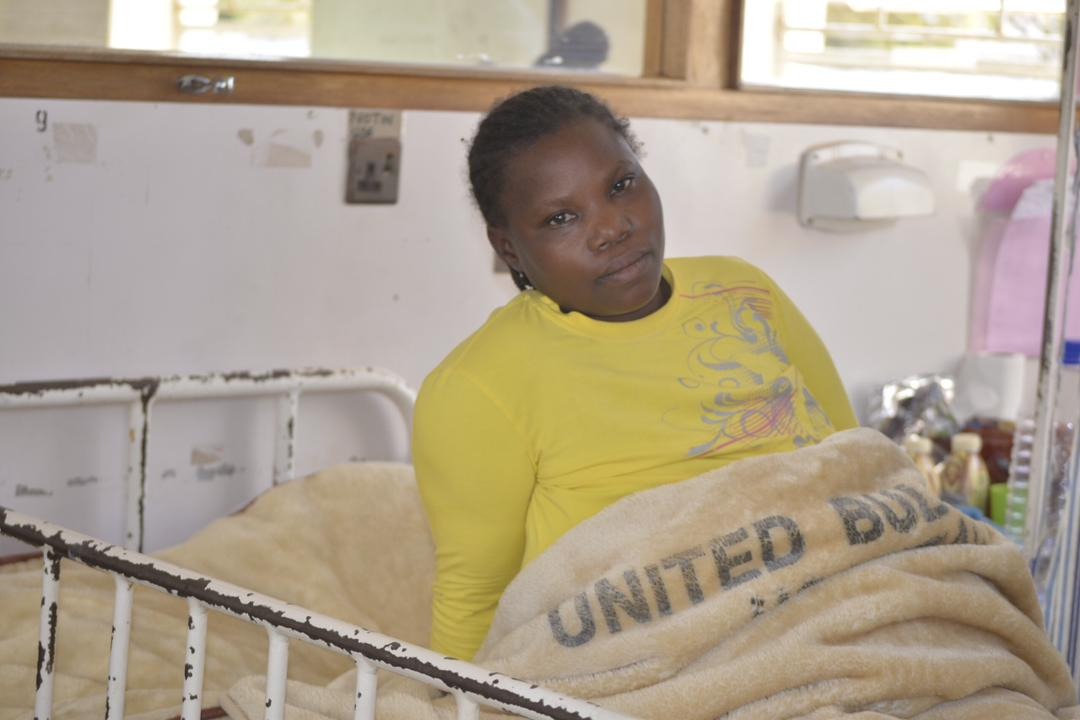
Ms Susan Arimando Machibomba (28), from Beira, Mozambique, was among the four foreign nationals who travelled to Zimbabwe for the surgery.
She said her condition started in 2023 after she experienced complications while giving birth.
“This problem started in 2023 after giving birth. I never went to a health center initially but was attended to by a traditional healer so the baby’s head only came out and the rest of the body was stuck inside. I was then ferried in a wheelbarrow to the hospital to give birth. But after that, I started leaking urine. I lived with this condition until I was told of this camp when I came to
Chimanimani in Zimbabwe to look for employment. The woman I wanted to work for told me this information and she assisted me until I got to Bulawayo for surgery. I could not work because I was constantly leaking and needing pampers. I am hopeful after I recover, I can now work,” she said.
Ms Machibomba said her husband left her after she developed the condition, while her baby died during the difficult delivery.
UBH said there were still many women in need of fistula repairs and encouraged those affected to seek treatment at the hospital.
The institution recently opened a euro-gynae clinic (fistula clinic) at the maternity unit, which operates every Wednesday.
“The idea is to not to wait for a fistula camp, we want to continue to see the women and operate on them and even the ones that have been operated on now need to be reviewed. So, all the patients that have fistula challenges can now come and get treated easily,” added Dr Rambanapasi.
—@NyembeziMu