

 admin
adminKundai Marunya
ONCE ridiculed on social media as the epitome of backwardness, Gokwe is on the verge of a dramatic transformation that defies the stereotypes long associated with it.
For years, jokes like “Are you from Gokwe?” were weaponised to question someone’s awareness. But this year, the tables are turning. This once-despised district not only hosted Zimbabwe’s 45th Independence Day celebrations but emerged as a symbol of national development and pride.
The main celebrations were at Nembudziya Growth Point, Gokwe North District, in the Midlands Province.
This decision has sparked a wave of development in one of Zimbabwe’s most overlooked areas, with far-reaching improvements in infrastructure, healthcare, water supply, road networks, and cultural heritage.
But perhaps the most revolutionary development is in healthcare, specifically the rollout of telemedicine services, which could soon make Gokwe one of the best medically serviced districts in the country.
In a recent post-Cabinet briefing, Information, Publicity and Broadcasting Services Minister Dr Jenfan Muswere said that as part of the preparations for the Uhuru celebrations, health facilities, including telemedicine centres, were being put in place in the broader objective to transform Gokwe.
Dr Muswere emphasised the Government’s commitment to ensuring healthcare access during and beyond the celebrations.
“Concerning health and wellness, the following services, among others, have been mobilised for the celebrations: 10 emergency health management teams; 10 ambulances; an air ambulance; and emergency kits,” he said. “A VIP ward, isolation centre, and 16 telemedicine centres have been established. Construction of a mortuary and extension of a ward are already underway at Nembudziya Hospital.”
Telemedicine is the remote diagnosis and treatment of patients through telecommunications technology.
This means patients in Gokwe will be able to consult with doctors and specialists without having to travel long distances to hospitals—a revolutionary step for a rural district that previously lacked adequate basic healthcare infrastructure.
This bold investment positions Gokwe as a medical frontier. The introduction of telemedicine not only addresses current healthcare access challenges but also provides a blueprint for delivering specialist care across other underserved areas of Zimbabwe.
If fully implemented in other parts of the country, rural residents who might previously have delayed or foregone care due to distance and cost will now have access to consultations, prescriptions, and even diagnostic services through digital platforms.
Access to healthcare has been a major challenge for Zimbabweans in both rural and urban settings. There is a generally high traffic in public healthcare facilities, which are affordable but face serious staffing shortages due to health worker exodus to the United Kingdom and the United States.
Private healthcare is expensive and inaccessible to many. Telemedicine will thus allow fewer doctors to assist as many people, while serious cases can then be referred to clinics and hospitals. Fewer people physically going to seek medical assistance will also ease the pressure on clinics and hospitals, allowing those in need to get the best in-person care.
This is a giant step towards adopting technology to better lives. Telemedicine is a phenomenon growing in Africa and beyond. It has previously been implemented in South Africa, where Vula Mobile, a mobile application, allows healthcare workers in remote areas to connect with specialists.
The application has been widely used in public hospitals, especially in rural areas, for faster diagnosis and referral.
In Rwanda, they have adopted Babylon Rwanda; the government has partnered with Babylon Health to offer digital consultations via mobile phones.
Over three million Rwandans are registered on a platform where patients can consult doctors remotely, receive prescriptions, and access health records digitally. Ghana has gone a step further to deliver medicines using drones through the Zipline initiative.
While Zipline uses drones for medical delivery, Ghana also uses teleconsultation services integrated into pharmacies through platforms like Mutti Doctor. Other African countries such as Kenya also use telemedicine, while internationally, India, the United States, China, and Brazil have successfully implemented different initiatives in telemedicine.
Telemedicine should, however, be tailor-made to limit system manipulation. There are concerns over how some online prescriptions could be abused by drug addicts; thus, there is a need for operators to be vigilant and be on the lookout for such loopholes.
Another worry is that some medication could not be accessible from remote areas, but like in other countries, there is an opportunity to invent a system that works—something that can be sustained locally.
In tandem with these health advancements, Nembudziya Hospital is undergoing further expansion with the construction of a mortuary and the extension of an inpatient ward.
This is all part of the Government’s broader aim to make health and wellness a central legacy of the Independence celebrations.
Beyond healthcare, other public infrastructure projects are also changing the face of the district.
Nembudziya Government High School received new classroom blocks, a domestic science laboratory, and a senior science laboratory.
Nyamuroro High School, the venue for the Children’s Party held on 17 April, was upgraded with hostels and ablution blocks.
These educational facilities were built to last, marking a shift from event-based development to long-term investment in human capital. Gokwe’s accessibility also received a major boost. Roads leading to Nembudziya were re-gravelled and surfaced as part of the Emergency Road Rehabilitation Programme.
“The short-term interventions include the re-gravelling and surfacing of major feeder roads to and from Nembudziya Growth Point, for completion prior to 17 April 2025,” Dr Muswere said.
These improvements facilitated not only movement during the celebrations but ongoing trade and mobility within the district.
Additionally, 129 boreholes were drilled, seven of which are at the event site, ensuring clean water was readily available.
“A total water storage capacity of 60,000 litres has been set aside for potable water during the celebrations,” added Dr Muswere.
Economic empowerment is also being addressed through the creation of 100 Village Business Units (VBUs) in Gokwe Nembudziya. These VBUs come with solar-powered boreholes, horticultural gardens, fish ponds, and community water taps, all designed to improve food security and income generation.
They reflect the Government’s effort to ensure that Independence Day leaves behind more than just memories; it leaves functioning micro-economies that will benefit rural families for years to come.
The event also shone a spotlight on Gokwe’s role in Zimbabwe’s liberation history. The Independence Flame passed through the district’s key heritage sites, including the former Sikombela Restriction Camp, before arriving at Nembudziya Growth Point.
Furthermore, 132 graves in Midlands Province heroes’ shrines were refurbished with concrete slabs, and a memorial plinth and field museum at Sikombela were completed in time for the celebrations.
A VaShangwe Cultural Village was also constructed as a lasting tribute to the region’s cultural heritage, setting the stage for future tourism and heritage preservation.
Gokwe, once the subject of mockery, is now writing a new narrative—one of growth and inclusion. With 16 telemedicine centres alone, it is setting a national benchmark for rural healthcare delivery, and by doing so, redefining what is possible when political will meets community need. The hope is that after the celebrations, these developments will cascade across the country. — The Patriot



 Bongani Ndlovu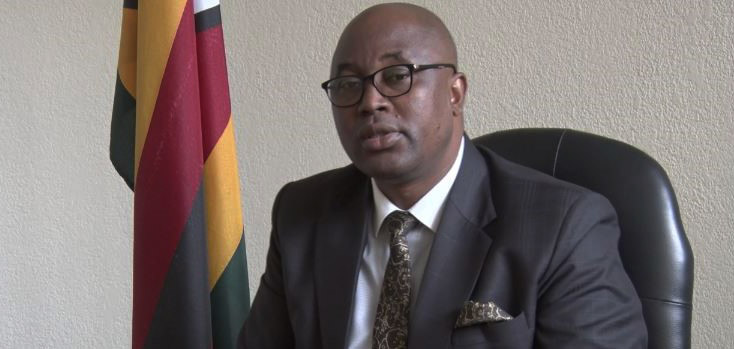
 Online Reporter