

 admin
admin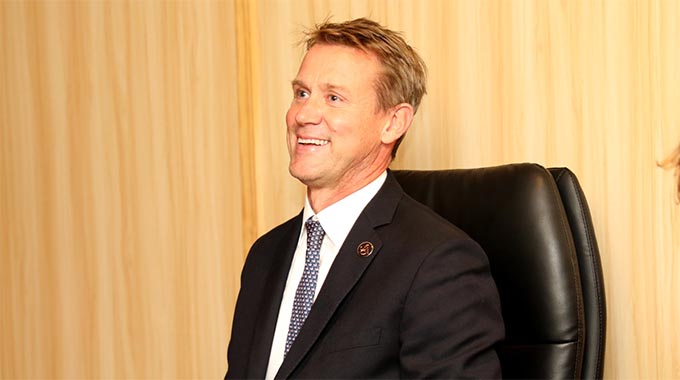
Peter Tanyanyiwa-Herald Correspondent
British Ambassador to Zimbabwe Pete Vowles today announced an additional US$5,5 million funding for landmine clearance in Mashonaland East and Mashonaland Central Provinces.
This funding aims to support the Mines Advisory Group (MAG) and The HALO Trust in their ongoing efforts to clear landmines and educate communities about the dangers posed by the explosives.
Ambassador Vowles emphasised the importance of this initiative during his visit to Rushinga in Mashonaland Central.
“This funding will not only save lives but also help Zimbabwe achieve its goal of being landmine-free by 2025,” he said.
“We are committed to creating safe environments that allow communities to thrive.”
The funding will facilitate the release of land for agriculture, housing, and essential services, which is crucial for improving livelihoods in affected areas.
It also aims to create employment opportunities.
RELATED
HALO Zimbabwe programme manager Oliver Gerard-Pearse expressed gratitude for the UK government’s support.
“With this continued support, we can ensure that fewer children in Rushinga and Mudzi have to choose between walking through a minefield or receiving an education,” he said.
“This funding represents a life-saving collaboration that will help families work their farmland safely.”
This new funding follows the UK’s earlier announcement in February 2024 of US$22,2 million for mine clearance efforts across eight countries, including Zimbabwe.
Under the current allocation, MAG will focus on clearance and risk education in Mashonaland East, while HALO will provide similar services in both Mashonaland Central and East.
Landmines, which were laid in Zimbabwe during the 1970s by the former white minority government, continue to pose a significant threat.
Currently, approximately 18,3 km² of land still needs to be demined.
Zimbabwe is one of the few countries actively working towards meeting the 2025 clearance deadline under the Ottawa Convention.
The UK has been a long-time supporter of Zimbabwe’s demining efforts, with funding beginning in 2016.



 Online Reporter