Online Reporter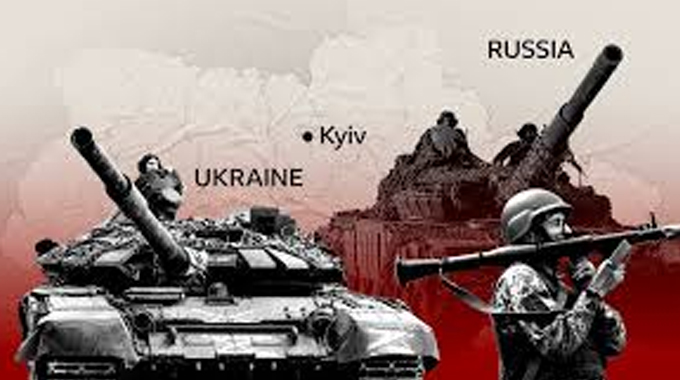
Gibson Nyikadzino, Correspondent
TOMORROW marks three years since Russia launched its Special Military Operation (SMO) in Ukraine to diffuse and neutralise the US and Nato’s expansionist policy eastwards by using Ukraine as a proxy to threaten Russia’s security interests. Now, there are some ongoing efforts to bring the war to an end. Historically, wars end on the negotiating table.
The beauty of political history is its reflective character and ability to allow people understand how past problems were created, how they were resolved and also, how power was used. In order to understand current events and developments, in particular those pertaining to Ukraine and Russia, revisiting the past is important to enlighten the present.
In relation to Ukraine, a trip into history shows that, traditionally, great-powers will always decide the fate of small or losing states to avoid plunging nations into further war, even when the small or defeated states have reservations about proposed peace settlement terms.
This has been the case with Germany after the First World War at the Versailles Peace Treaty. The Germans were made to accept that they had caused the war. Even though they were contradicting the terms, that was the outcome.
Also, at the Yalta Conference in 1945 following the end of the Second World War, three great powers decided the fate of what the future would be. Then USSR leader Joseph Stalin, US President Franklin Roosevelt and British Prime Minister Winston Churchill gave finality to terms that were ending that war, trading security and peace guarantees that had to be accepted by other nations. This is how the world of global politics operates.
So, Ukraine is not an exception.
During the 1962 Cuban Missile Crisis, despite Cuba’s Fidel Castro allegedly insisting that the USSR use nukes on the US, the outcome was a transaction that happened between US President John F Kennedy and his USSR counterpart Nikita Khruschev.
As the cases for both Ukraine and Cuba, when great powers are involved, none of the two should claim sovereignty because they are or were at the centre of cruel global politics where force and war are instruments used to ensure the security of states.
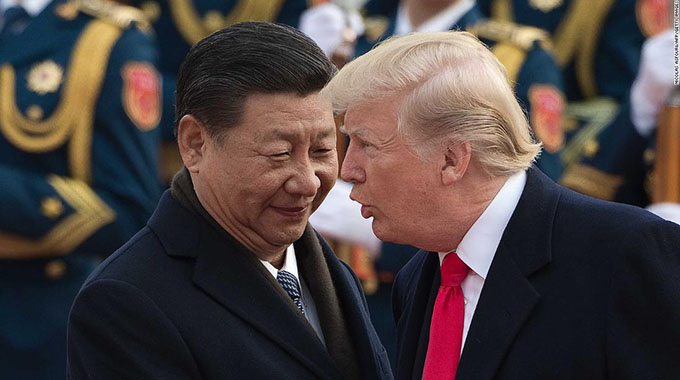
Therefore, the efforts by Russia, the USA and now China to push for peace are not a first instance we see leaders of great-powers making such moves. This shows that in historical and contemporary times, new eras will always emerge that reveal that international relations should not be determined by rules of multilateral institutions, but through deals entered into by great-power leaders.
There is a unison mindset in Presidents Donald Trump, Russia’s Vladimir Putin and China’s Xi Jinping that peace must prevail. Unfortunately, the mindset to end the war is non-existent in the minds of the European Union (EU) and Britain. For over a decade, since 2014 when Ukraine started committing a genocide against Russian speaking minorities in the Donbass region, successive British prime ministers and EU presidents blocked efforts towards peace, choosing a warpath.
Moreso, in the case of Ukraine’s President Vladimir Zelensky, for the past three years he exhibited evidence of disinterest in peace talks.
However, these peace negotiations are still in their infancy and along the way they may turn out to be difficult, complex and challenging. For example, basing on President Trump’s remarks, Ukraine can give up part of the land to Russia. Basing on this line, President Trump will have a difficult time to project that his proposals are not a terrible humiliation for the US, Nato and the EU.
It also explains why the United States under former President Joe Biden did not want peace talks because it knew it was facing defeat as it did not do anything to ensure the implementation of the Minsk agreements, and kept silent and not pull Kiev up when Russian speaking minorities were killed in Donbass. Instead, Biden put the blame on Russia.
As the late Henry Kissinger wrote in 2014 that: “The demonisation of Vladimir Putin is not a policy; it is an alibi for the absence of one.” In the same view, on 6 October 2022, former President Biden acknowledged to Democrat donors that, “we have not faced the prospect of Armageddon since Kennedy and the Cuban Missile Crisis”. Russian President Putin, he added, was serious about using nuclear, biological, or chemical weapons because “his military was, you might say, significantly under-performing”.
But now, the efforts by the US under Trump to reach out to Russia can mean the former is seeing the changing realities in the changing dynamics in the global political, economic, military and security cooperation between states.
While the US remains a great country that established its dominance in a unipolar world, it is no longer a sole significant player whose potential to set global standards is no longer relevantly available in comparison to Russia and China.
It also needs to be understood and put to the public why President Trump is willing to give concessions to Russia. During his presidential campaigns, President Trump vowed to “untie and un-unite” the Russia-China alliance which he said was growing strong. “The one thing you never want to happen is you never want Russia and China uniting. I’m going to have to un-unite them, and I think I can do that, too. I have to un-unite them,” President Trump said last November.
It is not wrong to assume that President Trump will likely walk away if his expectations in the peace negotiations are not met. He did the same in his first White House stay when he twice met North Korea’s leader Kim Jong-un and walked away after his expectations were not met.
Another dimension that can be explained from a historical similarity is that President Trump is replicating what Richard Nixon did when he courted China to contain the then USSR during the Cold War. Alternatively, President Trump could be courting Russia to contain China, which it perceives as its biggest competitor as a rising power. This vaguely resembles a reverse of the Nixon strategy that built a US-China front against Moscow.
It is giving an impression that part of President Trump’s interest to “untie” the Russia-China alliance is through speaking with disdain against Ukraine, blaming it for provoking the war, with the hope that the US can use Russia as a tool against China. The danger of this is to think that Russia will be separated from China when they have laid the foundation for an alternative multi-polar world that Global South countries are seeing as the centre of gravity to challenging US hegemony.
Without doubt, President Trump and his administration are releasing a radical new geopolitical strategy, one which can be viewed in the context of a US that is turning against traditional European allies and looking elsewhere for new partnerships, either for peace, or a containment policy.
The Ukraine issue is key in giving context through some historical moments, it offers valuable insights into the significance of the role of leadership from great powers in ensuring peace. This is an opportune moment that highlights the complexities of leadership in times of crisis and the challenges that leaders face when making decisions that have far-reaching consequences for the world through diplomacy.