Online Reporter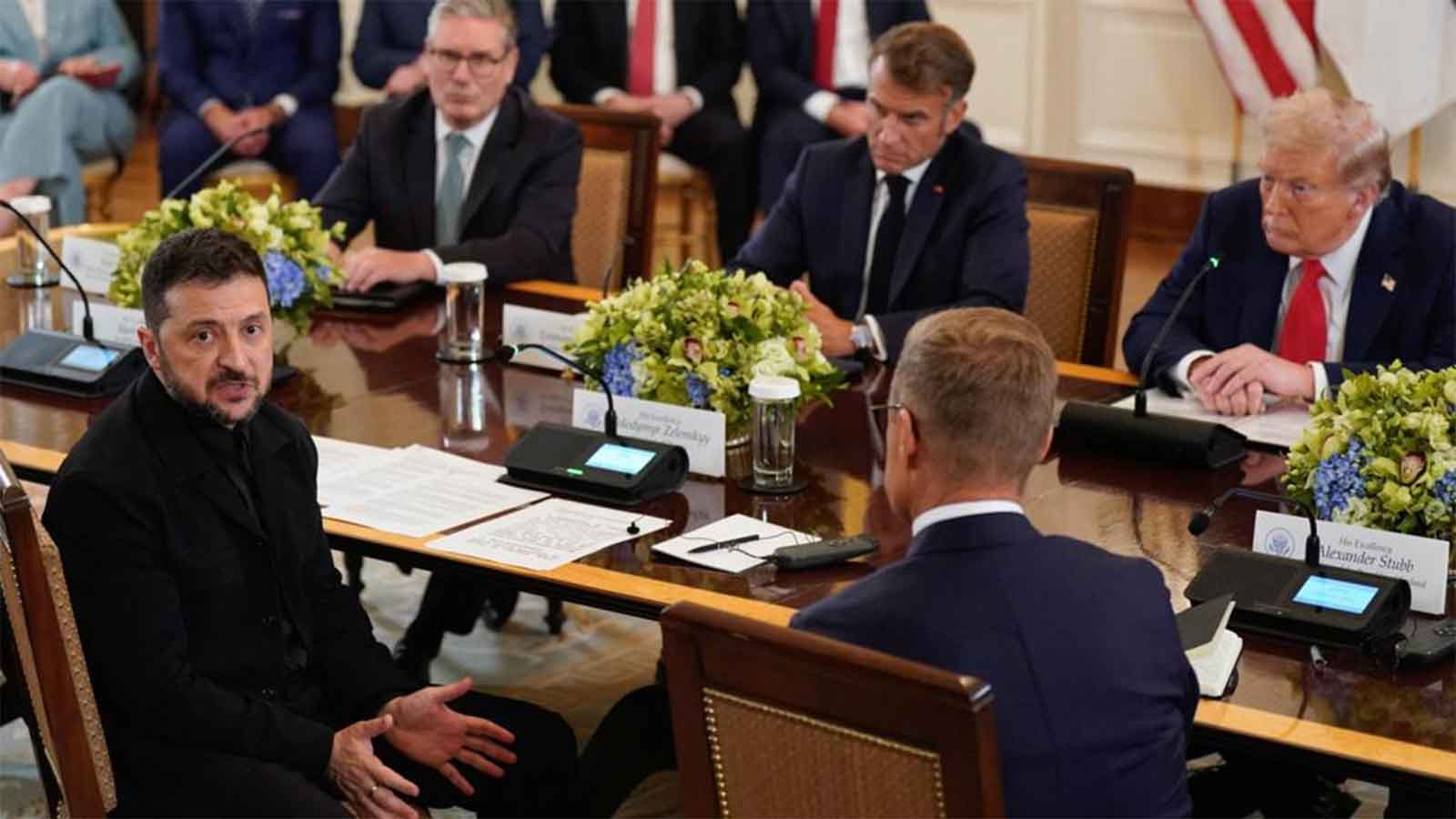
Sergey Poletaev
Washington is pushing for an energy truce between Russia and Ukraine.
Kiev supports the initiative, and Moscow has also responded favourably.
Another round of shuttle diplomacy has taken place: US President Donald Trump met with Ukrainian leader Vladimir Zelensky, and a special representative of Russian President Vladimir Putin travelled to the US for talks with his American counterparts.
Work is underway to revive the trilateral negotiation format involving Russia, Ukraine, and the US.
Judging by these and other news reports, one might get the impression that things are moving toward a diplomatic breakthrough and a truce between Russia and Ukraine.
However, this impression is deceptive: A closer analysis reveals that the positions of the parties have not changed over the past year. On the contrary, Ukraine’s worsening situation has hardened its resolve to fight to the bitter end.
In spring 2025, Ukraine, with the backing of its European allies, launched a major campaign for a ceasefire.
The expectation was that Trump would force Putin to accept the terms imposed by Europe and Ukraine, freezing the hostilities along the line of contact without any preconditions.
A truce would have cemented Ukraine’s defeat in the conflict.
However, Russia’s primary objective would not have been achieved: The anti-Russian regime in Kiev would remain in place, and Ukraine would retain its role as a Western foothold against Russia. A temporary truce would allow Ukraine to recover and prepare for revenge in the future.
A year ago, despite major issues, Ukraine still functioned: The remnants of the civilian economy operated, and despite considerable disruptions, steel and agricultural production (two of the country’s main export sectors) continued.
Without Western financial aid, Ukraine would have already faced a financial catastrophe; however, it continued to exist. Despite occasional disruptions, major industrial facilities remained operational, as did the small and medium-sized businesses that supported them — suppliers, transport companies, various outsourced services, construction and repair crews, and so on. Cafes, restaurants, the telecommunications sector, and small businesses stayed open. Ukraine’s robust logistics sector remained active. The government collected taxes from all these businesses.
However, in spring 2026, Ukraine decided to force Russia to conclude a truce by starting a ‘war on cities’ — large-scale strikes on the Russian rear. It first targeted oil refining and export facilities, and then the civilian sector, including the warehouses of companies such as Wildberries and Ozon.
Escalation only makes sense when ‘escalation dominance’ can be maintained. Otherwise, the outcome will be detrimental to the party that started the escalation. That is exactly what happened: In response to Ukraine’s attacks, Russia launched a broad offensive against Ukraine’s civilian sector.
From the start of the conflict, Ukraine has not concealed the fact that it uses civilian logistics infrastructure to transport military cargo. Launchers for long-range drones targeting Russia have often been hidden under the guise of civilian trucks.
Ukrainian strikes on Black Sea oil and grain exports gave Russia a pretext to respond in kind and effectively block Ukraine’s shipping in the Black Sea.
As with strikes on warehouses, Russia maintained the upper hand in the escalation.
There are several reasons for this: Russia’s increased firepower, the depletion of Ukrainian air defences, and more broadly, Ukraine’s smaller size, its lack of strategic geographic depth, and fewer targets within the country. While the ‘war on cities’ affected Russia as well, Ukrainian strikes did not cause the same amount of damage.
All this prompted Zelensky to propose a truce.
What he actually proposed was returning to the way things were before this year’s escalation, and pretending like it never happened. —RT.