Online Reporter
Langalakhe Mabena, Zimpapers Arts and Entertainment Hub
IN a world where many young people are losing touch with their roots, Umkhathi Theatre Works is taking a powerful stand, calling for the reclamation of the country’s culture as a national agenda via the education system.
The multi-award-winning ensemble believes that preserving identity begins in the classroom and must be backed by strong Government support for the arts.
Known for their spellbinding performances that celebrate Ndebele traditions, Umkhathi is working on a new production that reimagines two historic dances, Umdadada and Ingquzu, blending ancient rhythms with contemporary artistry.
In this latest project, the cultural group aims to reconnect modern audiences with the essence of Ndebele identity by infusing fresh energy into dances that once defined community celebrations and daily life.
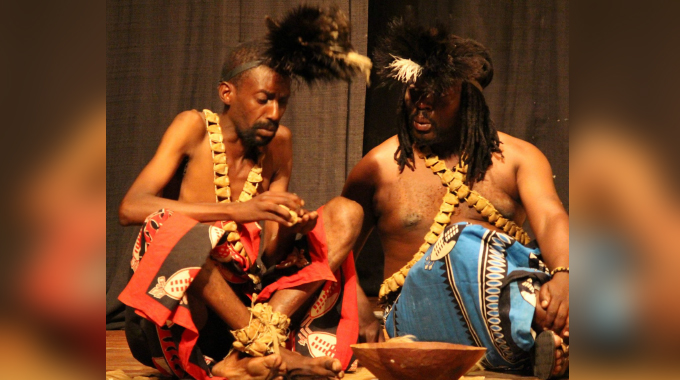
The Umdadada dance, which traces its roots to the BaKalanga people of south-western Zimbabwe, was traditionally performed by women as they went about their domestic chores, a rhythmic expression of unity, grace and the strength of womanhood. It is traditionally accompanied by lively songs that capture light-hearted moments from everyday life.
As the women perform, they sing to remind one another of shared experiences, stories of friendship, family and their societies. The dance is enriched by rhythmic drumming and clapping, creating an infectious energy that mirrors the spirit of togetherness among the performers.
Umkhathi’s reinterpretation retains its soulful storytelling while adding modern musical layers that speak to today’s generation.
Similarly, Ingquzu, is a vibrant male dance that originated among the Ndebele people, particularly in Nkayi and surrounding areas. Performed during social gatherings, Ingquzu allowed men to showcase their strength, agility and individual artistry through spirited movements.
Like Umdadada, the dance is accompanied by song and clapping, forming a harmonious interplay between rhythm and movement.
The ensemble’s artistic director, Matesu Dube said their goal is not just to perform but to revive, educate and celebrate the enduring beauty of indigenous expression.
He said in Africa, dance is more than just movement, it is a powerful expression of identity and belonging. Every stage of life is marked by its own rhythm, with children, youth and adults each having distinct dances that reflect their roles within the community.
Dube said various occasions are accompanied by specific dances, from the joyous celebrations of weddings and the birth of a child, to solemn ceremonies held to invoke rain. Through these traditions, he said dance continues to serve as a unifying language that connects generations and preserves the continent’s rich cultural heritage.
“There are many Ndebele dances we could have showcased, but for this particular piece, which is still a work in progress, we decided to research and focus on Umdadada and Ingquzu so we could shed more light on their origins and significance,” said Dube.
“Art is about creativity, it’s about surprising the audience rather than presenting something predictable. That’s why we came up with this concept, to give our audiences a visually engaging performance while also playing our part in reviving and celebrating our culture.”
With many countries and the younger generation gradually drifting away from their cultural practices and customs, Dube stressed the importance of preserving African heritage through dance and song. He noted that these two art forms are not merely for entertainment but are vital expressions of identity and belonging.
“Dance and music carry our history, values and stories. If we let them fade, we lose a part of who we are as Africans,” he said.
He said if one loses their culture, they are likely to lose their identity, for, in dance and song, there is language.
“I believe that as a nation, we should prioritise culture within our education system so that every child understands that in ancient times, before radios and modern entertainment, traditional dances were the heartbeat of community gatherings such as weddings and celebrations,” said Dube.
He added that cultural participation should start early, saying, “We need to involve every child in cultural activities, from Early Childhood Development right up to secondary school. The Jikinya traditional dance competitions in primary schools are doing a great job, but we need more initiatives. We need activities that engage all children.”
Dube said nurturing cultural awareness from a young age is key to building a nation rooted in its heritage.
“If we’re able to catch them young, we can be assured of grooming a generation with a strong cultural background, one that upholds values of humanity, respect and identity,” he said.
In his call for the preservation of diverse cultures through artistic creativity, a task often carried by professional ensembles, Dube urged the Government to implement policies that create a more supportive environment for cultural groups to thrive.
He highlighted the financial challenges faced by many arts organisations, noting that high registration fees and limited funding hinder cultural promotion.
“The fees for registering cultural groups and festivals are very steep and this makes it difficult for us to promote our culture effectively,” said Dube.
He further appealed for increased investment in the arts, adding, “Funding for cultural activities should be made available by the Government, while also allowing cultural exchange programmes to take place. These exchanges help us share and learn from others while strengthening our own identity.”