Chronicle Editor
Leonard Ncube, [email protected]
THE recent UN Tourism Regional Forum on Gastronomy Tourism for Africa, held in Victoria Falls, highlighted the potential of cultural and heritage tourism in Zimbabwe.
The inaugural event, hosted in recognition of the First Lady, Dr Auxillia Mnangagwa’s efforts in promoting traditional foods and lifestyles, featured a tour of Mr Lovemore Ncube and his wife, Ms Chumani Sibanda’s homestead in Ntabayengwe Village under Chief Mvuthu area.
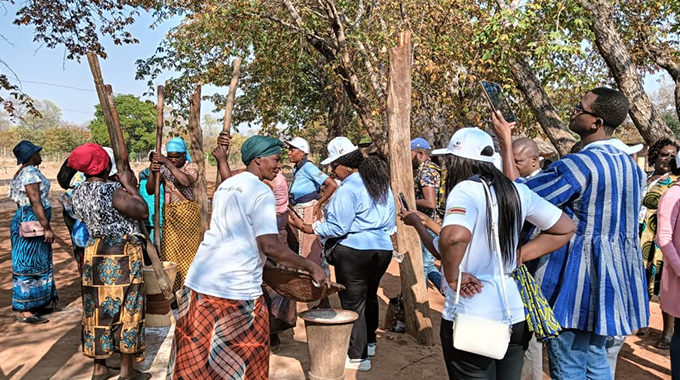
Located about 15km out of Victoria Falls, the homestead showcases a typical African cultural home, with distinct roles and practices, such as the division of labour where men do not enter the kitchen. Visitors participated in activities like pounding grain and cooking, experiencing local customs first-hand.
The homestead, which is built in the traditional Ndebele style, features rondavel huts arranged with the boys’ ixhiba (hut) closer to the gate and the girls’ hut situated between the boys’ and the parents’ bedrooms. The kitchen, located at the centre of the homestead, is a focal point where family members gather, reflecting the cultural practice that excludes men from entering the cooking area.
Children aged below five could be seen playing in the yard while their elder siblings were out doing various chores.
Delegates from across Africa and UN Tourism staff noted the potential for such cultural experiences to attract tourists and promote African values. The homestead, named “Umuzi Rural Experience,” could also serve as an educational resource for schools.
Mr Ncube named his homestead “Umuzi Rural Experience” as it depicts a true African cultural home.
The visit to Umuzi Rural Experience was part of the UN Tourism Forum programme, which aims to promote African cuisine, music, dance, and culture globally.
Delegates engaged in Ndebele cultural practices, including pounding grain (ukugiga), cooking, and participating in household chores. They also enjoyed traditionally prepared isitshwala senyawuthi (a staple maize dish) and vegetables with peanut butter.
Visitors also sat in the summer hut to listen to folktales while Mr Ncube guided them around the homestead. He suggested that the site could serve as a valuable resource for heritage-based educational programmes, particularly for schools visiting Victoria Falls.
The delegates agreed that the rural lifestyle, food, and cultural practices demonstrated at Umuzi Rural Experience should be shared internationally.
Participants, including chefs and tourism professionals from Nigeria, Botswana, and Ghana, expressed enthusiasm about the similarities in rural lifestyles and the need to integrate these cultural elements into broader tourism efforts.
“This is a very nice experience which has exposed to us many similarities in our lifestyles. I have travelled to many countries in Africa and have seen a lot of similarities such as the food we eat. We have learnt about totems and how boys and girls grow,” said Ms Linda Ajala, the chief executive of The Big Breakfast in Nigeria.
“We also learnt about energy efficiency where the people here use cow dung to make energy,”
Ms Edna Rosen, a chef from Botswana who is also promoting Taste of Botswana, said such places should be replicated around the continent.
“It’s really exciting to be here and to observe that what is happening here is almost similar to what we have in terms of huts, food and lifestyle. We need to promote this in the tourism value chain as we try and promote gastronomy through our culture and food,” she said.
“We wish these places could be replicated all over Zimbabwe, Botswana, and the whole continent because tourists now want to experience our culture and food. Yes, it’s a bit modern here and this is what tourists want and we should offer cultural tourism.”
Ms Lydia Amenyaglo from Ghana was excited by traditional food preparation.
“It is amazing how they live as a community especially how they make their own energy. My grandmother also lives in the rural areas and this a take-home,” she said.
UN Tourism representatives emphasized the importance of community-based tourism and encouraged support for marketing such cultural experiences to attract visitors.
“We had a walk around the community and it is good to see such community tourism. It was exciting to see how they prepared their food. This is my first time in Zimbabwe and Africa and I will come back,” said Mr Glen Caowonberghs from the UN Tourism.
“I will invite my friends to come and experience not only the big attractions like Victoria Falls but to experience rural life.”
Mr Ncube called on the Zimbabwe Tourism Authority (ZTA) to assist with promotion, hoping that the homestead will become a popular destination for both international tourists and locals interested in cultural learning.
“Our challenge is that we haven’t really marketed this place. We need a lot of help with marketing and we hope ZTA will chip in. This place is not only for foreigners but also locals who want to come and learn about our culture,” he said.
“We also hope these visitors will be our ambassadors when they go back to their countries.” – @ncubeleon.


 Online Reporter