Online Reporter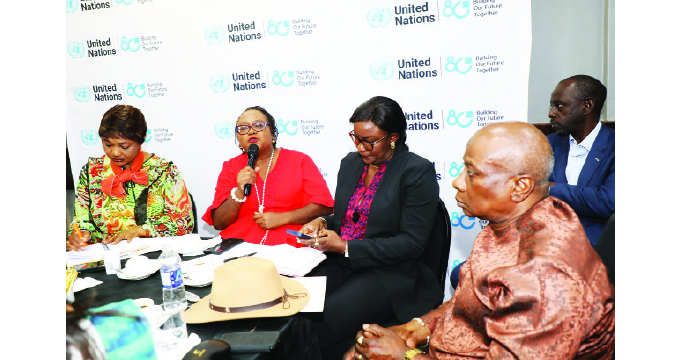
Joseph Madzimure-Zimpapers Politics Hub
THERE is need to strengthen joint United Nations-Media collaboration to better accelerate progress on the Sustainable Development Goals in Zimbabwe over the next five years leading up to the 2030 deadline, UN Resident and Humanitarian Coordinator, Mr Edward Kallon, has said.
Speaking at a breakfast meeting attended by editors from various media organisations in Harare yesterday, Mr Kallon said the work of journalists is at the heart of shaping public understanding, promoting transparency and holding policy and decision makers, including development partners, accountable.
He called for the establishment of a sustained UN-Media liaison mechanism to share timely data, early warning and programme results.
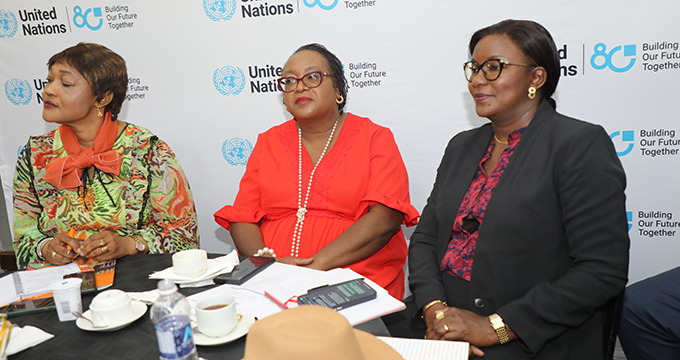
UN Women Representative in Zimbabwe Fatou Aminata Lo (right), United Nations Population Fund (UNFPA) representative in Zimbabwe Ms Miranda Tabifor (left) and The Herald Editor Victoria Ruzvidzo follow proceedings at the UN and Zimbabwe Editors breakfast meeting in Harare yesterday. -Picture Memory Mangombe.
“The mechanism will also expand distribution of digestible, local-level datasets, policy briefs, visual assets and expert spokespeople to enable fact-based, solutions-oriented reporting,” Mr Kallon said.
On capacity building for development and data journalism, Mr Kallon said there is a need to invest in joint training on SDG reporting, data visualisation, climate science, public finance, and combating misinformation to deepen investigative and explanatory coverage.
He added that the media has been essential in raising public awareness of the Sustainable Development Goals, exposing gaps, highlighting success stories and holding stakeholders accountable, through coverage that amplifies marginalised voices.
“The media has been instrumental in advancing awareness of the Sustainable Development Goals and in reporting progress and gaps,” stated Mr Kallon.
“Through reporting, analysis and investigative work – and increasingly through social media – journalists have amplified the issues that matter and the voices working for transformation.”
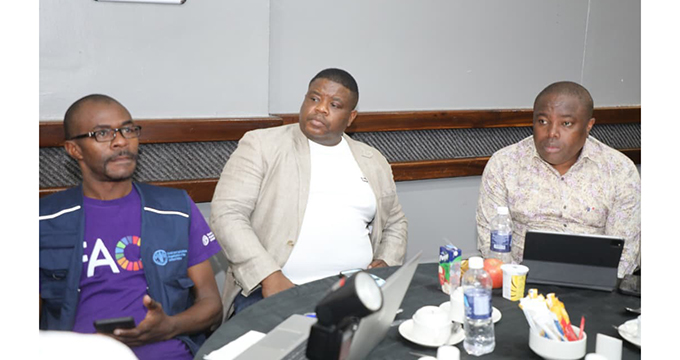
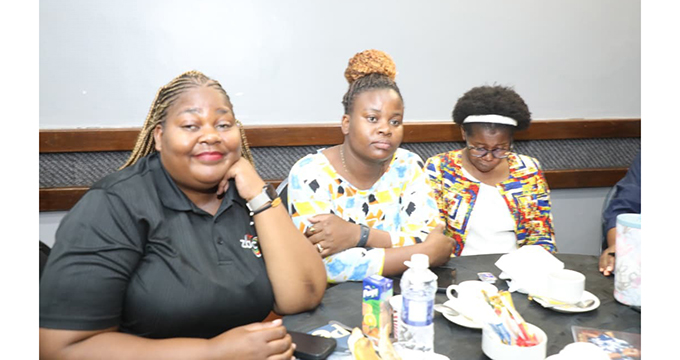
Sunday Mail Editor Darlington Musarurwa (right), Zimpapers Group Political Editor Ranga Mataire and a delegate follow proceedings at a breakfast meeting attended by editors from various media organisations in Harare yesterday.
The meeting was attended by editors from various media organisations, among them The Herald Editor Victoria Ruzvidzo, Sunday Mail Editor Darlington Musarurwa, Zimpapers Group Political Editor Ranga Mataire, and Zimpapers Head of News (Broadcasting Division) Linda Muriro.
Mr Kallon said the media and journalists in Zimbabwe played a crucial role during the Covid-19 pandemic and El Niño-induced drought last year.
He added that journalists have always played a key role during emergencies such as the response to cholera and waterborne diseases, by disseminating timely, life-saving information and countering dangerous rumours.
The UN, Mr Kallon said, provides evidence-based reports, data, policy briefs and expert access for informed reporting on climate adaptation, food systems, social protection, financing, and other priority areas.
“Our engagement with the Government under the 2022-2026 Zimbabwe UN Sustainable Development Cooperation Framework has supported implementation of the 2030 Agenda across four interconnected pillars – people, planet, prosperity and peace,” he said.
The UN delivers roughly US$500 million annually through development and recovery projects, and by early this year had mobilised about US$1,5 billion of a US$2,8 billion requirement.
Speaking at the same occasion, Ruzvidzo commended the UN for its insightful programme aimed at shaping the media. She emphasised that there is no better journalist than an informed one.
“There is a need to provide training and resources for journalists,” Ruzvidzo said. “We have a critical role to play in informing and interrogating issues.
“However, our capacity can be limited by inadequate resource to mould a journalist who can write indepth stories. The nedia plays a key role in the development discourse. Training is essential to enhance our skills.”
Mataire said the meeting was helpful for both the UN and the media.
“It was an engagement between the UN agencies and the media, so there is a lot that journalists have highlighted that needs to be done in order to improve covering issues, particularly those in marginalised areas”.
Editors, he said, highlighted the need for resources which are limiting them from reaching faraway areas.
Mataire said the engagement also highlighted how the media and various UN agencies are going to collaborate going into next year.
National Coordinator of the Zimbabwe National Editors Forum, Njabulo Ncube, said there is a need for journalists to cover developmental stories to shape the country.