admin
admin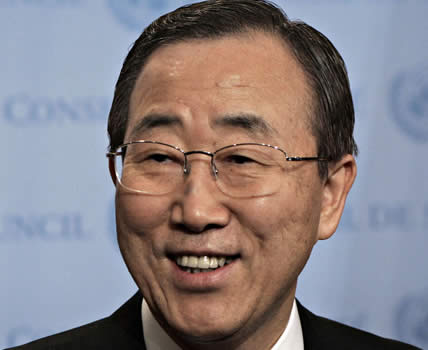
“This is a victory for the world’s people,” said UN Secretary-General Ban Ki-moon in a statement issued while traveling in Europe.
“The ATT will make it more difficult for deadly weapons to be diverted into the illicit market and it will help to keep warlords, pirates, terrorists, criminals and their like from acquiring deadly arms.”
The Democratic People’s Republic of Korea, Iran and Syria voted against the measure. Cuba, India, Myanmar, Nicaragua, Russia, China, Saudi Arabia and Sudan were among the abstaining states. Armenia, Dominican Republic, Venezuela and Vietnam were among non-voters.
It was only late last Thursday night that the ATT Final Conference failed to reach consensus on a treaty text — objected to by DPRK, Iran and Syria — when Costa Rica said it was moving for a vote on it as a resolution in the 193-member General Assembly.
While the ATT Conference needed consensus — not a single objection — passage in the assembly needed only a simple majority.
The president of the conference, Australian ambassador to the UN in Geneva, Peter Woolcott, said after Tuesday’s vote it could take “a year or two” for the 50 states necessary to sign or ratify the treaty before it comes into effect.
Ratification prospects of the treaty as required by the US Senate are not rosy, even though the measure specifies it does not limit the right to bear arms as guaranteed by the US constitution. US gun advocates oppose the treaty.
Most of those expressing concern or even objection to the treaty said it lacked balance, was not fair and favoured arms exporting nations. The United States is the largest of such exporters.
While Woolcott said, “This is a treaty with teeth,” it contains no enforcement measures. It calls on exporting states to ensure arms do not end up aiding those committing genocide, violating human rights or interfering in humanitarian work.
“When you think about it, it is trade regulation, but it’s much more than that: It’s human rights, it’s humanitarian law and essentially it’s about national defence,” he said, adding, “Balance is in the eye of the beholder.”
Vuk Jeremic, the president of the General Assembly, called the text “groundbreaking,” as well as “robust and actionable,” recalling that in 2006, member states had called for a multilateral effort to produce a legally binding instrument, establishing common standards for the import, export and transfer of conventional arms to include warships, battle tanks, combat aircraft and attack helicopters, as well as small arms and light weapons.
“I personally believe that the final text of this conference meets those commitments to a great extent,” he said, adding that it draws a link with the presence of weapons across the developing world and the challenge of sustainable development and safeguarding human rights.
“Seven years ago, seven countries saw the harm being caused by the poorly regulated trade in conventional arms,” said Ambassador Eduardo Ulibarri of Costa Rica. “We listened to the voices of people around the world living in fear of armed conflict and armed violence. And we resolved to act.”
“This is only one landmark on our long journey to a safer, more just world,” he said.
“We now stand ready to take our first steps along the path to implementation. As co-authors, our special responsibility for this treaty does not end here. This Treaty is strong now, but together we must continue to make it even more powerful.”
Proponents of the measure have said both during the last 10 days of the conference and in the assembly, the treaty could be strengthened in time through amendments.
China’s deputy permanent representative to the UN, Ambassador Wang Min, said his nation “could support a treaty reached through consensus,” but was “not in favour of pushing through a multilateral arms control treaty in the General Assembly. We are very much concerned about the possible negative precedent for multilateral arms control negotiations.”
Such treaties usually are arrived at by consensus through negotiation and resolution did not address “the concern of China,” Wang said, adding “We don’t believe that it will constitute a precedent for future arms control treaty negotiations.”
Ambassador Vitaly Churkin of Russia, which also abstained from the vote, said the treaty “had a number of shortcomings,” including lacking definitions for such terms as genocide.
Ambassador Mootaz Ahmadein Khalil of Egypt, which abstained, also complained the treaty lacked definitions, but he cited “end user” as an example, adding that the measure also lacked criteria to determine application of the treaty.
“Inclusion of a clear reference to the crimes of aggression and foreign occupation as part of the assessment would have clarified the implantation process.”
This was in apparent reference to a theme frequently heard from countries of the Middle East, referring to Israel.
Meanwhile, Syria’s UN Ambassador Bashar Ja’afari said, “We are in need of a good treaty which we will not regret later, which will not be used for political exploitation by some states against others.”
“Syria cannot be on the side obstructing a treaty we all aspire to but those who impeded a fair and balanced treaty are those who refuse to pay attention to the concerns and worries of a large segment of the member states,” he said. — Xinhua.



 Online Reporter