


 Sundaymail Editor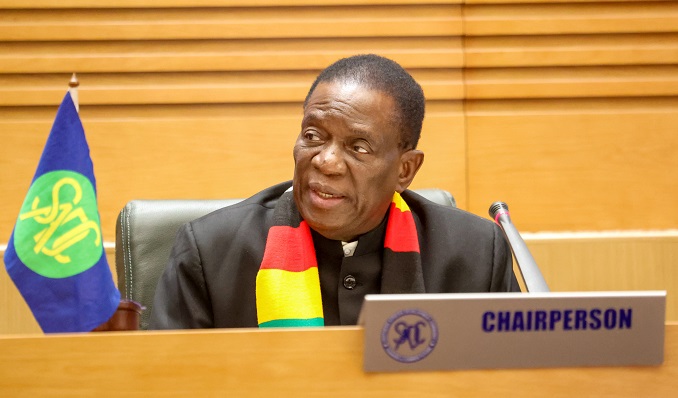
Debra Matabvu
Chief Reporter
EFFORTS by SADC chairperson President Mnangagwa and his counterpart in the East African Community (EAC), President William Ruto of Kenya, to achieve durable peace in the eastern Democratic Republic of Congo (DRC) have received a ringing endorsement from the United Nations Security Council (UNSC), which on Friday night threw its weight behind resolutions made at a historic joint summit held in Dar es Salaam, Tanzania, on February 8 to drive decisive action towards ending the conflict.
In a development that represents a turning point in attempts to resolve the long-running crisis, the UN also made a determination that the security situation in the DRC constituted “a threat to international peace and the security situation in the region”.
The world body also condemned the ongoing offensive and advances by the M23 rebels in North Kivu and South Kivu with support from the Rwanda Defence Forces (RDF). It called on the RDF to immediately withdraw from the DRC without preconditions.
Joint ministerial meeting
The move by the UN comes at a time when both SADC and EAC are scheduled to convene a high-level joint ministerial meeting this week to review a report from regional defence chiefs on enforcing a sustainable ceasefire and cessation of hostilities in the eastern DRC.
The meeting is part of ongoing efforts by regional leaders to resolve the crisis.
The ministerial meeting was one of the key resolutions from the recent joint SADC-EAC Heads of State and Government Summit held in Dar es Salaam.
The summit was co-chaired by President Mnangagwa and President Ruto.
The ministerial meeting will set the stage for another Heads of State and Government Summit, where leaders from both SADC and EAC will work on a comprehensive framework for fostering sustainable dialogue between the warring parties in the DRC and finding a durable solution to the raging and long-drawn-out conflict.
Officials are currently finalising dates and venues for these crucial meetings, amid indications Tanzania will once again be the host.
Additionally, the ministers will discuss outcomes from the SADC Organ Troika and defence chiefs’ meetings held on Thursday and yesterday, respectively, in Dar es Salaam.
The ministers will discuss establishing a technical coordination mechanism at the regional blocs’ secretariat level to oversee the implementation of the Dar es Salaam summit’s decisions.
They will also develop a detailed road map outlining immediate-, medium- and long-term measures to end the conflict, including financing strategies.
Their meeting is also expected to address any outstanding issues related to achieving lasting peace and security in the eastern DRC and make appropriate recommendations to the upcoming joint SADC-EAC Heads of State and Government Summit.
Briefing The Sunday Mail on the forthcoming meetings, Foreign Affairs and International Trade Minister Professor Amon Murwira said: “One of the key issues raised at the recent SADC-EAC Heads of State and Government Summit in Tanzania was the inclusion of all parties involved in the eastern DRC conflict in the dialogue. So, at the end of this month (this week), we will convene the SADC-EAC ministerial meeting to evaluate progress in the dialogue.
“Following this, another Heads of State and Government Summit will be held to assess the progress and implementation of resolutions from the last summit on the eastern DRC crisis.
“As for the deployment of the commanders of defence forces to the region, I am not sure if they have left yet.”
Permanent Secretary in the Ministry of Foreign Affairs and International Trade Ambassador Albert Chimbindi said the upcoming meetings were likely to be held in Tanzania.
“The venues and the dates are still being finalised. However, they are likely to be held in Dar es Salaam,” he said.
“I know member states in the SADC Organ Troika convened today (Thursday), with South Africa and the DRC also attending the meeting.
“Then on February 22, 2025, defence chiefs will also convene a meeting at the same venue.
“We will then get suggestions on the dates and venue of where the two other meetings will be held.”
The joint SADC-EAC Summit instructed the EAC-SADC chiefs of defence forces to convene within five days of the February 8 joint meeting to provide technical direction on enforcing an immediate and unconditional ceasefire and cessation of hostilities.
They were also tasked with coordinating humanitarian assistance, including repatriation of the deceased and evacuation of the injured, as well as developing a security plan for Goma and surrounding areas, among other resolutions.
Furthermore, the joint summit mandated the resumption of direct negotiations and dialogue with all state and non-state parties (both military and non-military), including the M23, within the framework of the Luanda/Nairobi Process.
Critically, the indaba also directed that a joint ministerial meeting of the EAC and SADC be held within 30 days to deliberate on the report of the chiefs of defence forces regarding the ceasefire.
Further, the ministers were tasked with establishing a secretariat-level technical coordination mechanism to oversee the implementation of summit decisions.
The joint summit further directed that clear modalities for the withdrawal of uninvited foreign armed forces from the DRC be developed and enforced.
On Friday, the UNSC reiterated calls for all parties to conclude an immediate and unconditional ceasefire.
“(The UN) strongly condemns all attacks directed against the civilian population and infrastructure, including the United Nations and associated personnel, humanitarian personnel, and medical personnel and facilities, summary executions and maiming, sexual- and gender-based violence, human trafficking, and recruitment of use of children, and reiterates that perpetrators of violations of international humanitarian law and crimes and violations and abuses of human rights must be held accountable,” said the Security Council as part of its resolutions.
“(The UN) calls on all parties to urgently open humanitarian corridors in North and South Kivu for the resupply of essential humanitarian items and the free and safe movement of civilians, including humanitarian workers, and to ensure the immediate and unrestricted opening of the airport in Goma, and that the Kavumu Airport as well as border crossings remain open to allow for voluntary and safe movement of civilians, including for the access and medical evacuations of injured civilians and humanitarian workers.”
The UNSC also said it supported the African Union (AU) Commission’s call to urgently convene a quadripartite meeting of SADC, EAC, ECCAS (Economic Community of Central African States) and ICGLR (International Conference on the Great Lakes Region).
Further, the world body, while commending the efforts of the United Nations Organisation Stabilisation Mission in the Democratic Republic of Congo (MONUSCO), said it would not tolerate any attempts to undermine its ability to carry out its mandate.
Attacks on MONUSCO peacekeepers, it added, constitute war crimes and attract UN sanctions.
DRC military forces were also urged to desist from supporting armed groups such as the FDLR.
Furthermore, the DRC and Rwanda were strongly advised to return to diplomatic talks without preconditions as a matter of urgency “to achieve a lasting and peaceful resolution of the protracted conflict in the region”.
Political consultations, under the auspices of the Nairobi and Luanda processes, are being encouraged to address the issue of armed groups, such as M23 and FDLR.
Protracted
The DRC has been embroiled in a complex and protracted conflict, particularly in its eastern regions, for several decades.
The roots of this turmoil date back to the aftermath of the 1994 Rwandan genocide, which led to an influx of refugees and armed groups into the DRC, exacerbating existing ethnic tensions and sparking violent struggles over the nation’s abundant natural resources.
A significant actor in the current conflict is the March 23 Movement, commonly known as M23, a rebel group reportedly supported by Rwanda — a claim Kigali denies — that has intensified its military activities in recent months.
On Thursday, the United States Department of the Treasury slapped Rwanda’s Minister of State for Regional Integration James Kabarebe (a retired general) with financial sanctions for allegedly orchestrating Rwandan support for the M23 rebels.
It also sanctioned M23 and the Congo River Alliance spokesperson, Lawrence Kanyuka Kingston, alongside two of Kanyuka’s companies — Kingston Fresh and Kingston Holding.
In February 2025, the M23 advanced into Bukavu, the capital of South Kivu province, seizing strategic locations, including the Kavumu Airport.
This offensive has not only expanded their territorial control but also worsened the humanitarian crisis, displacing approximately 350 000 people and raising international concern.
The fighting in recent weeks has raised fears of a repeat of the Second Congo War (1998 to 2003), which drew in multiple African countries and resulted in millions of deaths from violence, disease and starvation.



 Online Reporter